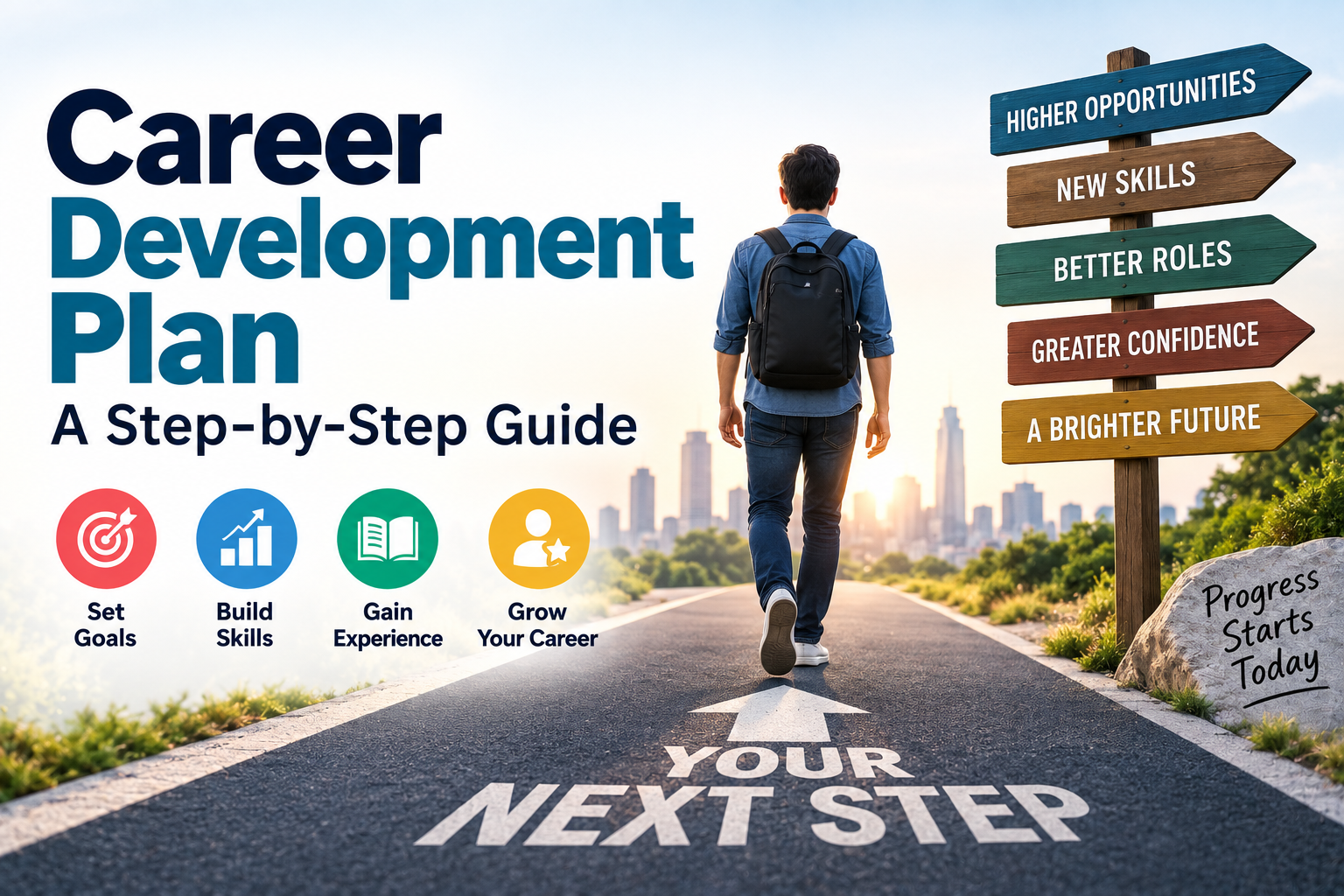
How to Create a Career Development Plan: A Step-by-Step Guide
Your career is unlikely to develop exactly as you expect.
Stay connected
Add us as a trusted source on Google
Get our latest guides, updates, and helpful resources surfaced more often when you search and browse.
New opportunities appear. Industries change. Your interests evolve. Skills that were valuable when you started working may need to be updated, while new responsibilities can take your career in directions you never originally considered.
That doesn’t mean you should leave your career entirely to chance.
A career development plan gives you a practical framework for deciding where you want to go professionally and what you need to do to get there.
It can help you identify your strengths, understand your skill gaps, choose realistic career goals, prioritize learning, and turn a long-term ambition into actions you can start taking now.
You don’t need to know exactly where you’ll be ten years from today.
You simply need enough direction to make better decisions about your next steps.
This guide explains how to create a career development plan step by step, with practical examples you can adapt to your own career.
What Is a Career Development Plan?
A career development plan is a structured roadmap for improving your skills, experience, and qualifications so you can move toward your professional goals.
It connects three important questions:
Where am I now?
Where do I want to go?
What do I need to do to get there?
For example, imagine you’re currently working as a marketing assistant and eventually want to become a digital marketing manager.
Your career development plan might identify:
- Skills you already have
- Skills required for management positions
- Experience you’re currently missing
- Courses or certifications that could help
- Projects you should volunteer for
- Leadership experience you need to develop
- Short-term and long-term career goals
- Milestones for measuring progress
Instead of simply hoping for a promotion someday, you have a clearer idea of what you need to demonstrate before you’re ready for it.
Why Is Career Development Important?
It’s easy to become reactive about your career.
You finish school, find a job, complete your responsibilities, and wait to see what happens next.
Sometimes that works.
But without deliberate career planning, you may eventually realize that you’ve spent several years gaining experience that doesn’t support the career you actually want.
A career development plan can help you become more intentional.
It can help you:
- Identify realistic career opportunities
- Understand your strengths
- Discover skill gaps
- Choose useful courses and certifications
- Prepare for promotions
- Build relevant experience
- Decide which opportunities to pursue
- Avoid unnecessary training
- Measure professional progress
- Adapt when your goals change
A plan doesn’t guarantee that everything will happen according to schedule.
Its purpose is to help you make better decisions with the information you have today.
Career Development vs. Career Planning
Career development and career planning are closely related, but they aren’t exactly the same.
Career planning is primarily about deciding where you want your career to go.
You might decide that you want to:
- Become a manager
- Move into cybersecurity
- Work remotely
- Become a software developer
- Enter digital marketing
- Start freelancing
- Become a specialist
- Change industries
Career development focuses more on building the abilities and experience required to move in that direction.
For example:
Career goal: Become a project manager.
Development needs: Project planning, stakeholder communication, budgeting, risk management, leadership, and practical project experience.
Planning determines the destination.
Development helps you prepare for the journey.
Who Needs a Career Development Plan?
Career development isn’t only for senior professionals.
A plan can be useful at almost every stage of your career.
Students
Students can use career development planning to decide which skills, internships, projects, and courses may improve their employment opportunities.
Freshers
If you’re entering the workforce, your plan might focus on gaining practical experience, developing professional skills, building your resume, and identifying potential career paths.
Mid-Career Professionals
You may want to earn a promotion, increase your salary, develop specialist expertise, or move into management.
Career Changers
A development plan can help you identify which existing skills transfer to your new career and which gaps you need to close.
Managers
Managers may use career development planning to strengthen leadership, strategic thinking, communication, and team-management skills.
Experienced Professionals
Even after many years in an industry, continued development can help you stay relevant, prepare for senior roles, or explore new professional directions.
How to Create a Career Development Plan
A useful career development plan doesn’t need to be complicated.
You can create one by working through the following steps.
Step 1: Evaluate Where You Are Now
Before deciding where to go next, understand your current position.
Write down your:
- Current job title
- Main responsibilities
- Years of experience
- Technical skills
- Soft skills
- Education
- Certifications
- Major accomplishments
- Industry knowledge
- Professional interests
Then think beyond what’s written on your resume.
Ask yourself:
- Which parts of my work do I enjoy most?
- Which tasks am I particularly good at?
- Which responsibilities do I dislike?
- What type of problems do people ask me to solve?
- What feedback do I regularly receive?
- What would I like to learn?
- Which responsibilities would I like to have in the future?
- Do I want to manage people?
- Do I prefer specialist or generalist work?
- What kind of work environment suits me?
Be realistic rather than overly positive or negative.
The purpose isn’t to judge yourself.
It’s to establish a starting point.
Step 2: Identify Your Strengths
Your strengths are skills and abilities you can build upon.
They might include:
- Communication
- Writing
- Programming
- Data analysis
- Sales
- Customer service
- Leadership
- Organization
- Problem solving
- Design
- Project management
- Technical troubleshooting
Look for evidence rather than relying entirely on your own perception.
For example, perhaps:
- Customers regularly compliment your support.
- Your manager asks you to train new employees.
- Your reports rarely require corrections.
- You’re frequently assigned difficult technical problems.
- Your presentations receive strong feedback.
- You consistently complete projects before deadlines.
These patterns can reveal strengths that may influence your career direction.
Step 3: Identify Your Career Direction
Now think about where you’d like your career to go.
You don’t need a perfect 20-year plan.
Start with a direction.
For example:
“I want to move into management.”
“I want to become a cybersecurity professional.”
“I want to transition from graphic design into UX design.”
“I want to become a senior software developer.”
“I want to build a career that allows me to work remotely.”
“I want to move from customer support into customer success.”
If you’re unsure what direction suits you, spend time researching possibilities before creating an extensive development plan.
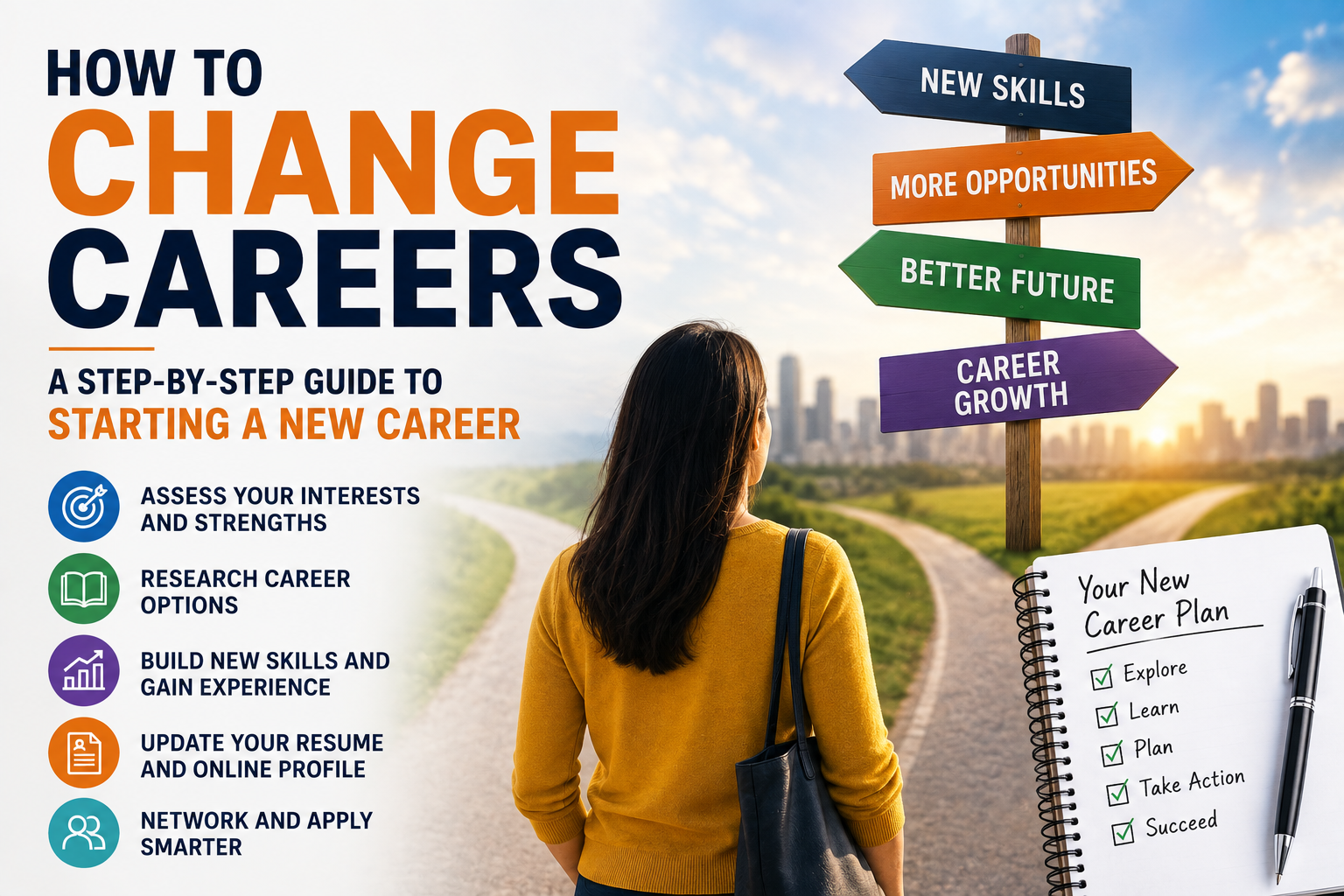
Our guide on how to choose the right career path can help you evaluate your interests, strengths, work preferences, and possible career options.
Step 4: Define Your Career Goals
Once you have a general direction, turn it into specific goals.
You might have:
Short-Term Goals
Goals you want to work toward relatively soon.
Examples:
- Complete a certification
- Learn Excel
- Improve presentation skills
- Update your resume
- Build a portfolio project
- Take responsibility for a small project
- Attend industry events
- Improve professional communication
Medium-Term Goals
Examples:
- Earn a promotion
- Move into a specialist position
- Lead a project
- Change departments
- Become qualified for a new role
Long-Term Goals
Examples:
- Become a department manager
- Become a senior specialist
- Change careers
- Start a business
- Become a consultant
- Build a successful freelance career
Your goals should connect with one another.
For example:
Long-term goal: Become a marketing manager.
Medium-term goal: Move into a senior marketing role.
Short-term goals: Improve analytics skills, manage a campaign independently, and gain experience coordinating other team members.
Each smaller goal moves you closer to the larger one.
Step 5: Research Your Target Role
Don’t build your career development plan entirely from assumptions.
Research the position you want.
Search real job descriptions and look for patterns.
Pay attention to:
- Required experience
- Technical skills
- Soft skills
- Education
- Certifications
- Software
- Responsibilities
- Leadership requirements
- Industry knowledge
Don’t base your conclusions on one job advertisement.
Review several.
Suppose you want to become a project manager.
After reviewing multiple positions, you might repeatedly see requirements for:
- Project planning
- Budget management
- Stakeholder communication
- Risk management
- Scheduling
- Leadership
- Project-management software
Repeated requirements provide useful clues about what employers value.
Step 6: Perform a Skills Gap Analysis
Now compare your current abilities with the requirements of your target role.
Create three categories.
Skills You Already Have
These don’t require immediate attention.
Skills You Need to Improve
You understand them but need stronger practical experience.
Skills You Don’t Have Yet
These become potential development priorities.
For example:
Target role: Digital Marketing Manager
Already have:
- Content marketing
- SEO
- Email marketing
Need improvement:
- Analytics
- Paid advertising
- Campaign strategy
Need to develop:
- Budget management
- Team leadership
- Performance forecasting
This exercise turns a vague goal into specific development needs.
Step 7: Prioritize Your Skill Gaps
Don’t try to learn everything at once.
Some skills will matter more than others.
Prioritize skills based on:
- How frequently employers request them
- How important they are to your target role
- How long they take to develop
- Whether they unlock additional opportunities
- Whether you can practice them in your current job
Suppose you identify eight skill gaps.
Trying to improve all eight simultaneously may leave you making little progress on any of them.
Choose one or two high-value skills first.
Step 8: Decide How You Will Develop Each Skill
Different skills require different learning methods.
You might develop skills through:
- Online courses
- Books
- Workshops
- Certifications
- Personal projects
- Freelance work
- Internships
- Volunteer projects
- Mentoring
- Job shadowing
- Workplace assignments
- Professional communities
Don’t assume every skill requires a paid course.
Practical experience can sometimes be more valuable.
For example, if you want to improve project management, volunteering to coordinate a small internal project may teach you more than simply watching hours of videos.
The strongest development often combines learning with practice.
Step 9: Look for Opportunities in Your Current Job
You may not need to change employers immediately to develop new skills.
Look for opportunities where you already work.
You could:
- Volunteer for a project
- Help another department
- Train a new employee
- Give a presentation
- Lead a meeting
- Improve an internal process
- Create documentation
- Analyze performance data
- Mentor a junior coworker
- Ask for additional responsibility
Suppose you want to become a manager.
Before receiving the title, you could begin developing leadership experience by mentoring colleagues, coordinating small projects, or taking responsibility for team initiatives.
These experiences can later become evidence that you’re ready for advancement.
Step 10: Find a Mentor
A mentor can provide perspective that is difficult to get from courses or books.
A mentor may help you:
- Understand your industry
- Evaluate career options
- Identify blind spots
- Prepare for promotions
- Improve specific skills
- Navigate workplace challenges
- Expand your professional network
Your mentor doesn’t necessarily need to be a senior executive.
Someone a few steps ahead of you may provide extremely practical advice because they recently faced similar challenges.
When approaching someone, avoid simply asking:
“Will you be my mentor?”
Instead, begin with a specific question or request for advice.
Professional relationships often develop naturally over time.
Step 11: Build Your Professional Network
Career opportunities don’t come only from online applications.
Relationships matter.
Your professional network can include:
- Current coworkers
- Former coworkers
- Managers
- Clients
- Classmates
- Alumni
- Industry professionals
- People you meet at events
- Online professional communities
Networking doesn’t mean messaging strangers and immediately asking for jobs.
Focus on building genuine professional relationships.
You can:
- Participate in industry discussions
- Attend professional events
- Share useful knowledge
- Ask thoughtful questions
- Congratulate people on achievements
- Stay in contact with former coworkers
- Help others when you can
Build your network before you urgently need it.
Step 12: Create Practical Projects
Projects can provide evidence that you know how to apply what you’ve learned.
This is particularly useful when you’re:
- A student
- A fresher
- Changing careers
- Learning a technical skill
- Building a portfolio
Examples include:
Web Development
Build a functioning website.
Data Analysis
Analyze a public dataset and explain your findings.
Digital Marketing
Create a sample campaign strategy or grow a real small project.
Graphic Design
Develop a portfolio of design projects.
Writing
Publish articles or create professional writing samples.
Project Management
Document how you planned and completed a real project.
Projects move you from:
“I learned this.”
to:
“Here’s what I can do with it.”
That distinction can be important when you’re competing for opportunities.
Step 13: Create a Timeline
Goals become easier to act on when they have a timeframe.
Suppose your goal is to qualify for a data analyst role.
Your plan might look like:
Month 1
Improve spreadsheet skills.
Months 2–3
Learn SQL fundamentals.
Months 3–4
Study data visualization.
Months 4–5
Complete two portfolio projects.
Month 6
Update your resume and begin targeted applications.
The timeline doesn’t need to be perfect.
Learning may take longer than expected, or you may progress faster.
Its purpose is to give your development structure.
Step 14: Make Your Goals Measurable
“Improve my skills” is difficult to measure.
A better goal might be:
“Complete an intermediate Excel course and build two spreadsheet projects within eight weeks.”
Instead of:
“Become better at public speaking.”
try:
“Deliver three presentations during the next six months and request feedback after each one.”
Measurable goals make progress easier to evaluate.
Step 15: Track Your Accomplishments
Don’t wait until you need a resume to remember what you’ve achieved.
Maintain a simple record of:
- Projects completed
- Problems solved
- Revenue generated
- Costs reduced
- Processes improved
- Awards
- Positive feedback
- Certifications
- New responsibilities
- Training completed
- Promotions
- Performance metrics
Include numbers whenever they meaningfully demonstrate results.
For example:
Instead of:
“Improved website performance.”
record:
“Reduced average page load time from 4.2 seconds to 2.1 seconds.”
This information can later help with:
- Resume writing
- Performance reviews
- Promotion discussions
- Interviews
- Salary negotiations
Step 16: Improve Your Resume as You Develop
Don’t treat your resume as something you update only when you’re unemployed.
As you gain skills and accomplishments, keep it current.
Your resume should gradually reflect your desired career direction.
If you’re moving toward management, emphasize examples of:
- Leadership
- Project ownership
- Mentoring
- Decision-making
- Process improvement
- Cross-team collaboration
If you’re changing careers, highlight transferable skills and relevant new projects.
The objective is to make your professional story increasingly aligned with where you want to go next.
Step 17: Review Your Plan Regularly
A career development plan shouldn’t be created once and forgotten.
Review it periodically.
Ask:
- Am I making progress?
- Is this still the career direction I want?
- Have industry requirements changed?
- Have I discovered new interests?
- Which skills have I developed?
- Which gaps remain?
- Have new opportunities appeared?
- Do any goals need to change?
Your career development plan should evolve as you do.
Changing your plan isn’t failure.
Sometimes new experience gives you better information.
Career Development Plan Example
Here’s a simplified example.
Current Position
Customer Support Specialist
Career Goal
Move into Customer Success Management.
Current Strengths
- Customer communication
- Product knowledge
- Troubleshooting
- Relationship building
Development Gaps
- Account management
- Customer retention strategy
- Data analysis
- Presentation skills
- Commercial awareness
Development Actions
- Shadow a customer success manager
- Learn basic customer-success metrics
- Improve spreadsheet skills
- Volunteer to help with customer onboarding
- Lead a customer training session
- Complete a relevant course
- Ask a manager for monthly feedback
Six-Month Milestone
Take responsibility for onboarding selected customers.
Twelve-Month Milestone
Become qualified to apply for entry-level customer success positions.
Notice how the plan connects the career goal with specific actions.
That’s what makes it useful.
Career Development Plan Template
You can create your own plan using this structure.
Current Role
What do you do today?
Target Role or Career Direction
Where would you like to go next?
Current Strengths
What valuable skills and experience do you already have?
Skill Gaps
What abilities or experience are missing?
Development Priorities
Which gaps matter most?
Learning Activities
What courses, projects, books, certifications, or training will you use?
Practical Experience
How will you apply what you learn?
Networking Actions
Who could help you better understand your target career?
Short-Term Goals
What should happen during the next few months?
Medium-Term Goals
What would meaningful progress look like after that?
Long-Term Goal
What larger career outcome are you working toward?
Progress Measures
How will you know you’re improving?
Review Date
When will you evaluate and update the plan?
Keep the plan somewhere accessible.
A simple document or spreadsheet is enough.
Common Career Development Mistakes
Even a detailed plan can become ineffective if you approach it incorrectly.
Trying to Learn Everything
More skills aren’t automatically better.
Prioritize abilities connected to your actual career goals.
Collecting Certifications Without Experience
Certifications can be useful, but certificates alone don’t always demonstrate that you can perform the work.
Look for opportunities to apply what you learn.
Following Trends Without Considering Fit
A career may be popular or well paid without being suitable for you.
Consider your:
- Interests
- Strengths
- Work preferences
- Lifestyle
- Values
- Long-term priorities
Comparing Your Career With Everyone Else
Someone else may become a manager at 25.
Another person may change careers at 40.
Someone may start a business at 50.
Careers don’t follow one universal schedule.
Measure your progress against your own goals.
Creating Unrealistic Timelines
Some skills can be learned quickly.
Others require years of experience.
Research your target role so your expectations remain realistic.
Waiting for Your Employer to Develop Your Career
Good employers may provide training and development opportunities.
But ultimately, you should take ownership of your professional growth.
Ask for opportunities instead of assuming someone will automatically create them for you.
Never Updating the Plan
Your goals at 22 may not match your priorities at 32.
That’s normal.
Your career development plan should change as your life and interests change.
What If You Don’t Know What Career You Want?
You can still create a development plan.
Focus initially on exploration.
Your plan might include:
- Research five possible careers
- Complete career assessments
- Talk with professionals in different roles
- Take introductory courses
- Try small projects
- Identify transferable skills
- Review job descriptions
- Attend industry events
You don’t always discover the right career by thinking about it indefinitely.
Sometimes you need to test possibilities.
If you’re still exploring, start with our guide on how to choose the right career path before committing to a highly specialized development plan.
What If Your Career Goals Change?
They probably will at some point.
You may discover that:
- You don’t enjoy management
- You prefer technical work
- You want more flexibility
- You enjoy another industry
- Your priorities have changed
- A new profession interests you
- Your current field has changed
Career development isn’t about predicting your entire future correctly.
It’s about making informed decisions and adapting when you learn something new.
If you decide that your current profession no longer fits your goals, our guide on how to change careers explains how to evaluate and plan a transition without assuming you have to discard all your previous experience.
How Career Development Helps With Promotions
If your goal is advancement within your current company, don’t focus only on doing your existing job well.
Research what the next position requires.
Ask:
- What responsibilities would I have?
- Which skills would I need?
- What results are expected?
- What experience do successful candidates have?
- What am I currently missing?
Then begin developing those capabilities before the opportunity appears.
You can also discuss career development with your manager.
Instead of simply asking:
“When will I get promoted?”
try:
“I’d like to work toward a senior role. What skills or results would you need to see from me to consider me ready?”
That conversation can give you much more actionable information.
Career Development for Remote Workers
Remote employees should be especially deliberate about professional development.
When you aren’t physically present with managers and coworkers, some accomplishments may be less visible.
Document your results.
Communicate progress.
Volunteer for meaningful projects.
Participate in team discussions.
Build relationships across the organization.
And continue developing skills that make you effective in distributed environments, including:
- Written communication
- Time management
- Independent problem solving
- Collaboration
- Digital tools
- Self-management
Career development shouldn’t stop because you work remotely.
Frequently Asked Questions
What is a career development plan?
A career development plan is a structured roadmap that identifies your professional goals, current strengths, skill gaps, development activities, milestones, and actions needed to move toward your desired career.
Why do I need a career development plan?
A plan can help you make more deliberate decisions about skills, training, projects, job opportunities, promotions, and long-term career direction.
How do I start career development?
Begin by evaluating your current skills and experience. Choose a possible career direction, research the requirements, identify gaps, and create specific actions for developing the abilities you’re missing.
How long should a career development plan be?
There is no required length. A useful plan can fit on one page if it clearly identifies your goals, skill gaps, development activities, milestones, and review dates.
How often should I review my career development plan?
Review it periodically and whenever your job, goals, interests, or circumstances change significantly. The important thing is to keep the plan relevant rather than following an outdated roadmap.
What are examples of career development activities?
Examples include taking courses, completing certifications, working on projects, attending workshops, finding a mentor, networking, volunteering for new responsibilities, reading industry material, and practicing new skills.
Can my employer create my career development plan?
Your manager can help identify opportunities and provide feedback, but you should remain actively involved in your own career development. Your professional goals may extend beyond your current position or employer.
What if I don’t have a clear career goal?
Start with exploration. Research different careers, identify your interests and strengths, talk to professionals, and try small projects before committing to a specific path.
Final Thoughts
A career development plan doesn’t need to predict exactly where you’ll be five or ten years from now.
It needs to help you make better decisions about what to do next.
Start by understanding where you are today.
Choose a direction.
Research what that career requires.
Identify the gap between your current abilities and your target role.
Then turn those gaps into specific actions.
Learn one important skill. Complete a practical project. Ask for more responsibility. Talk to someone working in your target role. Document your accomplishments. Review your progress.
Small actions become much more powerful when they’re connected to a larger direction.
Your career will continue to change, and your plan should change with it.
The goal isn’t to follow a perfect roadmap.
It’s to keep developing the skills, experience, and professional relationships that give you more choices about where your career goes next.