How to Write a Remote Work Resume That Gets Interviews
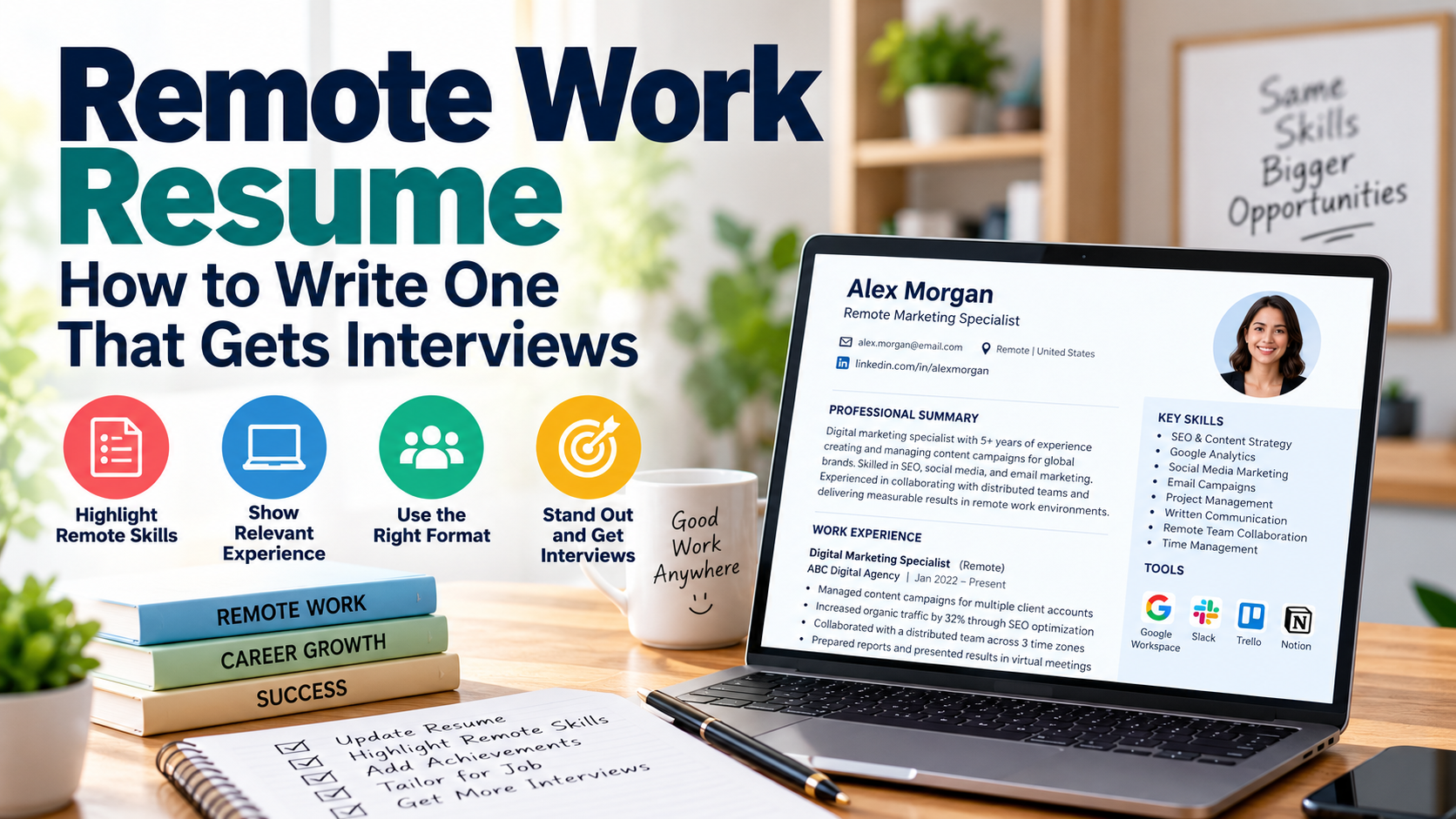
Many job seekers want the flexibility of working from home, but finding a remote job can be competitive. Employers are not simply looking for candidates who can perform a job. They also want people who can communicate clearly, manage their responsibilities independently, collaborate across locations, and remain productive without constant supervision.
Stay connected
Add us as a trusted source on Google
Get our latest guides, updates, and helpful resources surfaced more often when you search and browse.
Your resume should demonstrate those abilities.
A remote work resume is not necessarily a completely different document from a traditional resume. The main difference is how you present your experience, skills, and accomplishments to show that you can succeed in a remote or distributed working environment.
Whether you already have remote work experience or are applying for your first work-from-home position, you can build a resume that highlights your qualifications and remote-ready abilities.
In this guide, you’ll learn how to write a remote work resume, which skills employers value, how to describe remote experience, what to include when you have never worked remotely, and how to avoid common mistakes.
What Is a Remote Work Resume?
A remote work resume is a professional resume tailored to positions that allow employees to work outside a traditional office.
It includes the same essential sections as a regular resume, such as contact information, work experience, skills, and education.
However, it also emphasizes qualifications that matter in remote environments, including:
- Written and verbal communication
- Time management
- Self-motivation
- Independent problem-solving
- Digital collaboration
- Organization
- Accountability
- Adaptability
- Familiarity with remote work tools
- Experience working with distributed teams
The goal is not to fill your resume with remote-work keywords.
Instead, you should provide evidence that you can complete your responsibilities effectively while working independently and collaborating with others online.
Why Your Resume Matters When Applying for Remote Jobs
Remote positions can attract applicants from multiple cities, regions, or countries, depending on the employer’s hiring policies.
That means your resume may be competing against candidates with different levels of experience and backgrounds.
A well-written resume helps employers quickly understand:
- Whether you meet the job requirements
- Whether you have relevant experience
- Whether you can work independently
- Whether you communicate effectively
- Whether you understand remote collaboration
- Whether you can use the tools required for the role
- Whether you have delivered measurable results
Employers may use applicant tracking systems, or ATS software, to organize applications. Clear formatting and relevant terminology can help make your resume easier to process and review.
However, no particular resume format or keyword can guarantee that an employer will select you for an interview.
How to Write a Remote Work Resume Step by Step
The strongest remote resumes combine the qualifications needed for the job with evidence of effective independent and collaborative work.
Step 1: Read the Remote Job Description Carefully
Before writing your resume, study the job description.
Not every remote position has the same requirements.
For example, a remote customer support position may emphasize:
- Customer communication
- CRM software
- Ticket management
- Problem-solving
- Response times
- Documentation
A remote software developer position may emphasize:
- Programming languages
- Version control
- Code reviews
- Project management
- Technical documentation
- Collaboration with distributed engineering teams
Look for the required skills, responsibilities, software, experience level, and working arrangements.
Also check whether the position is fully remote, hybrid, location-restricted, or tied to specific working hours.
A remote job does not always mean you can work from any country or time zone.
Your resume should be tailored to the actual position rather than to the general idea of remote work.
Step 2: Choose a Clear Resume Format
Most remote job applicants can use a straightforward reverse-chronological resume.
This format typically includes:
- Contact information
- Professional summary
- Skills
- Work experience
- Education
- Relevant certifications or projects
Your most recent work experience appears first.
For career changers or candidates with limited experience, a combination resume may also be useful because it can emphasize relevant skills alongside employment history.
Avoid complicated layouts that make important information difficult to find.
Use clear section headings and consistent formatting.
A simple resume is usually easier for both recruiters and applicant tracking systems to review.
Step 3: Write a Professional Resume Header
Your resume header should include your essential contact information.
For example:
Alex Morgan
Digital Marketing Specialist
LinkedIn: linkedin.com/in/alexmorgan
Portfolio: alexmorganportfolio.com
City, State
You generally do not need to include your complete street address.
For remote positions, your city, state, or country may be relevant because some employers have geographic hiring restrictions.
Do not claim to live in another location simply to qualify for a position.
You may also include a professional portfolio, GitHub profile, or relevant website if it supports your application.
Step 4: Create a Remote-Focused Professional Summary
A professional summary is a short introduction that highlights your experience, relevant strengths, and qualifications.
For remote positions, you can mention remote experience when it is genuinely relevant.
Example for an Experienced Remote Worker
Digital marketing specialist with five years of experience managing content campaigns, SEO initiatives, and email marketing programs. Experienced in collaborating with distributed teams, coordinating projects through digital tools, and delivering measurable marketing results. Skilled in Google Analytics, project management, content strategy, and written communication.
Example for Someone Without Remote Experience
Customer service professional with three years of experience resolving customer concerns, maintaining accurate records, and managing multiple priorities. Strong written communication, problem-solving, and organizational skills, with experience using CRM systems and digital communication tools. Seeking to apply these strengths in a remote customer support role.
Notice that the second example does not falsely claim previous remote work.
Instead, it emphasizes skills that can transfer to a remote environment.
Step 5: Highlight Remote Work Skills
Remote employers often look for a combination of technical and professional skills.
However, the skills section should reflect the actual job requirements and your abilities.
Communication Skills
Remote teams frequently rely on written messages, video meetings, and shared documentation.
Relevant abilities include:
- Written communication
- Professional email communication
- Virtual presentations
- Active listening
- Meeting documentation
- Clear status updates
Time Management
Remote employees may need to manage their workload without constant supervision.
Examples include:
- Task prioritization
- Deadline management
- Scheduling
- Project planning
- Independent work
- Managing competing priorities
Digital Collaboration
Remote teams use online tools to coordinate work.
Relevant experience may include:
- Shared documents
- Project management systems
- Team messaging
- Video conferencing
- File sharing
- Collaborative planning
Problem-Solving
Working remotely may require you to investigate issues independently and know when to ask for help.
Examples include:
- Troubleshooting
- Research
- Analytical thinking
- Decision-making
- Process improvement
Adaptability
Remote work environments can change quickly.
You may need to learn new software, collaborate with colleagues across time zones, or adjust to different communication practices.
Include skills you can support with examples from your experience.
Step 6: Include Relevant Remote Work Tools
Many remote jobs require familiarity with specific software.
Examples include:
Communication: Slack, Microsoft Teams, Zoom, Google Meet
Project management: Asana, Trello, Jira, ClickUp
Document collaboration: Google Workspace, Microsoft 365, Notion
Customer support: Zendesk, Freshdesk, Intercom
Development: GitHub, GitLab, Jira
Design: Figma, Adobe Creative Cloud
Marketing: Google Analytics, WordPress, HubSpot
Do not add every popular remote work tool to your resume.
Include software you actually know how to use, especially when it appears in the job description.
Step 7: Describe Your Remote Work Experience
If you have previously worked remotely, make that experience clear.
For example:
Content Marketing Specialist — Remote
ABC Digital Agency | January 2022–Present
- Managed content production for multiple client websites while collaborating with a distributed marketing team.
- Coordinated editorial deadlines using Asana and shared Google Workspace documents.
- Increased organic traffic by 32% through content optimization and keyword research.
- Prepared weekly performance reports and communicated results during virtual client meetings.
- Maintained project documentation to support asynchronous collaboration.
These examples show both job-related accomplishments and remote working abilities.
They do more than simply state that the candidate worked from home.
Step 8: Focus on Achievements Instead of Responsibilities
A common resume mistake is describing only what you were responsible for.
Compare these examples.
Weak:
Responsible for managing customer support emails.
Stronger:
Resolved an average of 45 customer support requests daily while maintaining a 96% customer satisfaction rating.
The stronger example provides evidence of performance.
Another example:
Weak:
Worked remotely with team members.
Stronger:
Coordinated weekly project updates across a six-person distributed team and helped deliver all assigned milestones on schedule.
Use accurate numbers when available.
If you do not have measurable results, describe meaningful outcomes and responsibilities without inventing statistics.
Step 9: Demonstrate Independent Work
Employers want confidence that you can complete your work without constant supervision.
Your resume can demonstrate this through examples of:
- Managing projects independently
- Meeting deadlines
- Organizing schedules
- Solving problems
- Making appropriate decisions
- Reporting progress
- Taking ownership of assignments
For example:
Independently managed weekly content schedules for four client accounts while meeting publication deadlines.
Or:
Developed a documentation process that helped team members resolve recurring support issues more efficiently.
These statements show practical independence rather than simply claiming to be self-motivated.
Step 10: Show Your Communication Skills
Communication is particularly important in remote environments because colleagues may not share the same workspace or schedule.
Consider highlighting experience with:
- Written reports
- Client emails
- Online presentations
- Team documentation
- Cross-department collaboration
- Virtual meetings
- Stakeholder updates
For example:
Prepared concise weekly project updates for stakeholders across three departments, improving visibility into deadlines and outstanding tasks.
Even if this experience happened in an office, the underlying communication skill can be valuable in remote work.
Step 11: Add Relevant Projects
Projects can strengthen your resume when you have limited professional experience.
For example, a candidate seeking a remote web development position might include:
Personal Portfolio Website
- Designed and developed a responsive portfolio using HTML, CSS, and JavaScript.
- Managed the project independently from planning through deployment.
- Used GitHub for version control and project documentation.
- Tested functionality across desktop and mobile devices.
A candidate interested in remote digital marketing might include:
Content Marketing Project
- Developed a content plan for a personal website.
- Conducted keyword research and published search-focused articles.
- Monitored website performance using analytics tools.
- Documented improvements and lessons learned.
Personal projects should be clearly identified as projects rather than paid employment.
Step 12: Include Education and Certifications
Your education section should contain relevant qualifications.
Depending on your career level, this may include:
- Degree
- Diploma
- Professional certification
- Relevant training
- Technical coursework
For example:
Bachelor of Business Administration
University Name
Certifications
Google Analytics Certification
Project Management Fundamentals
Only include certifications you have actually earned.
A certification may help demonstrate knowledge, but it does not automatically replace the experience required for a position.
Step 13: Tailor Your Resume for Each Remote Job
Sending the same resume to every employer can reduce your chances of showing the most relevant qualifications.
Instead, compare your resume with the job description.
Ask:
- Does my summary reflect the target role?
- Have I included the most relevant skills?
- Are my strongest accomplishments easy to find?
- Have I demonstrated independence and communication?
- Do I have experience with the required software?
- Have I removed unnecessary information?
For example, a remote customer support position may require a different emphasis from a remote operations coordinator position, even if you have experience relevant to both.
You don’t need to rewrite your entire resume for every application.
Often, adjusting your summary, skills, and most relevant accomplishment bullets is enough.
Remote Work Resume Example
The following sample shows how a candidate might present experience for a remote customer support position.
Alex Morgan
Customer Support Specialist
LinkedIn: linkedin.com/in/alexmorgan
Professional Summary
Customer support professional with four years of experience handling customer inquiries, resolving technical issues, and maintaining service quality. Skilled in written communication, CRM systems, ticket management, and independent problem-solving. Experienced in collaborating with distributed teams and managing customer requests through digital support platforms.
Key Skills
- Customer Support
- Email and Chat Support
- Zendesk
- CRM Management
- Written Communication
- Time Management
- Problem-Solving
- Documentation
- Microsoft Teams
- Google Workspace
Professional Experience
Customer Support Specialist — Remote
ABC Services | 2022–Present
- Resolved customer inquiries through email and live chat while maintaining service quality targets.
- Managed an average of 40 support tickets per day using Zendesk.
- Collaborated with colleagues across different locations to resolve complex issues.
- Created internal support documentation to reduce repeated troubleshooting.
- Maintained accurate customer records and provided timely case updates.
Customer Service Representative
XYZ Company | 2020–2022
- Assisted customers with account questions, product information, and service requests.
- Recorded customer interactions using CRM software.
- Escalated complex cases to appropriate departments.
- Maintained professional communication across phone and email channels.
Education
Bachelor of Arts
University Name
Certifications
Customer Service Fundamentals
Google Workspace Training
This is a fictional example. Replace the names, dates, qualifications, and accomplishments with your own information.
How to Write a Remote Work Resume Without Remote Experience
You do not need to have worked from home previously to apply for a remote job.
Many skills developed in traditional workplaces can transfer to remote environments.
For example, consider someone who works in an office and regularly:
- Manages deadlines independently
- Communicates through email
- Uses cloud-based software
- Coordinates projects
- Prepares documentation
- Resolves problems
- Works with colleagues in different locations
These experiences can help demonstrate remote readiness.
Emphasize Transferable Skills
Focus on skills relevant to remote work, such as:
- Written communication
- Organization
- Time management
- Technical proficiency
- Self-management
- Problem-solving
- Collaboration
Highlight Digital Tools
If you already use tools such as Google Workspace, Microsoft Teams, project management software, or CRM systems, include them when relevant.
Include Independent Projects
Personal projects, freelance assignments, volunteer work, and coursework can provide evidence of independent work.
Be Honest About Your Experience
Don’t label a traditional office position as remote.
Instead, describe the relevant abilities you developed in that role.
Demonstrate Your Ability to Learn
Employers may value candidates who can quickly learn new tools and adapt to changing workflows.
Use specific examples when possible.
Best Resume Format for Remote Jobs
There is no universal resume format required for remote positions.
However, a clean, easy-to-read document is generally a good choice.
Consider these formatting practices:
- Use standard section headings.
- Choose a readable font.
- Maintain consistent spacing.
- Use concise bullet points.
- Avoid unnecessary graphics.
- Keep contact information easy to find.
- Use clear job titles and employment dates.
- Follow the employer’s file-format instructions.
For many applicants, a one- or two-page resume is appropriate, depending on relevant experience.
Don’t force substantial accomplishments onto one page if doing so makes the document difficult to read.
Should You Put “Remote” in Your Resume Headline?
You can mention remote work when it adds useful information.
For example:
Customer Support Specialist | Remote Support Experience
Or:
Software Developer | Distributed Team Collaboration
However, your professional identity should usually remain focused on the actual job you perform.
A headline such as:
Looking for Work From Home
does not communicate your professional qualifications as effectively.
Employers want to understand what you can contribute, not only where you want to work.
Should You Include Your Location on a Remote Resume?
Usually, including your city, region, or country is sufficient.
Some remote employers hire only within specific countries, states, or time zones.
Others allow broader geographic flexibility.
Read the job posting carefully.
If a company requires employees to live in a particular location, do not misrepresent your residence.
You generally do not need to provide your complete residential address on your resume.
Common Remote Work Resume Mistakes
1. Focusing Only on Wanting to Work From Home
Remote flexibility may be an important reason you’re applying, but your resume should primarily explain why you’re qualified for the work.
2. Claiming Remote Experience You Don’t Have
Never describe an office-based job as remote simply to appear more competitive.
3. Listing Too Many Tools
Only include software you understand and can discuss confidently.
4. Using Generic Skills Without Evidence
Words such as “hardworking,” “motivated,” and “excellent communicator” are more convincing when supported by accomplishments.
5. Ignoring the Job Description
A remote marketing role and a remote customer support role require different qualifications.
Tailor your resume accordingly.
6. Using Complicated Formatting
Unnecessary columns, icons, text boxes, and graphics can make your resume harder to review.
7. Including Irrelevant Experience in Too Much Detail
Focus on the responsibilities and achievements most relevant to the position.
8. Forgetting About Time Zones and Location Requirements
Some positions require employees to work specific hours or live within particular geographic areas.
Check these requirements before applying.
9. Adding Fake Metrics
Never invent productivity improvements, customer satisfaction scores, or project results.
Use real achievements or describe meaningful work without numbers.
10. Forgetting to Proofread
Remote positions may involve substantial written communication.
Spelling errors, unclear sentences, and inconsistent formatting can weaken your application.
How to Make Your Remote Resume ATS-Friendly
An applicant tracking system helps employers collect and organize applications.
To keep your resume straightforward:
- Use standard headings such as Work Experience, Skills, and Education.
- Include relevant terminology from the job description naturally.
- Avoid keyword stuffing.
- Use consistent employment dates.
- Keep your work history easy to understand.
- Follow the requested document format.
- Avoid placing essential information inside complicated graphics.
Remember that ATS systems vary. No single format guarantees compatibility with every employer’s software.
What to Do After Creating Your Remote Work Resume
Once your resume is ready, you can begin applying for suitable remote positions.
But don’t rely only on submitting applications.
You should also:
Update Your LinkedIn Profile
Make sure your profile reflects your skills, experience, and career interests.
Prepare a Relevant Portfolio
If your field benefits from work samples, create a portfolio that demonstrates your abilities.
Research Employers
Check whether the company is legitimate and whether the job advertisement matches information from official sources.
Prepare for Remote Interviews
Practice using video conferencing software, explaining your experience, and discussing how you manage work independently.
Track Applications
Maintain a simple record of the companies, positions, application dates, and follow-up actions.
Watch for Job Scams
Be cautious about employers requesting upfront payments, sensitive financial information, or unusual communication arrangements.
Legitimate remote opportunities should be evaluated carefully, just like traditional jobs.
Remote Work Resume Checklist
Before sending your application, confirm that:
- Your resume matches the target job.
- Your contact information is correct.
- Your professional summary highlights relevant strengths.
- Your skills reflect actual abilities.
- Your work experience includes meaningful accomplishments.
- Your remote experience is clearly identified when applicable.
- Your transferable skills are easy to find.
- Relevant software is included.
- Employment dates are consistent.
- Your location information is accurate.
- The formatting is easy to read.
- The document follows application instructions.
- You have checked spelling and grammar.
- You have removed irrelevant information.
- You have saved the correct final version.
A final review can help you catch mistakes before an employer sees your application.
Frequently Asked Questions
What Should I Put on My Resume for Remote Work?
Include your relevant professional experience, technical skills, communication abilities, time management, digital collaboration tools, and accomplishments. If you have remote experience, identify it clearly.
How Do I Write a Resume for a Remote Job With No Experience?
Focus on transferable skills, relevant projects, digital tools, education, internships, and examples of independent work. You don’t need to claim previous remote experience to demonstrate remote readiness.
Should I Mention Remote Work on My Resume?
Yes, when relevant. You can identify remote positions in your work history and describe how you collaborated, communicated, and completed responsibilities in a distributed environment.
What Skills Are Important for Remote Jobs?
Common skills include communication, time management, organization, problem-solving, independent work, digital collaboration, adaptability, and job-specific technical abilities.
Can I Use My Regular Resume for Remote Jobs?
Yes, but tailoring it is recommended. Emphasize the skills, experience, tools, and accomplishments most relevant to the remote position.
Should I Include Zoom and Slack on My Resume?
Include them if you have experience using them and they are relevant to the job. Prioritize the tools employers actually request.
How Long Should a Remote Work Resume Be?
For many candidates, one or two pages are appropriate. The ideal length depends on your experience and how much relevant information you need to communicate.
Do Remote Employers Care About Location?
Some do. Remote jobs may have country, state, legal, tax, or time-zone restrictions. Always review the employer’s eligibility requirements.
Do I Need a Cover Letter for a Remote Job?
Not every employer requires one. When requested or useful, a tailored cover letter can explain your interest in the position and highlight relevant remote-ready skills.
Final Thoughts
A strong remote work resume does more than communicate your interest in working from home.
It shows employers that you have the professional qualifications, communication skills, technical abilities, and independence needed to succeed in the position.
Start with the job description. Identify the skills and experience that matter most, then organize your resume around those qualifications.
If you already have remote experience, demonstrate how you worked with distributed teams and delivered results.
If you’re applying for your first remote job, focus on transferable skills, relevant digital tools, and examples of independent work.
Above all, keep your resume accurate, readable, and tailored to the opportunity.
The strongest resume isn’t the one with the most remote-work keywords. It’s the one that clearly explains why you’re qualified for the job.