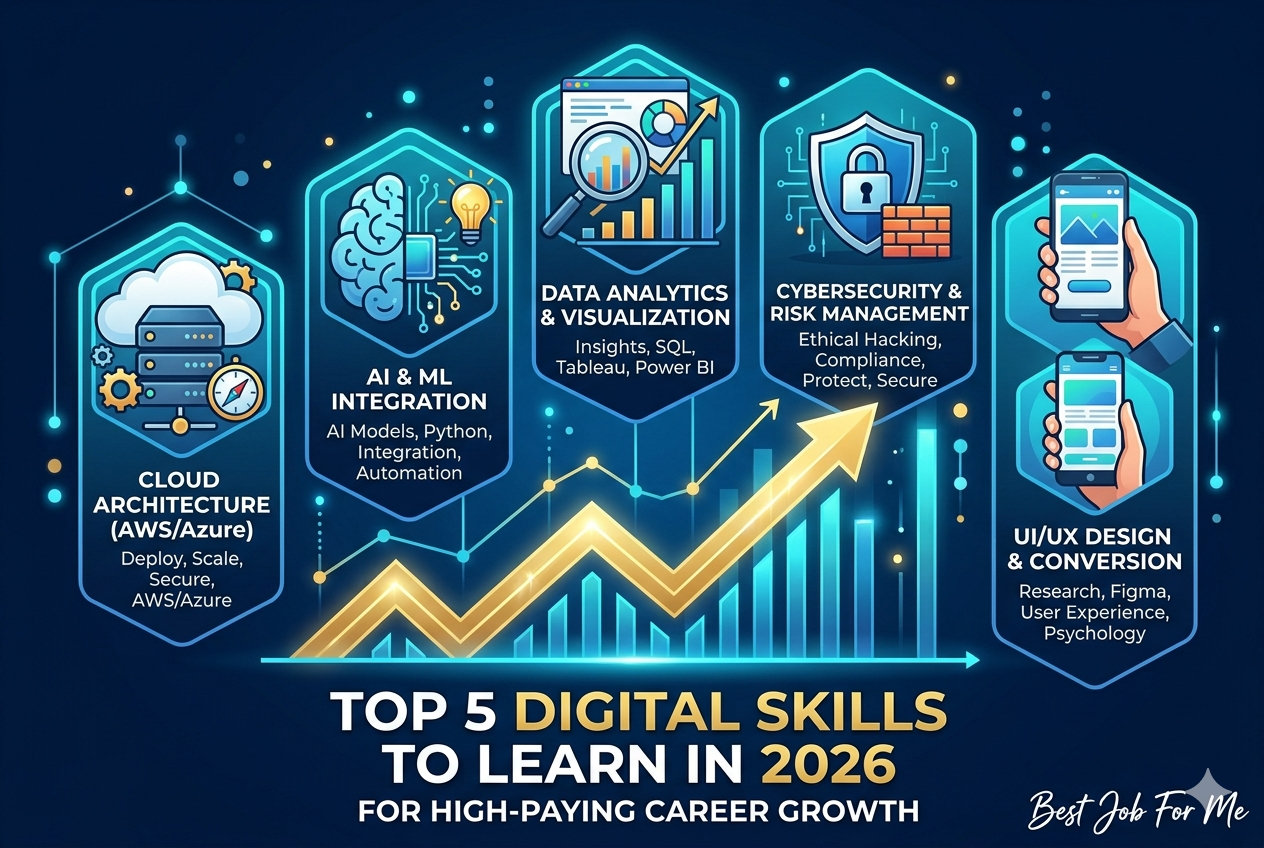
Top 5 Digital Skills to Learn in 2026 for High-Paying Career Growth
Technology is changing the way people work. Many companies now look for people with digital skills instead of only traditional qualifications. Whether you are a student, fresher, or working professional, learning the right digital skills can help you get better job opportunities and higher salaries.
Stay connected
Add us as a trusted source on Google
Get our latest guides, updates, and helpful resources surfaced more often when you search and browse.
The good news is that you don’t need to learn everything. By focusing on the right skills, you can improve your career and stay ahead in the job market.
Here are the top 5 digital skills you should consider learning in 2026.
1. Web Development and Cloud Computing
Websites and online applications are used by almost every business today. Companies need skilled developers who can build, manage, and improve these systems.
What You Should Learn
PHP and Modern Frameworks
PHP is still one of the most popular programming languages. It powers WordPress and many business websites.
Learning PHP and frameworks like Laravel can help you build secure and professional web applications.
Cloud Computing
Many businesses now store their data and applications on cloud platforms instead of physical servers.
Popular cloud platforms include:
- Amazon Web Services (AWS)
- Microsoft Azure
- Google Cloud
Learning cloud basics can increase your job opportunities and salary potential.
2. Artificial Intelligence (AI)
Artificial Intelligence is becoming a part of everyday business operations. Companies use AI for customer support, content creation, data analysis, and automation.
What You Should Learn
AI Tools and Integration
Learn how businesses use AI tools to improve productivity and save time.
Understanding AI applications can help you work smarter and stay competitive.
Python Programming
Python is one of the most popular programming languages used in AI and data science.
Focus on learning:
- Basic Python
- Data handling
- Automation
- AI fundamentals
Python skills are useful in many industries, not just AI.
3. Data Analytics
Businesses collect huge amounts of data every day. They need people who can understand that data and help make better decisions.
What You Should Learn
SQL
SQL helps you work with databases and find important information quickly.
It is one of the most valuable skills for data-related jobs.
Data Visualization
Data is easier to understand when it is shown in charts and reports.
Popular tools include:
- Power BI
- Tableau
- Google Looker Studio
These tools help businesses turn data into useful insights.
4. Cybersecurity
As more businesses move online, protecting data has become very important. Cybersecurity professionals help companies keep their systems safe from hackers and cyber attacks.
What You Should Learn
Security Basics
Learn about:
- Network security
- Password protection
- Data security
- Threat detection
Security Compliance
Many companies must follow rules to protect customer information.
Understanding security standards and data protection practices can make you a valuable employee.
5. UI/UX Design
A website or app should not only work properly but also be easy and enjoyable to use.
UI (User Interface) and UX (User Experience) design help create better experiences for users.
What You Should Learn
User Research
Learn how users interact with websites and applications.
This includes:
- User testing
- Customer feedback
- User behavior analysis
Figma
Figma is one of the most popular design tools used by designers and developers.
With Figma, you can:
- Design websites
- Create app layouts
- Build prototypes
- Work with development teams
Final Thoughts
Learning digital skills is one of the best investments you can make in your career. You do not need to master all five skills at once. Choose one area that interests you and start learning step by step.
Build projects, practice regularly, and create a portfolio to show your skills. Employers often value practical skills and real projects more than certificates alone.
The sooner you start learning, the better prepared you’ll be for the job opportunities of 2026 and beyond.