How to Write a Cover Letter That Gets You Interviews
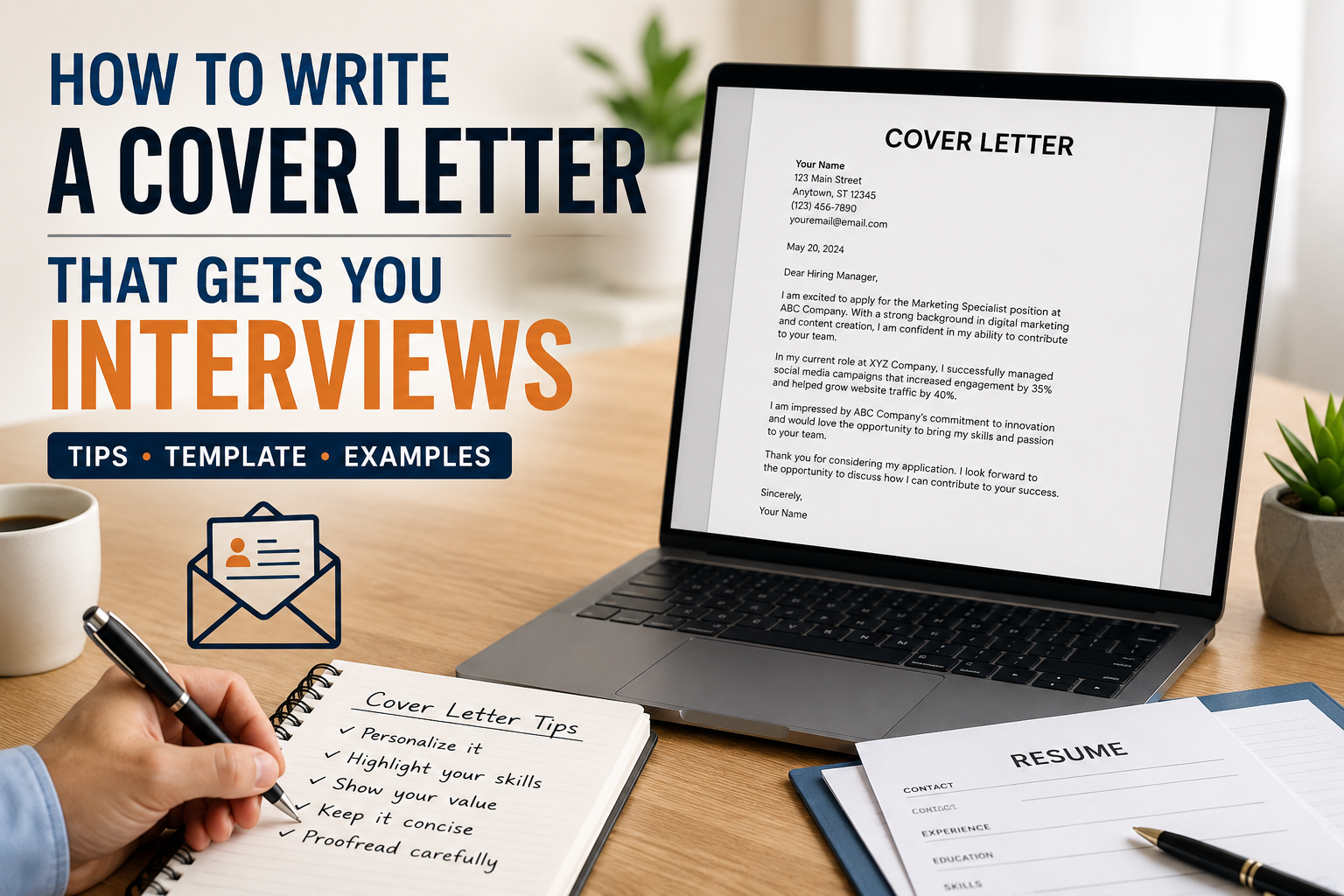
Finding the right job is competitive, and a great resume alone isn’t always enough. Many employers still ask applicants to submit a cover letter because it helps them understand who you are, why you’re interested in the role, and what makes you a good fit.
A well-written cover letter can increase your chances of getting an interview by showing your personality, communication skills, and enthusiasm for the job.
Before writing your cover letter, make sure your resume is ready. If you’re creating your first resume, read our guide on How to Write a Resume with No Experience to build a strong foundation.
What Is a Cover Letter?
A cover letter is a one-page document sent with your resume when applying for a job. It introduces you to the employer and explains why you’re the right candidate for the position.
Unlike your resume, which lists your education and experience, a cover letter allows you to explain how your skills and achievements match the employer’s requirements.
A good cover letter should:
- Introduce yourself professionally.
- Mention the job you’re applying for.
- Explain why you’re interested in the company.
- Highlight your most relevant skills.
- Encourage the employer to invite you for an interview.
Why Is a Cover Letter Important?
Hiring managers often receive hundreds of applications for a single position. A personalized cover letter helps your application stand out.
A strong cover letter can:
- Show genuine interest in the company.
- Demonstrate your communication skills.
- Explain employment gaps or career changes.
- Highlight achievements not included in your resume.
- Create a memorable first impression.
Example
Instead of writing:
I am applying for the Customer Service Representative position.
Write:
I am excited to apply for the Customer Service Representative position because I enjoy helping customers solve problems and creating positive experiences that build long-term relationships.
The second example immediately tells the employer why you’re interested and what value you can bring.
How to Structure a Cover Letter
Following a professional structure makes your cover letter easier to read.
1. Contact Information
Include:
- Full Name
- Phone Number
- Professional Email Address
- LinkedIn Profile (optional)
- City and State (optional)
2. Greeting
Whenever possible, address the hiring manager by name.
Examples:
- Dear Hiring Manager,
- Dear Ms. Taylor,
- Dear Mr. Johnson,
Avoid:
- To Whom It May Concern
3. Write a Strong Introduction
Mention the job you’re applying for and explain why you’re interested.
Example
I am excited to apply for the Marketing Assistant position at ABC Company. After learning about your innovative marketing campaigns, I believe my creativity and digital marketing skills make me a strong candidate for your team.
4. Highlight Your Skills and Experience
This section should explain why you’re qualified.
Instead of listing responsibilities, focus on achievements.
Example
Instead of saying:
I worked in retail.
Write:
While working as a Retail Sales Associate, I consistently exceeded monthly sales goals by providing excellent customer service and recommending products that matched customers’ needs.
Adding numbers makes your achievements more convincing.
Examples:
- Increased online sales by 18%.
- Managed more than 80 customer inquiries every day.
- Improved customer satisfaction ratings by 20%.
If you’re wondering which skills employers value most, read our guide on Problem-Solving Skills: Why They Matter and How to Improve Them. Developing these skills can strengthen both your resume and your cover letter.
5. Explain Why You Want to Work There
Research the company before applying.
Mention something specific that interests you.
Example
I admire your company’s commitment to innovation and customer satisfaction. I would be excited to contribute my skills while continuing to grow professionally with your team.
6. End with Confidence
Finish your cover letter by thanking the employer and expressing interest in an interview.
Example
Thank you for considering my application. I appreciate your time and would welcome the opportunity to discuss how my experience and skills can contribute to your organization.
Sincerely,
Your Name
Simple Cover Letter Template
Dear Hiring Manager,
I am writing to apply for the [Job Title] position at [Company Name].
My experience in [Industry or Skill] has helped me develop strong communication, teamwork, and problem-solving skills. I believe these qualities would allow me to contribute positively to your organization.
I am particularly interested in working for your company because of its reputation for [Reason].
Thank you for your time and consideration. I look forward to discussing my qualifications with you.
Sincerely,
Your Name
Cover Letter Example for Freshers
Dear Hiring Manager,
I am excited to apply for the Junior Software Developer position at XYZ Technologies.
Although I recently graduated, I have completed several academic and personal projects using HTML, CSS, JavaScript, and WordPress. These projects strengthened my programming, teamwork, and problem-solving skills.
I am eager to begin my professional career and believe my willingness to learn and dedication make me a valuable addition to your team.
Thank you for considering my application. I look forward to hearing from you.
Sincerely,
John Smith
Common Cover Letter Mistakes
Avoid these mistakes:
Using the Same Cover Letter for Every Job
Always customize your cover letter for each company.
Repeating Your Resume
Your cover letter should explain your achievements, not copy your resume word for word.
Writing Too Much
Keep your cover letter between 250 and 400 words.
Ignoring the Employer’s Needs
Explain how your skills will help the company succeed.
Spelling and Grammar Errors
Always proofread before sending your application.
Tips for Writing a Better Cover Letter
- Read the job description carefully.
- Match your skills with the employer’s requirements.
- Keep the letter to one page.
- Use clear and professional language.
- Include measurable achievements whenever possible.
- Research the company before applying.
- Save the document as a PDF unless instructed otherwise.
Can AI Help You Write a Cover Letter?
AI writing tools can help you organize your ideas, improve grammar, and create a professional first draft. However, your cover letter should always reflect your own experience and personality.
Once your application is ready, prepare for the interview by practicing common questions like How to Answer “Tell Me About Yourself” and How to Answer “Why Should We Hire You?”. Being prepared can boost your confidence and improve your chances of getting hired.
Final Thoughts
A strong cover letter gives employers a better understanding of who you are and why you’re the right person for the job. By customizing each cover letter, highlighting your achievements, and showing genuine interest in the company, you’ll improve your chances of getting an interview.
Remember, your resume gets you noticed, your cover letter tells your story, and your interview performance helps you secure the job. Taking time to prepare each step carefully can make a big difference in your job search.
Frequently Asked Questions
Do I need a cover letter if the employer doesn’t ask for one?
If there’s an option to upload a cover letter, it’s usually a good idea to include one. It can help your application stand out.
How long should a cover letter be?
Keep it between 250 and 400 words, and aim to fit everything on one page.
Can I use the same cover letter for every job?
No. Customize your cover letter for each employer to improve your chances of success.
What should I include if I have no work experience?
Highlight your education, internships, volunteer work, certifications, personal projects, and transferable skills.
Should my cover letter match my resume?
Yes. Your resume and cover letter should complement each other. The cover letter should provide additional context instead of repeating your resume.
Helpful Resources
Internal Articles
- Resume Writing: https://bestjobforme.com/how-to-write-a-resume-with-no-experience/
- Interview Preparation: https://bestjobforme.com/category/interview-prep/
- Skill Development: https://bestjobforme.com/category/skill-development/
External Resources
- LinkedIn Career Advice: https://www.linkedin.com/advice/
- Indeed Career Guide: https://www.indeed.com/career-advice