How to Change Careers: A Step-by-Step Guide to Starting a New Career
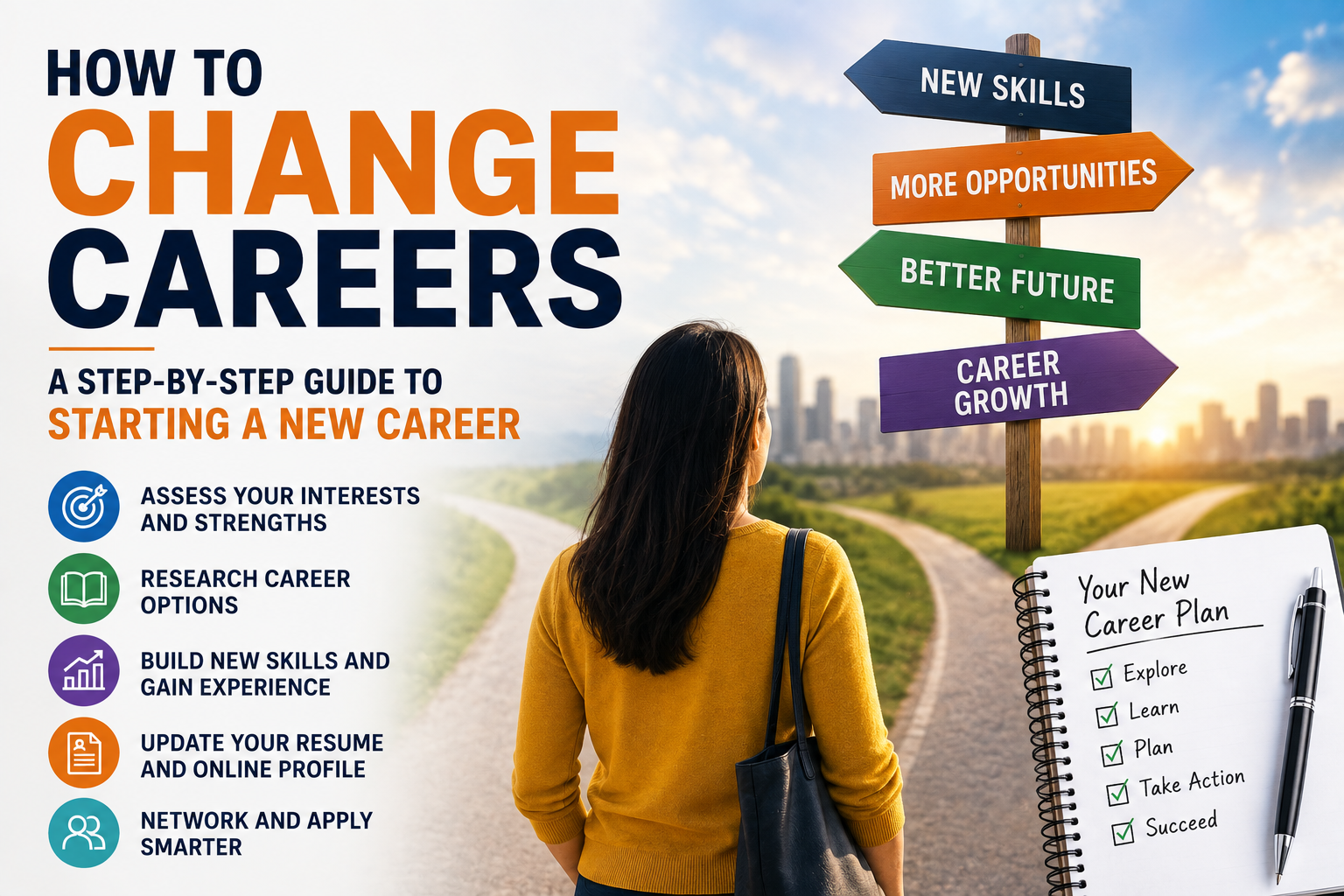
Changing careers can feel intimidating, especially when you’ve spent years building experience in one profession. You may worry about starting over, taking a pay cut, learning unfamiliar skills, or explaining your decision to employers.
Stay connected
Add us as a trusted source on Google
Get our latest guides, updates, and helpful resources surfaced more often when you search and browse.
But a career change doesn’t necessarily mean throwing away everything you’ve already accomplished.
Many of the skills you’ve developed—communication, leadership, problem-solving, organization, customer service, technical knowledge, or project management—can transfer to a new profession. The key is understanding what you already bring to the table and identifying what you still need to learn.
Whether you’re unhappy in your current profession, looking for better opportunities, or simply ready for something different, a successful career change usually starts with a plan.
This guide explains how to change careers step by step, from deciding whether a change is right for you to building new skills, updating your resume, and applying for your first position in a new field.
How Do You Know It’s Time for a Career Change?
Having a difficult week at work doesn’t necessarily mean you need an entirely new career.
Sometimes the real problem is your employer, manager, workload, salary, schedule, or workplace culture rather than the profession itself.
Before making a major decision, ask yourself what you actually want to change.
Consider questions such as:
- Do I still enjoy the work itself?
- Am I learning anything new?
- Do I see opportunities for growth?
- Does this career fit the lifestyle I want?
- Am I interested in another profession?
- Would changing employers solve most of my problems?
- Have I felt this way for several months or only recently?
- What would I like my work to look like in the future?
Your answers can help you distinguish between needing a new job and needing a new career.
Step 1: Understand Why You Want to Change Careers
Don’t begin your career change by immediately searching job boards.
Start by identifying what isn’t working.
Write down what you dislike about your current situation.
For example:
- Limited career growth
- Low earning potential
- Lack of interest in the work
- Poor work-life balance
- Few opportunities in your industry
- Desire for remote work
- Interest in another profession
- Changing personal priorities
Then create a second list describing what you want from your next career.
Perhaps you want:
- More flexibility
- Higher earning potential
- Creative work
- Greater stability
- More meaningful responsibilities
- Technical challenges
- Opportunities to work remotely
- Better advancement opportunities
This exercise helps prevent you from moving into a different profession that creates the same problems.
Step 2: Identify Your Transferable Skills
One of the biggest misconceptions about changing careers is that you have to start from zero.
You don’t.
Your previous career has already helped you develop valuable skills.
What Are Transferable Skills?
Transferable skills are abilities that can be useful across different jobs and industries.
Examples include:
- Communication
- Leadership
- Problem-solving
- Critical thinking
- Project management
- Customer service
- Sales
- Writing
- Research
- Data analysis
- Organization
- Teamwork
- Negotiation
- Time management
Suppose you’ve spent five years working in retail management and want to move into customer success.
You may not have held the title “Customer Success Manager,” but you probably already have experience handling customer problems, training employees, resolving complaints, tracking performance, and communicating with different types of people.
Those abilities still have value.
Your challenge is learning how to present them in a way that makes sense for your new profession.
Step 3: Research Career Options Before Choosing One
Don’t switch careers simply because another profession sounds exciting.
Research it first.
Try to understand:
- Typical responsibilities
- Required skills
- Entry-level requirements
- Career progression
- Salary ranges
- Work environment
- Education requirements
- Industry outlook
- Common challenges
Read actual job descriptions.
If ten employers hiring for the same position repeatedly request the same three skills, you’ve discovered something important about the market.
You can also speak with people already working in the profession.
Ask them what they actually do during a normal workday, what they enjoy, what they find difficult, and what they wish they had known before entering the field.
The goal isn’t to find a perfect career.
It’s to make a more informed decision.
Step 4: Compare Your Current Skills With Your Target Career
Once you’ve chosen a possible career direction, perform a simple skills-gap analysis.
Create two lists.
Skills You Already Have
Include relevant:
- Technical skills
- Soft skills
- Industry knowledge
- Certifications
- Management experience
- Projects
- Achievements
Skills You Need to Develop
Review job descriptions for your target role and identify requirements that appear repeatedly.
Then divide those skills into three groups:
Already have
Can learn relatively quickly
Requires significant training or education
This gives you a realistic picture of how difficult the transition may be.
You may discover that you’re much closer to being qualified than you expected.
Step 5: Learn the Skills You Actually Need
Career changers sometimes make the mistake of collecting courses and certifications without knowing whether employers value them.
Start with job descriptions.
Identify the skills employers consistently request and prioritize those.
Depending on your target career, you might learn through:
- Online courses
- Certifications
- Books
- Workshops
- Professional training
- Personal projects
- Freelance projects
- Volunteer work
- Mentorship
- Hands-on practice
Don’t confuse completing courses with becoming job-ready.
Knowledge becomes much more valuable when you can demonstrate how you’ve applied it.
Step 6: Build Proof of Your New Skills
Imagine two candidates applying for an entry-level digital marketing position.
Candidate A says:
“I completed three digital marketing courses.”
Candidate B says:
“I created and managed a small content campaign, performed keyword research, tracked traffic, and documented the results.”
Candidate B has something employers can evaluate.
Whenever possible, turn your learning into evidence.
Depending on your profession, that could include:
- Portfolio projects
- GitHub repositories
- Case studies
- Websites
- Writing samples
- Design projects
- Data analysis projects
- Marketing campaigns
- Volunteer projects
- Freelance work
You don’t necessarily need a company to give you permission to start building experience.
Create opportunities to practice.
Step 7: Gain Experience Before Leaving Your Current Career
If possible, don’t make your transition unnecessarily risky.
You may be able to explore your new profession while keeping your current income.
Consider:
- Freelancing
- Volunteering
- Part-time work
- Personal projects
- Shadowing professionals
- Helping a small business
- Taking on related responsibilities at your current company
This lets you answer an important question:
Do I actually enjoy this work?
A career can look very different from the outside.
Testing it before making a complete transition can help you avoid another mismatch.
Step 8: Build Connections in Your New Industry
Networking becomes particularly valuable when you’re changing careers.
People in your target industry can help you understand:
- Which skills matter most
- How companies hire
- Common entry points
- Industry terminology
- Certifications worth pursuing
- Mistakes beginners make
You don’t need to ask strangers for jobs.
Start by having conversations.
Connect with:
- Former colleagues
- Alumni
- Professional groups
- Industry communities
- People you meet at events
- Professionals on LinkedIn
Ask thoughtful questions and learn from their experience.
Over time, these relationships can also help you discover opportunities that aren’t obvious from job boards alone.
Step 9: Rewrite Your Resume for Your New Career
Don’t send the same resume you used in your old profession.
A career-change resume should help employers quickly understand why your previous experience is relevant.
Update Your Professional Summary
Your summary should introduce the direction you’re moving toward.
Instead of focusing only on your previous job title, highlight transferable strengths and relevant new skills.
For example:
Customer-focused retail manager transitioning into customer success, with experience leading teams, resolving complex customer issues, improving service processes, and building long-term customer relationships.
This immediately explains the connection.
Prioritize Relevant Skills
Your resume should emphasize skills that matter in your target profession.
Don’t hide your previous experience, but don’t allow irrelevant responsibilities to dominate the page.
Rewrite Your Accomplishments
Look at your previous work through the perspective of your new employer.
Instead of:
Managed retail store employees.
You might write:
Led and coached a 12-person team, coordinated schedules, resolved customer escalations, and monitored performance against monthly targets.
The facts haven’t changed.
The presentation makes the transferable value clearer.
If you have limited direct experience in your new profession, your projects, certifications, freelance work, and relevant achievements can become especially important.
Step 10: Prepare to Explain Your Career Change
Employers will probably ask why you’re changing careers.
Prepare a positive, concise explanation.
Avoid spending your answer criticizing your previous profession.
Instead, focus on what attracted you to the new one.
A strong structure is:
Past experience → reason for change → preparation → future direction
For example:
“My background is in operations, where I developed strong analytical and project-management skills. Over time, I became increasingly interested in data analysis because I enjoyed using data to identify problems and improve processes. I’ve since completed additional training and built several analysis projects to strengthen my technical skills. I’m now looking for an opportunity where I can combine my business experience with those new analytical abilities.”
This tells a logical story.
Step 11: Apply Strategically
Career changers often face a difficult temptation: applying to everything.
A targeted approach is usually better.
Look for roles where your existing experience gives you an advantage.
For example:
Teacher → Corporate Trainer
Teaching experience transfers naturally into training and development.
Sales Representative → Customer Success
Both involve communication, relationships, and understanding customer needs.
Journalist → Content Marketing
Writing, research, interviewing, and storytelling are directly relevant.
Accountant → Data Analyst
Analytical thinking, spreadsheets, reporting, and working with numbers provide a useful foundation.
The easiest career changes often happen between professions that share important skills.
Step 12: Be Realistic About Your First Job in the New Field
Your first position after a career change may not be your ideal job.
You might need to accept:
- A more junior title
- Different responsibilities
- Additional training
- A temporary salary adjustment
- A smaller company
- Contract or freelance work
That doesn’t mean the career change failed.
Think about where the position can take you.
Sometimes a strategic step sideways—or even slightly backward—creates much stronger long-term opportunities.
Should You Quit Your Job Before Changing Careers?
There isn’t one answer for everyone.
If possible, maintaining your current income while preparing for a transition can reduce financial pressure.
Before resigning, consider:
- Your savings
- Monthly expenses
- Family responsibilities
- Training costs
- Expected job-search duration
- Health insurance or other benefits
- Whether you can learn while employed
A financial cushion gives you more freedom to choose the right opportunity instead of accepting the first offer because you urgently need income.
If your situation allows it, build skills and begin applying before leaving your current position.
How Long Does a Career Change Take?
There is no standard timeline.
Some career transitions can happen relatively quickly because the professions share similar skills.
Others require substantial training, certification, education, or experience.
The timeline depends on:
- Your current experience
- Your target profession
- Required qualifications
- Time available for learning
- Financial situation
- Job-market conditions
- Professional network
Instead of asking only, “How quickly can I change careers?” ask:
“What do I need to demonstrate before an employer will consider me qualified?”
Then work backward from that answer.
Common Career Change Mistakes
Changing Careers Without Research
Don’t choose a profession based only on salary, popularity, or what you see online.
Understand what the work actually involves.
Quitting Too Early
Leaving your income before you’ve built skills or tested your new career can create unnecessary pressure.
Ignoring Transferable Skills
Your previous experience isn’t wasted.
Learn how to translate it.
Collecting Certifications Without Building Experience
Certificates can support your application, but practical evidence is often much more convincing.
Applying Only to Senior Positions
Your previous seniority may not transfer directly into a completely different profession.
Be realistic about where you can enter.
Using Your Old Resume
Your resume needs to tell the story of where you’re going, not just where you’ve been.
Expecting Immediate Results
Changing careers takes patience.
Rejection doesn’t necessarily mean you’ve chosen the wrong direction. It may simply reveal another skill, experience, or positioning gap you need to address.
Frequently Asked Questions
Is it too late to change careers?
There isn’t one age at which changing careers automatically becomes impossible. The more useful question is whether you can realistically acquire the skills, qualifications, experience, and financial flexibility required for your target profession.
Can I change careers without going back to college?
Yes, depending on the profession. Some careers require specific degrees or licenses, while others place greater emphasis on skills, certifications, portfolios, and practical experience. Research the actual requirements before committing to another degree.
How do I change careers with no experience?
Start by identifying transferable skills and building relevant experience through projects, freelancing, volunteering, certifications, or related responsibilities. Your goal is to create evidence that you can perform the new type of work.
Should I take a pay cut to change careers?
Sometimes a temporary pay cut can make sense if the new career offers stronger long-term opportunities, better working conditions, or greater satisfaction. Consider your financial situation and long-term earning potential before deciding.
How do I explain a career change in an interview?
Keep your explanation positive. Briefly discuss your previous experience, what attracted you to the new profession, what you’ve done to prepare, and how your existing skills can help you succeed.
Should I mention my career change in my resume?
Your resume should make the transition understandable. A strong professional summary, relevant skills, projects, and carefully written accomplishments can help employers see how your previous experience connects with your new direction.
Final Thoughts
Learning how to change careers isn’t about forgetting your previous experience and starting your professional life again from zero.
It’s about building a bridge between what you already know and where you want to go next.
Start by understanding why you want a change. Research your target profession, identify your transferable skills, close the most important skill gaps, and create evidence that you can perform the new work.
Then update your resume and interview story so employers can understand the connection.
A successful career change rarely happens through one dramatic decision. More often, it happens through a series of deliberate steps: learning one skill, completing one project, making one connection, and applying for one carefully chosen opportunity at a time.
You don’t need to have your entire future figured out before you begin.
You simply need a clear enough direction to take the next useful step.