Communication Skills: Why They Matter and How to Improve Them
Have you ever had a great idea but struggled to explain it clearly? Or maybe you’ve misunderstood instructions because of poor communication.
Stay connected
Add us as a trusted source on Google
Get our latest guides, updates, and helpful resources surfaced more often when you search and browse.
Communication is something we do every day, whether we’re talking to a friend, writing an email, attending a meeting, or interviewing for a new job.
Strong communication skills can help you build better relationships, perform well at work, and create new career opportunities. In fact, many employers consider communication one of the most important skills they look for when hiring.
The good news is that communication is a skill that anyone can improve with practice.
In this guide, you’ll learn what communication skills are, why they matter, and practical ways to become a better communicator.
What Are Communication Skills?
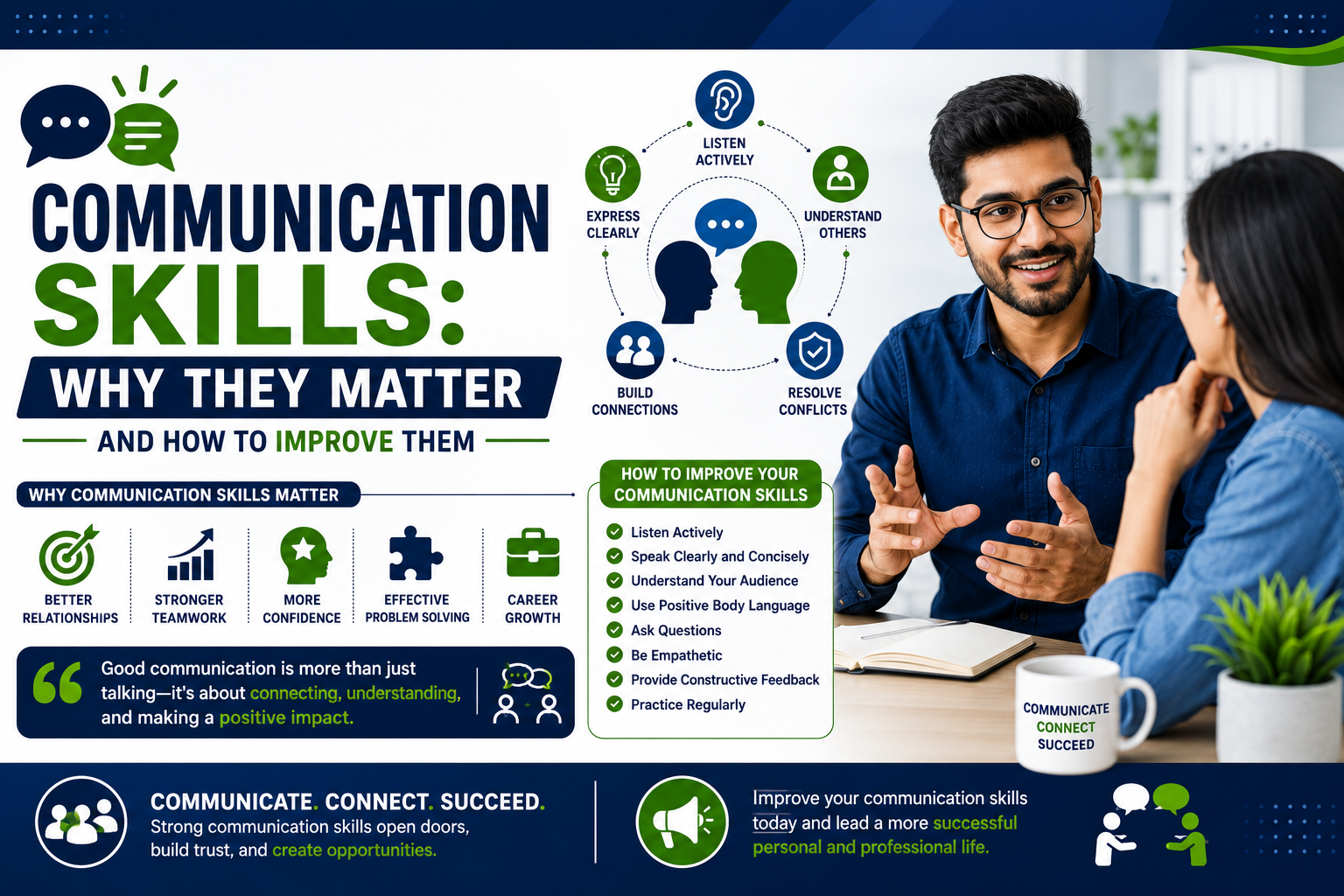
Communication skills are the ability to share information, ideas, and feelings clearly so others can understand you.
Communication isn’t just about speaking. It also includes listening, writing, reading, and understanding non-verbal signals like body language and facial expressions.
Example
Imagine your manager asks you to complete a project by Friday.
Instead of assuming you understand everything, you ask questions about the deadline, priorities, and expected results. This prevents misunderstandings and helps you complete the project successfully.
Why Are Communication Skills Important?
Good communication improves almost every part of your personal and professional life.
It helps you:
- Build trust
- Work better in teams
- Solve problems faster
- Reduce misunderstandings
- Improve customer relationships
- Increase confidence during interviews and presentations
Workplace Example
A customer contacts a support representative because their order hasn’t arrived.
Instead of giving a short reply like, “It’s delayed,” the representative explains the situation, provides a new delivery date, and apologizes for the inconvenience.
The customer feels informed and appreciated, even though there was a delay.
Types of Communication Skills
1. Verbal Communication
Verbal communication refers to speaking clearly and confidently.
Whether you’re in a meeting or a job interview, using simple language and speaking at a comfortable pace helps others understand your message.
Example
During a team meeting, you explain your project idea using clear examples instead of technical jargon. Everyone understands your proposal, making it easier to move the project forward.
2. Written Communication
Written communication includes emails, reports, text messages, and online chats.
Clear writing reduces confusion and improves professionalism.
Example
Instead of writing:
“Need this ASAP.”
Write:
“Could you please send the updated report by 3:00 PM today? We need it before our client meeting.”
The second message is much clearer and more professional.
3. Listening Skills
Good communication starts with listening.
Many people focus on preparing their response instead of understanding what the other person is saying.
Example
A coworker explains a problem with a project.
Instead of interrupting, you listen carefully, ask follow-up questions, and summarize the issue before suggesting a solution.
4. Non-Verbal Communication
Your body language often communicates more than your words.
Examples include:
- Eye contact
- Facial expressions
- Hand gestures
- Posture
- Tone of voice
Example
During a job interview, maintaining eye contact and sitting confidently shows interest and professionalism.
Practical Ways to Improve Communication Skills
Read Every Day
Reading books, articles, and professional content improves your vocabulary and helps you express your thoughts more clearly.
Example
Reading business blogs regularly introduces you to professional language that can improve your workplace communication.
Practice Speaking
Confidence comes from practice.
Try speaking in front of a mirror, recording yourself, or participating in group discussions.
Example
Before an interview, practice answering common questions aloud instead of only reading them.
You’ll become more confident and sound more natural.
Listen More Than You Speak
Good communicators spend more time understanding than talking.
Focus on listening carefully before responding.
Example
During a client meeting, listening to the customer’s needs first allows you to recommend the most suitable solution.
Ask Questions
Never be afraid to ask for clarification.
Questions prevent mistakes and show that you’re engaged.
Example
If your manager gives unclear instructions, asking a few simple questions can save hours of unnecessary work.
Improve Your Writing
Write emails, reports, and messages that are short, organized, and easy to understand.
Before sending anything important, read it once to check for errors.
Example
A well-written email can prevent multiple follow-up conversations because everything is explained clearly the first time.
Common Communication Mistakes
Not Listening
Interrupting others often leads to misunderstandings.
Using Complicated Language
Simple language is usually more effective than complicated words.
Ignoring Body Language
Poor eye contact or distracted behavior can send the wrong message.
Making Assumptions
Never assume everyone understands your message.
Always confirm important details when necessary.
How Employers Evaluate Communication Skills
Recruiters assess communication throughout the hiring process.
They observe:
- How clearly you answer questions
- How well you explain your experience
- Your listening skills
- Your professionalism
- Your confidence
Example Interview Question
“Tell me about a time you worked with a difficult team member.”
A strong answer explains the situation, how you communicated professionally, and the positive outcome.
How to Show Communication Skills on Your Resume
Instead of writing:
Excellent communication skills
Show real achievements.
Examples include:
- Delivered presentations to clients and internal teams.
- Coordinated projects across multiple departments.
- Resolved customer inquiries while maintaining high satisfaction ratings.
- Wrote user guides that reduced support requests.
Specific examples demonstrate your communication skills far better than simply listing them.
Final Thoughts
Communication is one of the most valuable skills you can develop, regardless of your profession.
Whether you’re interviewing for a job, leading a team, working remotely, or building your own business, strong communication helps you create better relationships and achieve better results.
The best way to improve is through consistent practice. Read more, listen carefully, ask thoughtful questions, and look for opportunities to communicate every day.
Over time, these small improvements will increase your confidence and make you a stronger professional.
Frequently Asked Questions (FAQs)
1. What are communication skills?
Communication skills are the ability to share ideas and information clearly through speaking, writing, listening, and non-verbal communication.
2. Why are communication skills important?
They help build relationships, improve teamwork, reduce misunderstandings, and increase workplace productivity.
3. How can I improve my communication skills?
Practice speaking, become a better listener, read regularly, ask questions, and improve your writing through daily practice.
4. What are the four main types of communication?
The four main types are verbal communication, written communication, non-verbal communication, and listening.
5. Why do employers value communication skills?
Employers want professionals who can collaborate effectively, explain ideas clearly, and communicate professionally with colleagues and customers.
6. Can communication skills improve career growth?
Yes. Strong communication often leads to better teamwork, leadership opportunities, successful interviews, and career advancement.
7. How can students develop better communication skills?
Students can participate in discussions, give presentations, join clubs, practice public speaking, and improve their writing through regular reading and practice.
8. Are communication skills important for remote work?
Absolutely. Remote teams rely heavily on written messages, video meetings, and online collaboration, making strong communication essential.