Problem-Solving Skills: Why They Matter and How to Improve Them
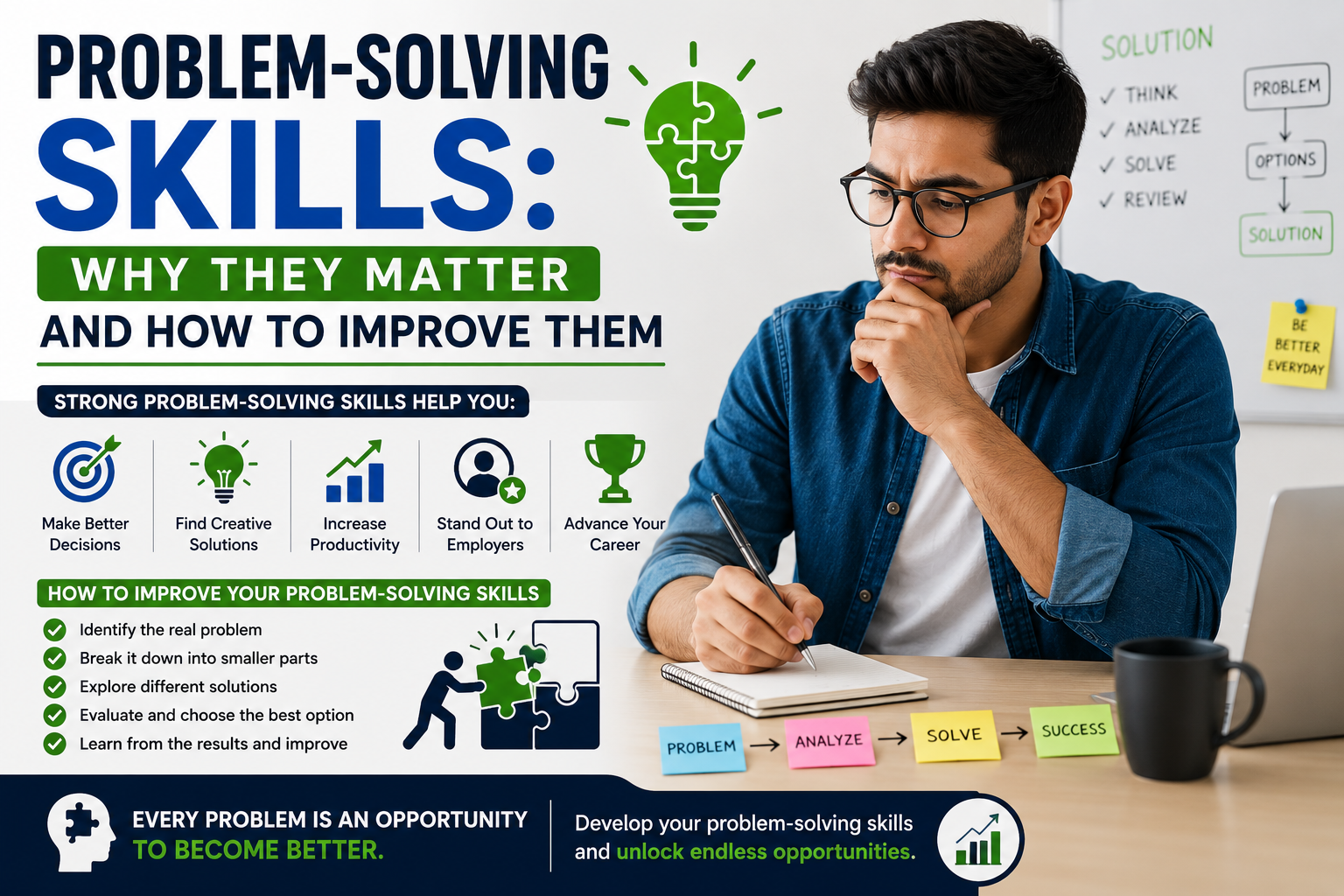
Every employer wants people who can solve problems.
Stay connected
Add us as a trusted source on Google
Get our latest guides, updates, and helpful resources surfaced more often when you search and browse.
Whether you’re applying for your first job, changing careers, or aiming for a promotion, strong problem-solving skills can make you stand out from other candidates.
The good news is that problem-solving isn’t a talent you’re born with—it’s a skill that anyone can develop with practice.
In this guide, you’ll learn what problem-solving skills are, why employers value them, and practical ways to improve them.
What Are Problem-Solving Skills?
Problem-solving skills are the ability to identify challenges, analyze information, and find effective solutions.
Instead of getting overwhelmed when something goes wrong, good problem solvers stay calm, gather information, and make thoughtful decisions.
Problem-solving is useful in every profession, including:
- Software Development
- Healthcare
- Marketing
- Education
- Finance
- Customer Service
- Sales
- Project Management
- Manufacturing
No matter your career, you’ll encounter problems that require creative thinking and sound judgment.
Why Employers Value Problem-Solving Skills
Businesses face challenges every day.
These may include:
- Meeting tight deadlines
- Handling customer complaints
- Improving business processes
- Fixing technical issues
- Managing unexpected changes
Employees who can solve problems independently help organizations save time, reduce costs, and improve productivity.
That’s why problem-solving consistently appears among the top workplace skills employers look for.
Key Components of Problem Solving
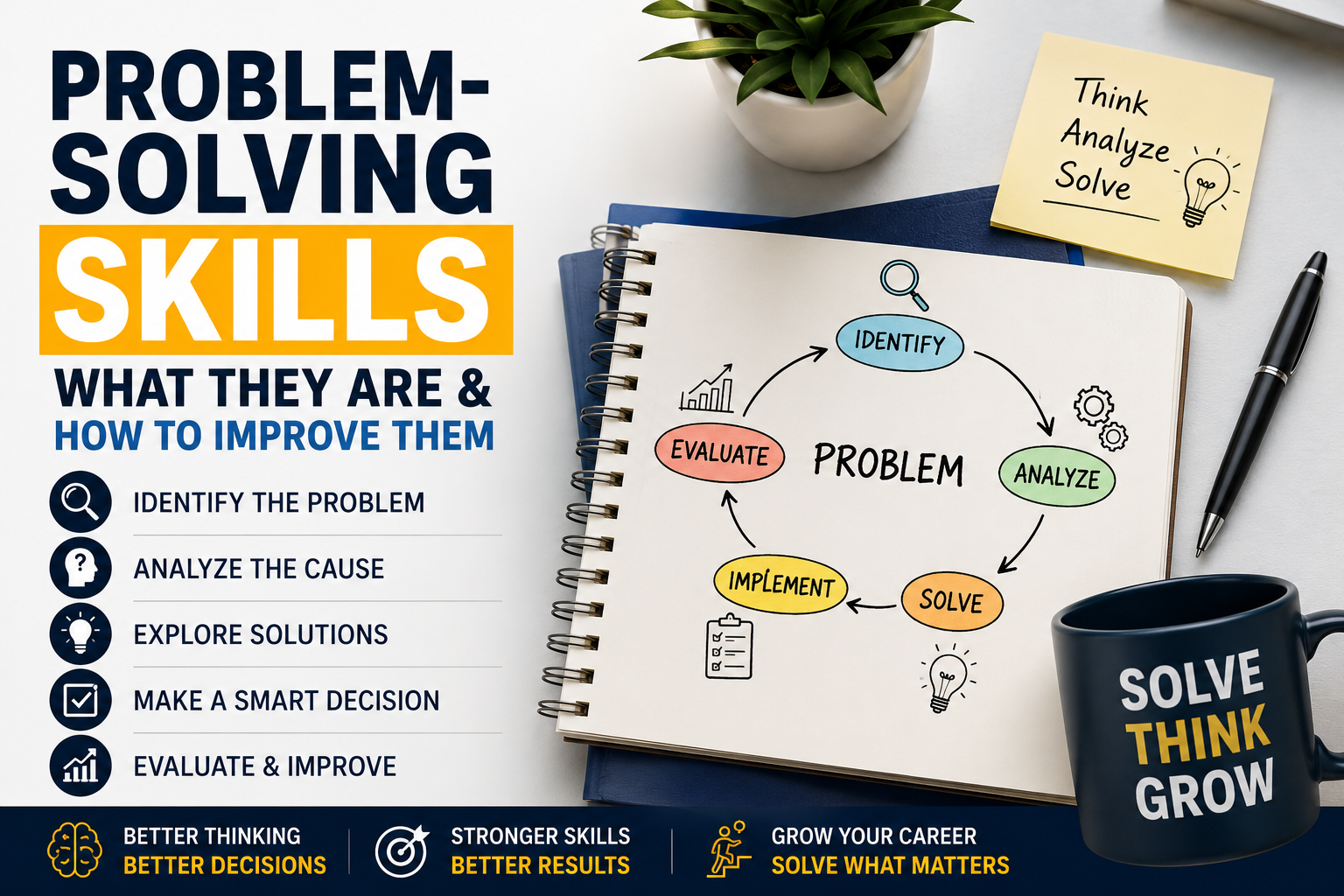
1. Identifying the Problem
Before you can solve a problem, you need to understand it clearly.
Ask yourself:
- What exactly is happening?
- Who is affected?
- When did it start?
- What is causing it?
Defining the problem correctly often makes finding the solution much easier.
2. Gathering Information
Good decisions are based on facts rather than assumptions.
Collect relevant information by:
- Asking questions
- Reviewing available data
- Observing the situation
- Seeking expert advice when necessary
The more accurate your information, the better your solution is likely to be.
3. Thinking of Possible Solutions
Avoid choosing the first solution that comes to mind.
Instead, list several possible options and evaluate their advantages and disadvantages.
Sometimes the simplest solution is the most effective.
4. Making a Decision
Choose the solution that best balances effectiveness, time, cost, and potential risks.
Not every decision will be perfect, but making informed choices is an important part of professional growth.
5. Evaluating the Results
After implementing a solution, review the outcome.
Ask yourself:
- Did the problem improve?
- What worked well?
- What could be done differently next time?
Reflection helps strengthen future decision-making skills.
How to Improve Your Problem-Solving Skills
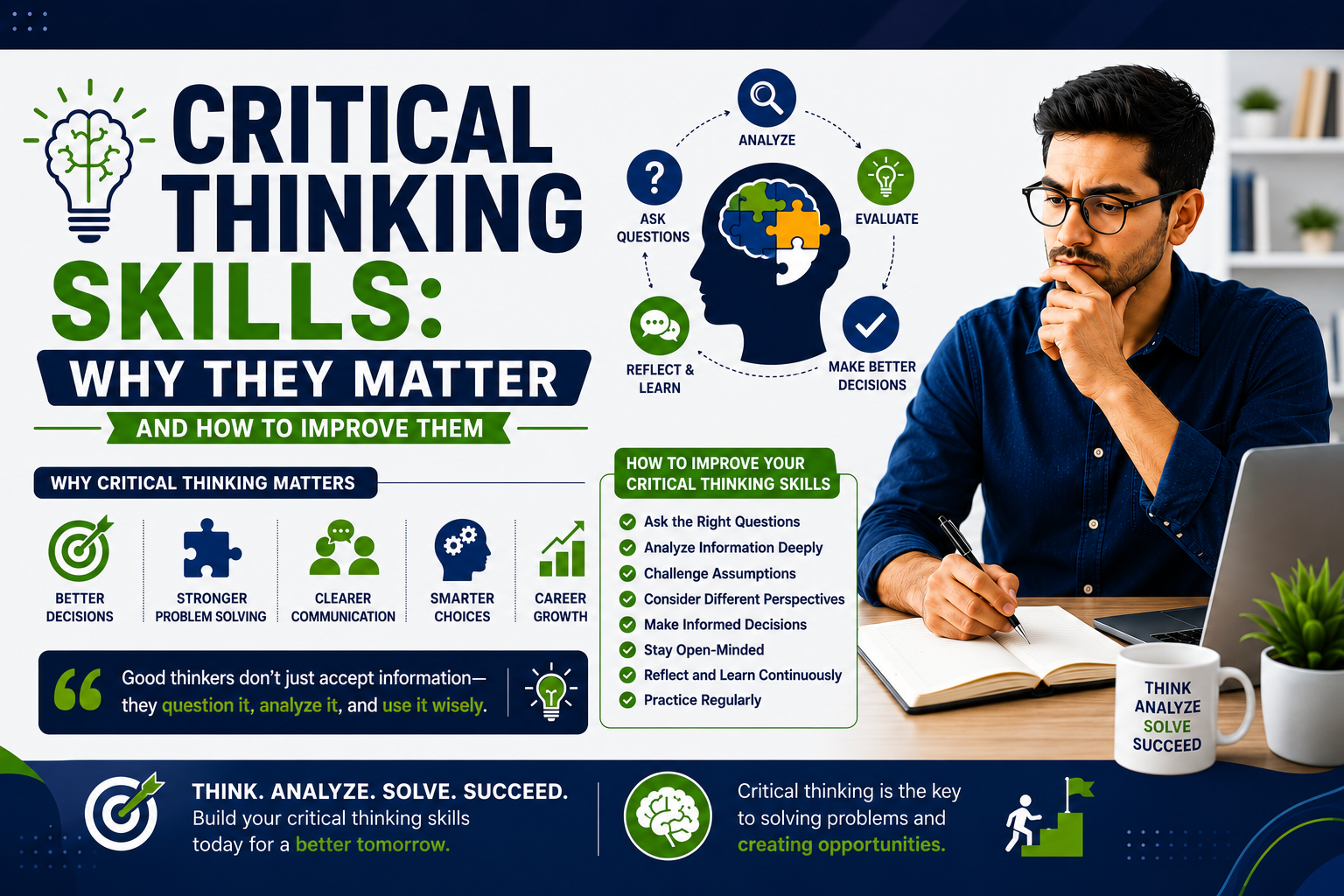
Practice Critical Thinking
Instead of accepting information immediately, ask questions and evaluate different perspectives.
Critical thinking helps you understand situations more deeply.
Break Large Problems Into Smaller Tasks
Complex problems often become easier when divided into smaller, manageable steps.
Focus on solving one part at a time instead of trying to solve everything at once.
Learn From Experience
Every challenge is an opportunity to improve.
Think about previous situations you’ve handled successfully and identify what helped you reach a solution.
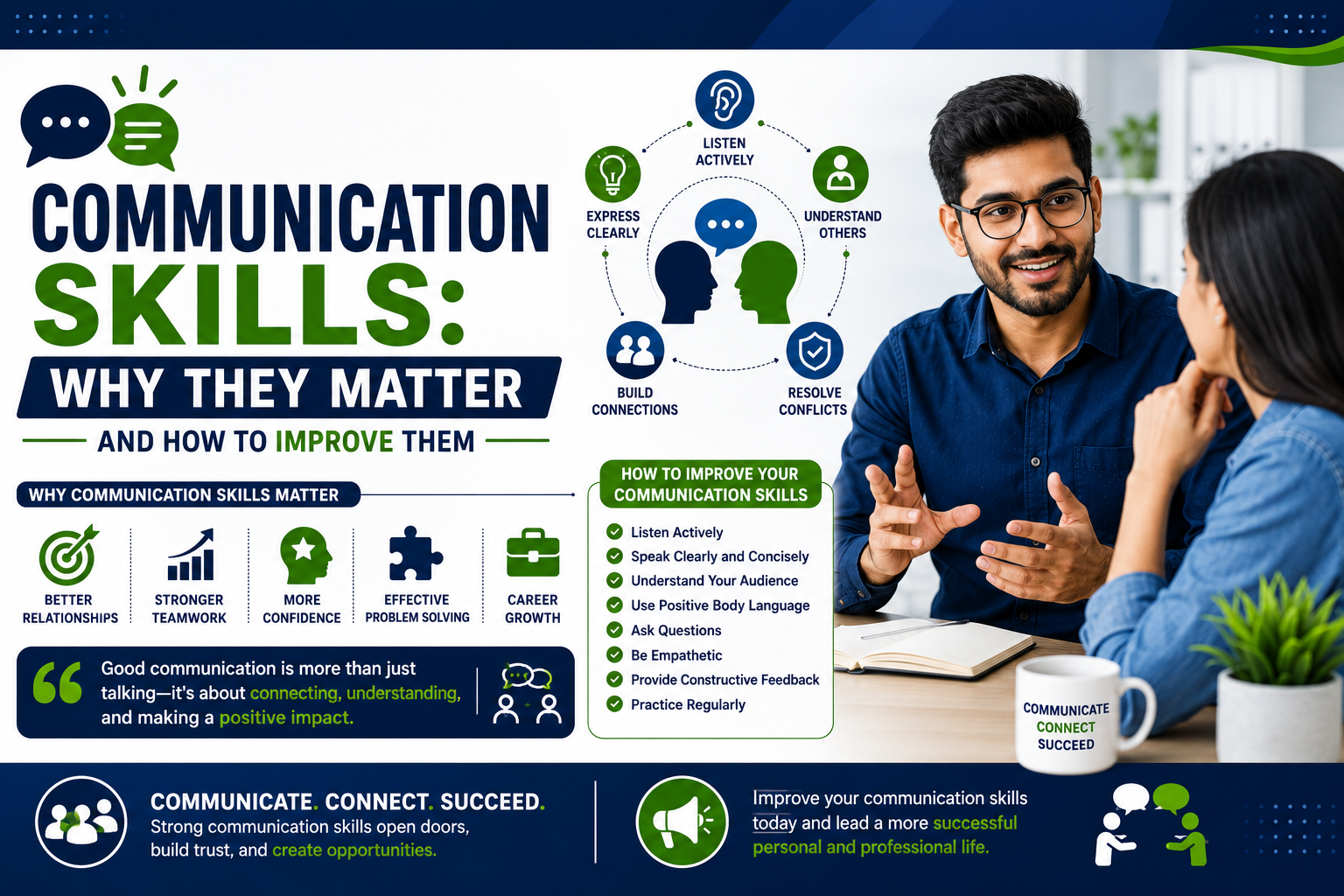
Develop Strong Communication Skills
Many workplace problems require collaboration.
Clear communication helps teams share ideas, avoid misunderstandings, and find better solutions together.
Stay Curious
Curiosity encourages continuous learning.
People who ask questions, explore new ideas, and seek knowledge often become better problem solvers over time.
Real-Life Examples of Problem Solving
Example 1: Customer Service
A customer receives the wrong product.
Instead of simply apologizing, the support representative quickly arranges a replacement, updates the customer on the shipping process, and offers a discount on the next purchase.
The problem is solved while maintaining customer trust.
Example 2: Software Development
A website suddenly becomes slow after an update.
Rather than immediately reversing every change, the developer reviews server logs, identifies the cause, fixes the issue, and tests the solution before deploying it.
Example 3: Project Management
A project falls behind schedule.
The project manager reorganizes priorities, assigns additional resources, and communicates updated timelines with stakeholders.
The project returns to schedule with minimal disruption.
How to Showcase Problem-Solving Skills on Your Resume
Instead of writing:
Excellent problem-solving skills
Show evidence.
Examples include:
- Improved a business process that reduced completion time by 30%.
- Resolved customer issues while maintaining high satisfaction ratings.
- Identified workflow improvements that increased team productivity.
- Troubleshot technical issues and reduced website downtime.
Specific achievements are much more convincing than generic statements.
How to Demonstrate Problem-Solving Skills in an Interview
Interviewers often ask behavioral questions such as:
- Tell me about a difficult situation you handled.
- Describe a challenge you overcame.
- Tell me about a time you solved a problem at work.
A useful approach is to explain:
- The situation
- The challenge
- The actions you took
- The final result
Using real examples makes your answers more memorable.
Final Thoughts
Problem-solving is one of the most valuable skills you can develop, regardless of your profession or experience level.
Employers want people who remain calm under pressure, think critically, and take action when challenges arise.
The more you practice identifying problems, evaluating options, and learning from your experiences, the more confident and effective you’ll become.
Strong problem-solving skills won’t just help you succeed in interviews—they’ll support your career growth for years to come.