How to Find a Remote Job in 2026: A Step-by-Step Guide
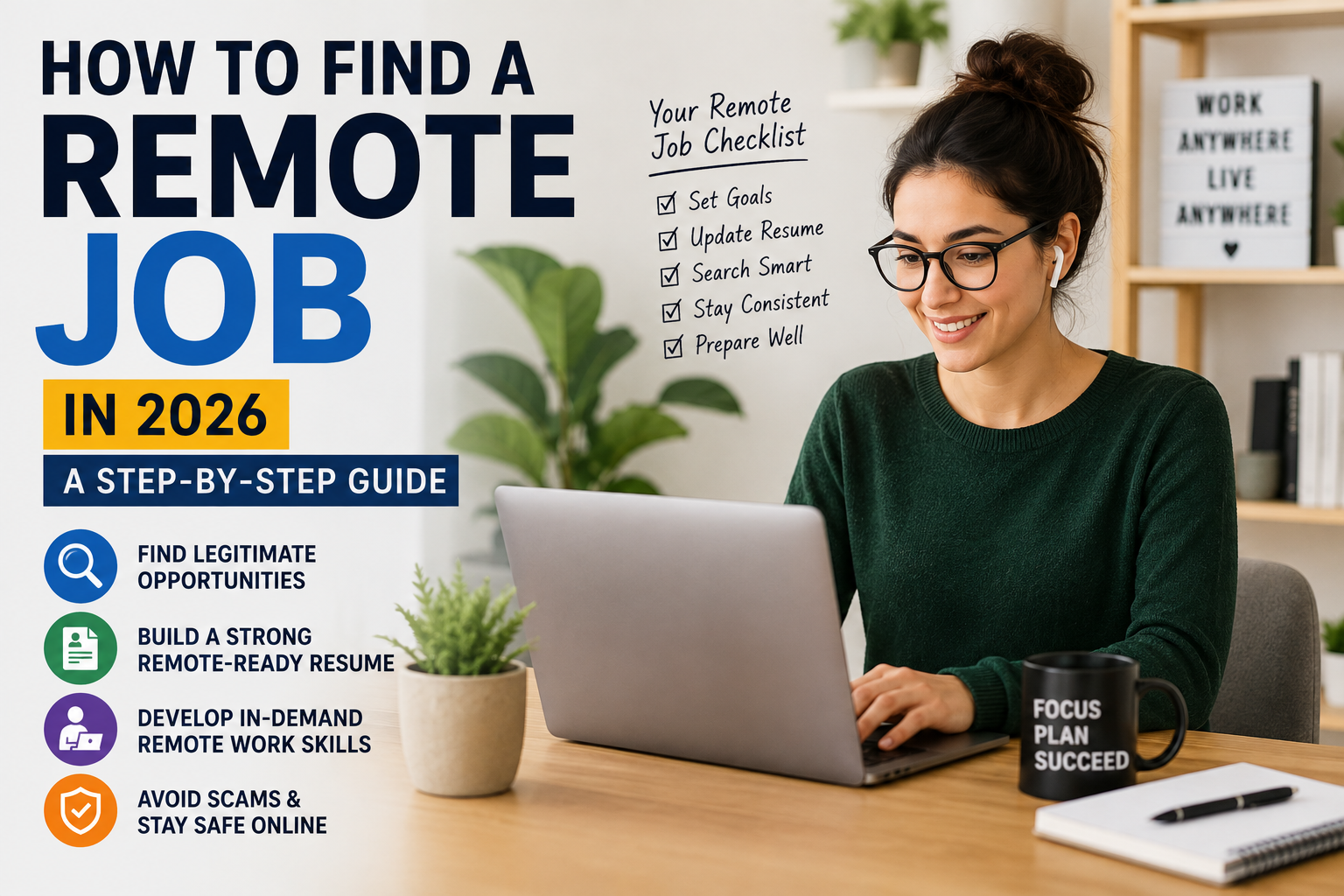
Finding a remote job can give you more flexibility, eliminate a daily commute, and open the door to opportunities outside your local area. But landing a good remote position isn’t as simple as typing “work from home jobs” into a search engine and applying to everything you see.
Stay connected
Add us as a trusted source on Google
Get our latest guides, updates, and helpful resources surfaced more often when you search and browse.
Remote positions can attract a large number of applicants, and not every job advertised as remote allows you to work from anywhere. Some employers require workers to live in a particular country, state, or time zone. Job seekers also need to watch for fake listings and work-from-home scams.
The good news is that a focused strategy can make your remote job search much more effective.
In this guide, you’ll learn how to find a remote job in 2026, where to search, what skills employers look for, how to improve your resume, and how to identify legitimate opportunities.
What Is a Remote Job?
A remote job is a position that allows you to perform your work outside a traditional company office.
Depending on the employer, you might work from:
- Your home
- A coworking space
- Another city
- Another state
- Another country
However, “remote” does not automatically mean “work from anywhere.”
Some employers hire remotely but require employees to live within a particular geographic area because of payroll, tax, employment law, client, or time-zone requirements.
That makes it important to read every job description carefully before applying.
Remote vs. Work From Home vs. Hybrid Jobs
These terms are often used interchangeably, but they can mean different things.
Remote Job
A remote employee generally performs most or all of their work outside the employer’s office.
The employer may still impose location or time-zone restrictions.
Work-From-Home Job
Work from home usually describes where you perform your job rather than the company’s overall working model.
Some work-from-home positions are permanently remote, while others may only allow employees to work from home on certain days.
Hybrid Job
A hybrid position combines remote and office work.
For example, an employee might work from home three days per week and visit the office for the remaining two.
Always check the employer’s exact definition before applying.
How to Find a Remote Job in 2026
Sending hundreds of identical applications isn’t usually the most effective approach.
A better strategy is to identify the type of remote work you want and focus your search on positions that genuinely match your skills.
Step 1: Decide What Remote Job You Want
Don’t begin with:
“I want any remote job.”
Start with a specific role.
For example:
- Remote customer service representative
- Remote content writer
- Remote web developer
- Remote digital marketer
- Remote virtual assistant
- Remote project manager
- Remote graphic designer
- Remote data analyst
The more specific your target is, the easier it becomes to customize your resume and find relevant openings.
Ask yourself:
- What am I already good at?
- Which of my skills can be used remotely?
- What type of work do I enjoy?
- Do I want full-time employment or freelance work?
- What hours can I realistically work?
- Am I comfortable working with an international team?
Your answers will help narrow your search.
Step 2: Build Skills Employers Want in Remote Workers
Remote employers aren’t only evaluating whether you can perform the technical requirements of a job.
They also need confidence that you can work effectively without constant in-person supervision.
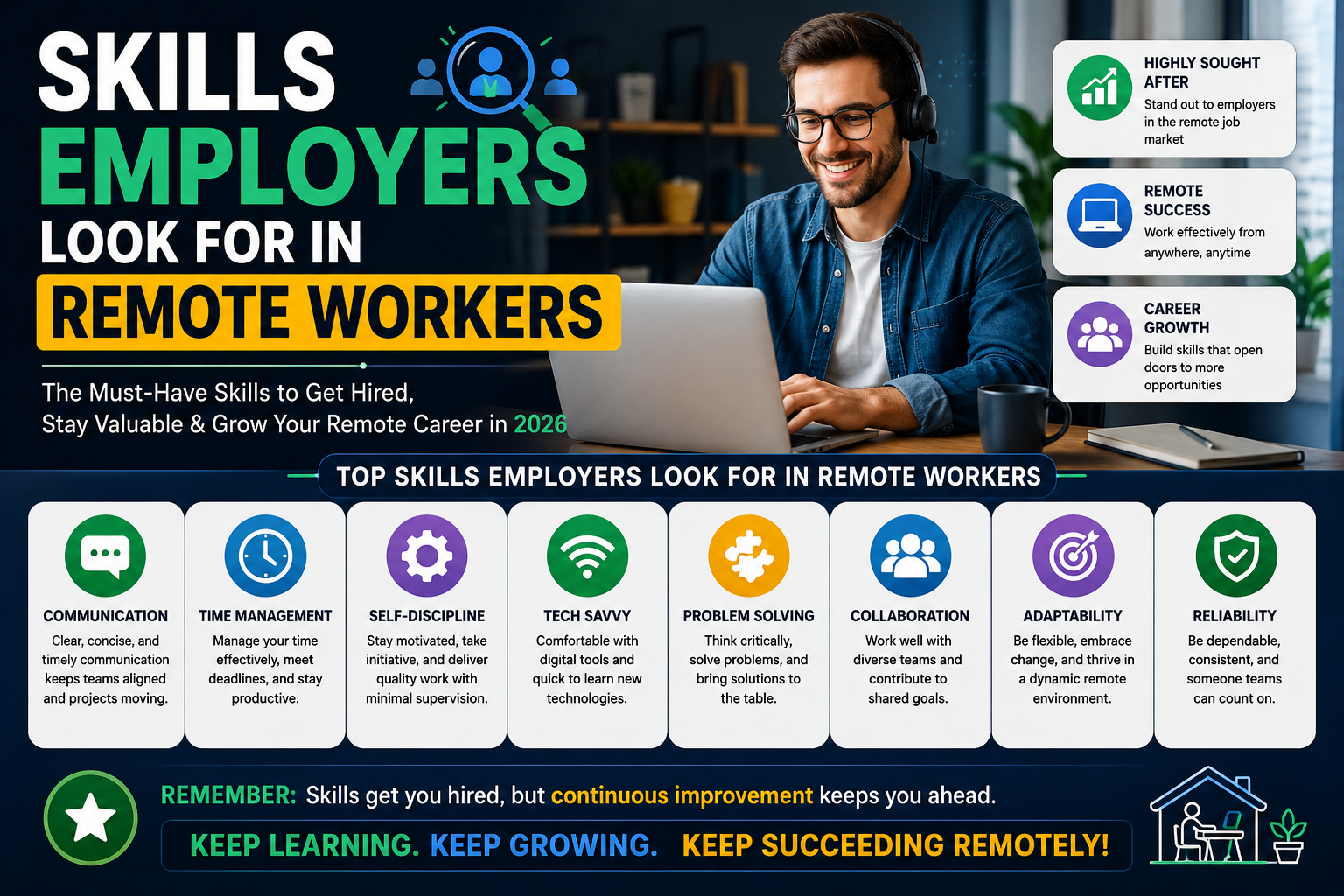
Important remote-work skills include:
Communication
Remote teams depend heavily on written and verbal communication.
You should be comfortable explaining ideas clearly through email, chat, documents, and video meetings.
Time Management
Without a traditional office structure, you may have greater responsibility for organizing your own day.
Employers value people who can prioritize tasks and meet deadlines consistently.
Self-Motivation
A manager may not be physically present to remind you what needs to be done.
Strong remote workers can stay focused and make progress independently.
Collaboration
Remote does not mean working alone.
You may collaborate with coworkers across different cities, countries, and time zones.
Digital Skills
Depending on your profession, employers may expect familiarity with video conferencing, project management, cloud storage, collaboration, and communication tools.
Before applying, compare your abilities with the top skills employers look for in remote workers and identify areas you can improve.
Step 3: Create a Remote-Friendly Resume
Your resume should make it easy for an employer to see that you’re capable of working remotely.
Don’t simply add “remote worker” everywhere.
Instead, demonstrate the skills associated with successful remote work.
For example, instead of writing:
Responsible for marketing campaigns.
You might write:
Coordinated digital marketing campaigns with a distributed team while managing deadlines and client communication through online collaboration tools.
When relevant, highlight:
- Previous remote experience
- Independent project management
- Virtual collaboration
- Written communication
- Time management
- Digital tools
- Results achieved while working independently
If you’ve never had a remote job, that’s okay.
Use examples from office jobs, freelance projects, education, internships, or volunteer work that demonstrate the same abilities.
Step 4: Search for Remote Jobs Using Specific Keywords
Searching only for “remote jobs” can produce thousands of unrelated results.
Combine the job title you want with remote-work terms.
For example:
- Remote customer support
- Remote WordPress developer
- Remote digital marketing specialist
- Work from home data analyst
- Remote graphic designer
- Remote project coordinator
- Remote entry-level marketing
- Remote jobs for freshers
Try different variations because employers don’t all describe remote positions in the same way.
You can also use filters for:
- Experience level
- Job type
- Salary
- Industry
- Location
- Remote work
- Date posted
Whenever possible, prioritize newer job postings rather than spending most of your time applying to old listings.
Step 5: Check the Location Requirements
This is one of the most overlooked parts of a remote job search.
A listing might say:
Remote
but later state:
Applicants must reside in the United States.
Another employer might require candidates to live in a particular state, country, or time zone.
Before spending time customizing an application, check:
- Eligible countries
- State or regional restrictions
- Time-zone requirements
- Work authorization requirements
- Required office visits
- Travel requirements
If the listing is unclear, ask the recruiter before progressing too far through the hiring process.
Step 6: Research the Company Before Applying
Don’t apply simply because the word “remote” appears in the job title.
Research the employer first.
Visit the company’s website and look for:
- An About page
- A careers page
- Employee information
- Products or services
- Contact information
- Social media presence
You can also search for employee reviews and recent company news.
Research serves two purposes.
First, it helps you determine whether the opportunity appears legitimate.
Second, it gives you information you can use to customize your application and prepare for an interview.
Step 7: Tailor Your Application
One carefully targeted application can be more valuable than sending the same resume to dozens of unrelated positions.
Read the job description and identify the employer’s most important requirements.
Then make sure your application clearly demonstrates the relevant experience.
You don’t need to rewrite your entire resume every time.
Instead, adjust elements such as:
- Professional summary
- Skills
- Most relevant accomplishments
- Keywords
- Cover letter
Focus on matching your genuine qualifications with what the employer is requesting.
Never add skills or experience you don’t actually have.
Step 8: Consider Freelancing as Another Path to Remote Work
A traditional full-time remote position isn’t the only way to work online.
Freelancing can help you:
- Gain remote experience
- Build a portfolio
- Develop client communication skills
- Earn while learning
- Test different career paths
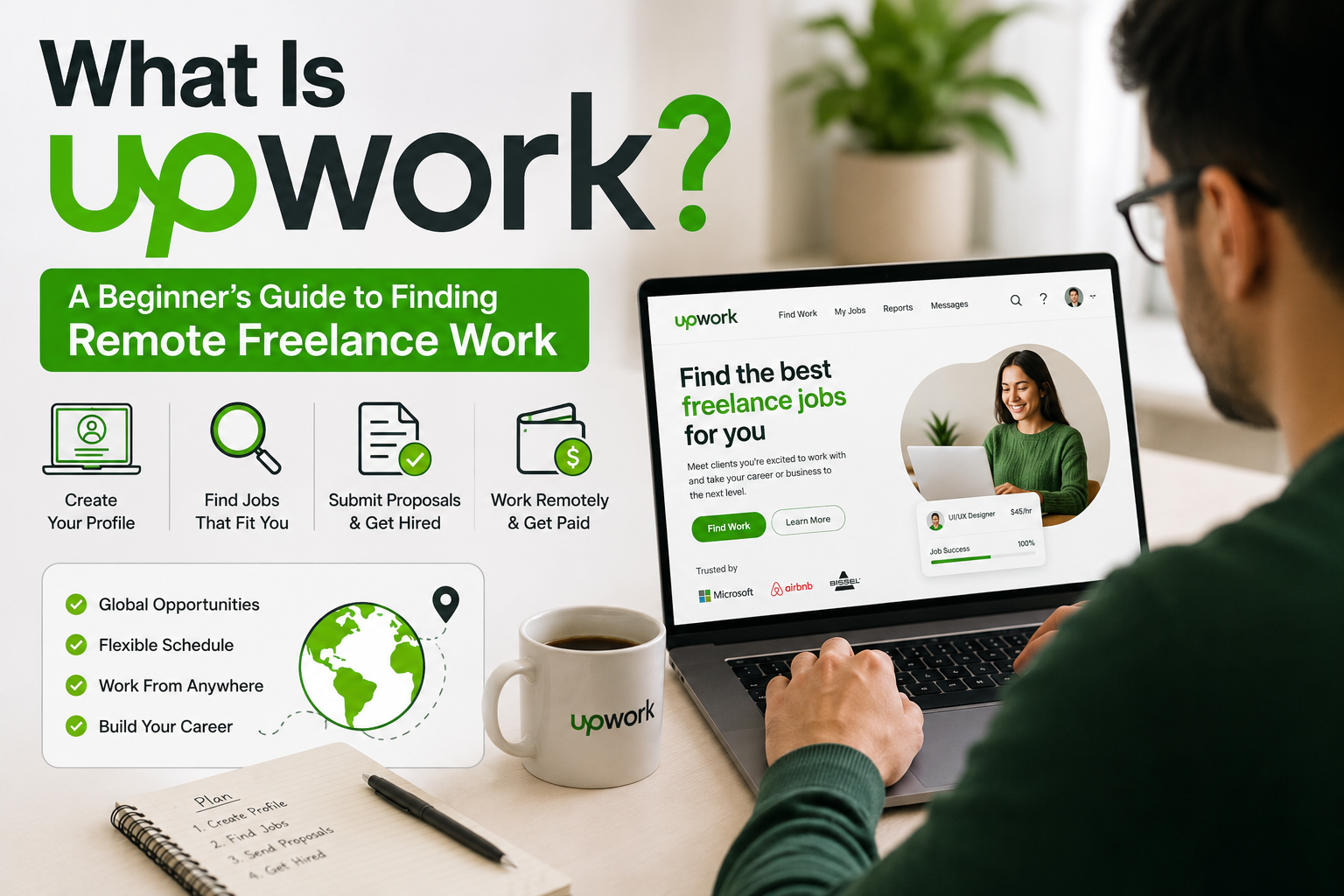
Platforms such as Upwork allow freelancers to connect with clients looking for services ranging from writing and design to programming and marketing.
If you’re new to freelancing, start by learning what Upwork is and how it works before creating your profile.
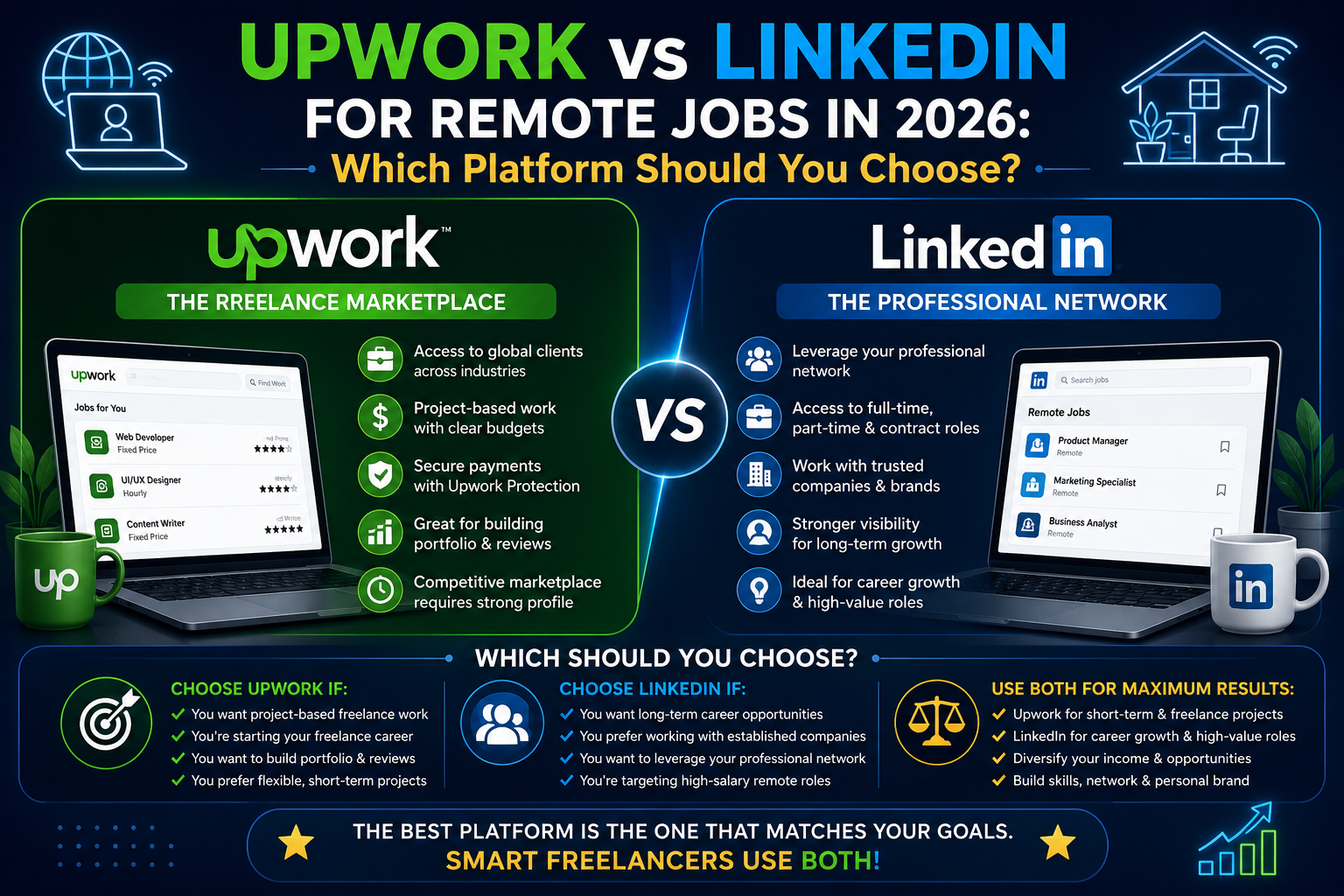
You can also compare Upwork vs. LinkedIn for remote jobs to determine which approach better matches your goals.
How to Find a Remote Job With No Experience
Getting your first remote job can feel difficult because many employers want previous experience.
But “experience” doesn’t always mean years of formal employment.
You can demonstrate your abilities through:
- Internships
- Freelance projects
- Personal projects
- Volunteer work
- Certifications
- Online courses
- College projects
- Portfolio work
Suppose you want a remote social media job but have never worked professionally in social media.
You could create a sample content calendar, grow a personal account, help a local organization, or build a portfolio showing what you can do.
The goal is to provide evidence of your skills.
How to Spot a Fake Remote Job
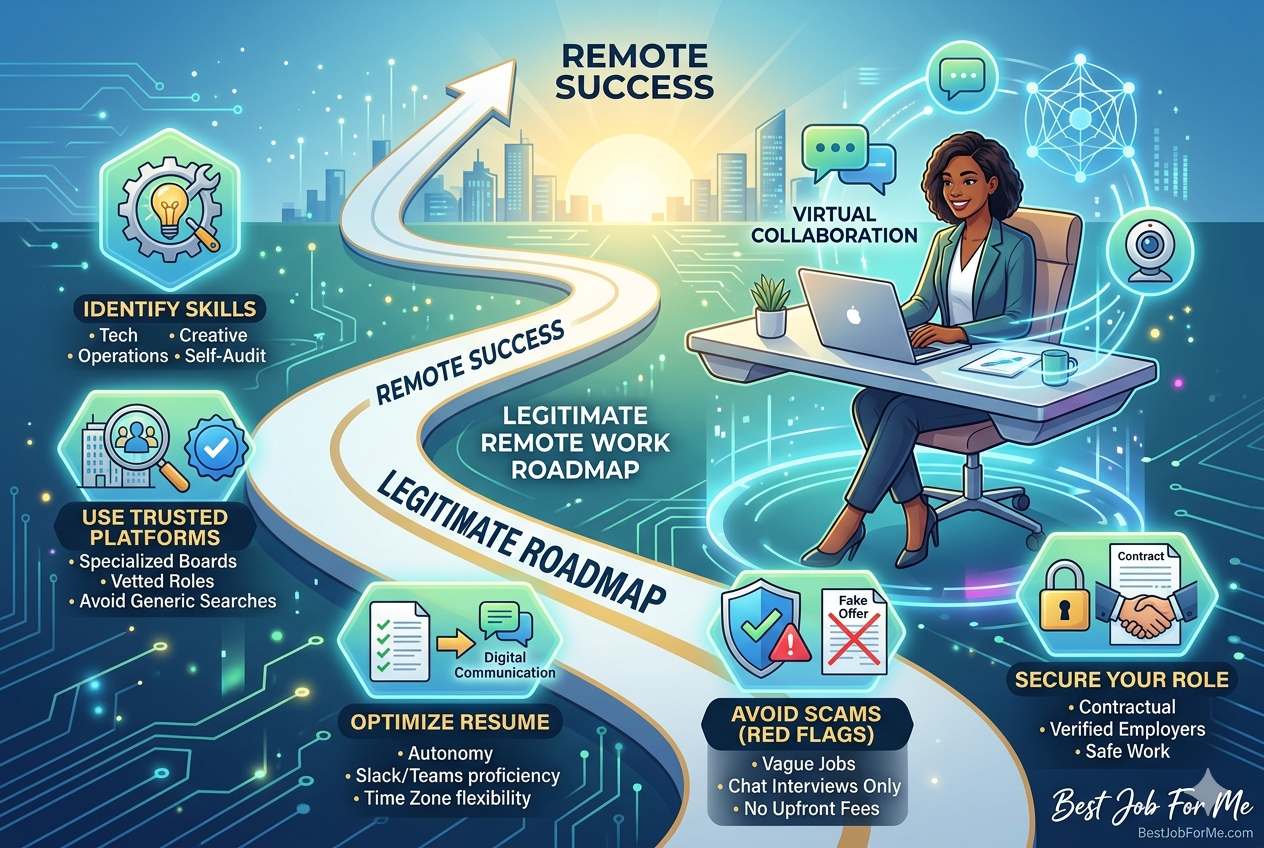
Unfortunately, work-from-home opportunities can attract scammers.
Be cautious when a job sounds unusually easy or promises unrealistic earnings.
Warning Signs of a Remote Job Scam
Watch for situations where:
- You’re asked to pay money to get the job
- The salary seems unrealistic for the work required
- The job description is extremely vague
- The company cannot be verified
- The recruiter uses suspicious contact information
- You’re pressured to make an immediate decision
- You’re asked for sensitive financial information unusually early
- The employer sends money and asks you to purchase equipment from a specific seller
A legitimate employer should be able to explain what the job involves, who you’ll work for, and how the hiring process works.
Never send money simply to receive a job offer.
Questions to Ask During a Remote Job Interview
An interview isn’t only an opportunity for the company to evaluate you.
You should also determine whether the remote arrangement actually meets your expectations.
Consider asking:
Is This Position Fully Remote?
Confirm whether remote work is permanent or whether employees may eventually be required to return to an office.
Are There Any Location Restrictions?
Ask whether you must live in a particular country, state, or region.
What Hours Am I Expected to Work?
Some companies offer flexible schedules.
Others expect everyone to be online during specific hours.
How Does the Remote Team Communicate?
The answer can help you understand how organized the company’s remote culture is.
How Is Performance Measured?
Strong remote teams should have clear expectations about goals, deadlines, and results.
Does the Company Provide Equipment?
Find out whether the employer provides a computer, monitor, software, internet allowance, or other equipment required for the role.
How to Stand Out in a Remote Job Interview
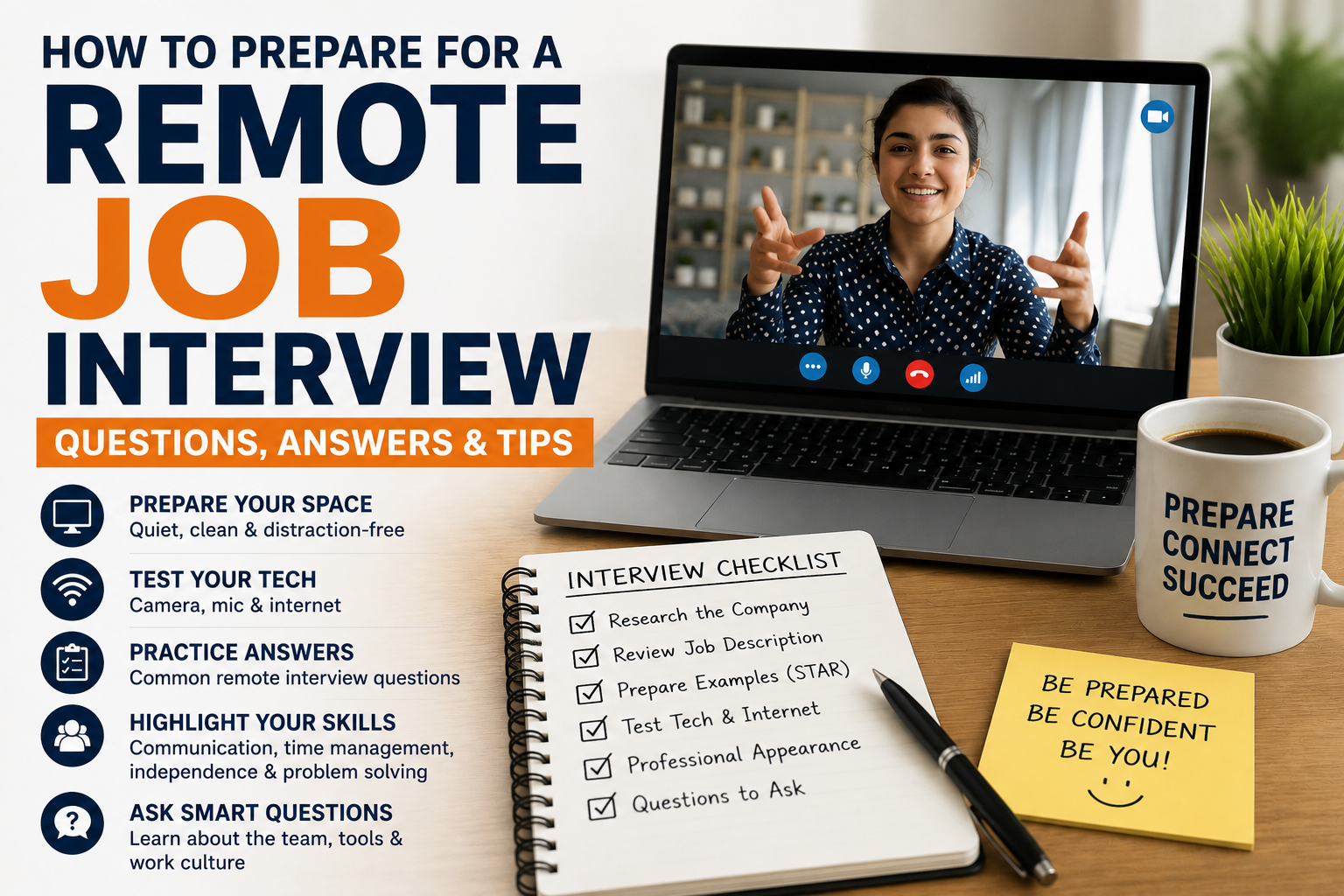
Remote interviews often take place over video, which means your preparation should include your technology and environment.
Before the interview:
- Test your camera
- Test your microphone
- Check your internet connection
- Choose a quiet location
- Remove distracting background items
- Keep your resume nearby
- Research the company
- Prepare questions for the interviewer
Be ready to provide examples demonstrating that you can work independently.
An employer may ask how you:
- Manage deadlines
- Handle distractions
- Communicate with teammates
- Resolve problems independently
- Organize your workday
- Collaborate across time zones
Use specific examples whenever possible.
Common Remote Job Search Mistakes
Avoiding a few common mistakes can make your search much more efficient.
Applying to Every Remote Job
Remote work is a location arrangement, not a profession.
Choose positions that actually match your abilities.
Ignoring Location Restrictions
Always verify where the employer is legally able or willing to hire.
Using the Same Resume Everywhere
Your resume should emphasize the qualifications most relevant to each position.
Focusing Only on Large Job Boards
Job boards are useful, but also check company career pages and professional networks.
Falling for Unrealistic Offers
Be skeptical when a company offers unusually high compensation for very little work or hires you without a meaningful screening process.
Assuming Remote Work Is Easier
Remote jobs still require performance, communication, reliability, and accountability.
Working from home changes where you work—not whether you need to deliver results.
Is Remote Work Right for You?
Remote work offers flexibility, but it isn’t ideal for everyone.
You may enjoy remote work if you:
- Work well independently
- Can manage your own schedule
- Communicate clearly online
- Enjoy using technology
- Have a suitable workspace
- Can stay productive without direct supervision
You may find it more difficult if you rely heavily on face-to-face interaction or struggle to separate work from personal time.
Neither preference is wrong.
The goal is to find a working environment that allows you to perform at your best.
Frequently Asked Questions
How do I find a legitimate remote job?
Start with reputable job platforms and company career pages. Research every employer, read the complete job description, verify location requirements, and avoid opportunities that require upfront payments or request sensitive financial information unusually early.
Can I get a remote job with no experience?
Yes. Entry-level remote positions exist, but you still need to demonstrate relevant skills. Internships, certifications, freelance projects, volunteer experience, and a strong portfolio can help compensate for limited formal work experience.
Does remote mean I can work from anywhere?
Not necessarily. Some remote jobs restrict employees to certain countries, states, regions, or time zones. Always read the location requirements before applying.
What skills do I need for remote work?
Communication, time management, self-motivation, digital literacy, collaboration, organization, and problem-solving are valuable across many remote positions. You will also need the technical skills required by your specific profession.
Should I put remote work on my resume?
If you have previous remote experience, it can be useful to mention it. More importantly, demonstrate accomplishments that show you can communicate, collaborate, manage deadlines, and produce results independently.
Are remote jobs good for freshers?
They can be, particularly for freshers who are self-motivated and comfortable using digital tools. However, entry-level candidates should look for employers that provide clear onboarding, training, communication, and support.
Final Thoughts
Learning how to find a remote job is about more than searching for positions labeled “work from home.”
Start by choosing a specific role, developing the skills required for that profession, and creating a resume that demonstrates you can work independently. Search strategically, verify location restrictions, research employers, and customize your strongest applications.
Most importantly, don’t allow the convenience of remote work to make you less selective about the employer.
A good remote job should provide clear responsibilities, legitimate compensation, professional communication, and realistic expectations.
With the right skills and a focused job-search strategy, remote work can give you access to opportunities that may never have been available within commuting distance of your home.