Upwork vs LinkedIn for Remote Jobs in 2026: Which Platform Should You Choose?
Remote work continues to grow in popularity, giving professionals more opportunities than ever to work from anywhere in the world. However, finding quality remote jobs depends heavily on where you look.
Stay connected
Add us as a trusted source on Google
Get our latest guides, updates, and helpful resources surfaced more often when you search and browse.
Among the many platforms available today, Upwork and LinkedIn remain two of the most powerful options for connecting with clients and employers. Although both can help you earn online, they serve very different purposes and attract different types of opportunities.
Understanding how each platform works can help you save time, avoid frustration, and choose the best path for your career goals.
Understanding the Difference
At a glance, both platforms connect professionals with work opportunities, but their business models are completely different.
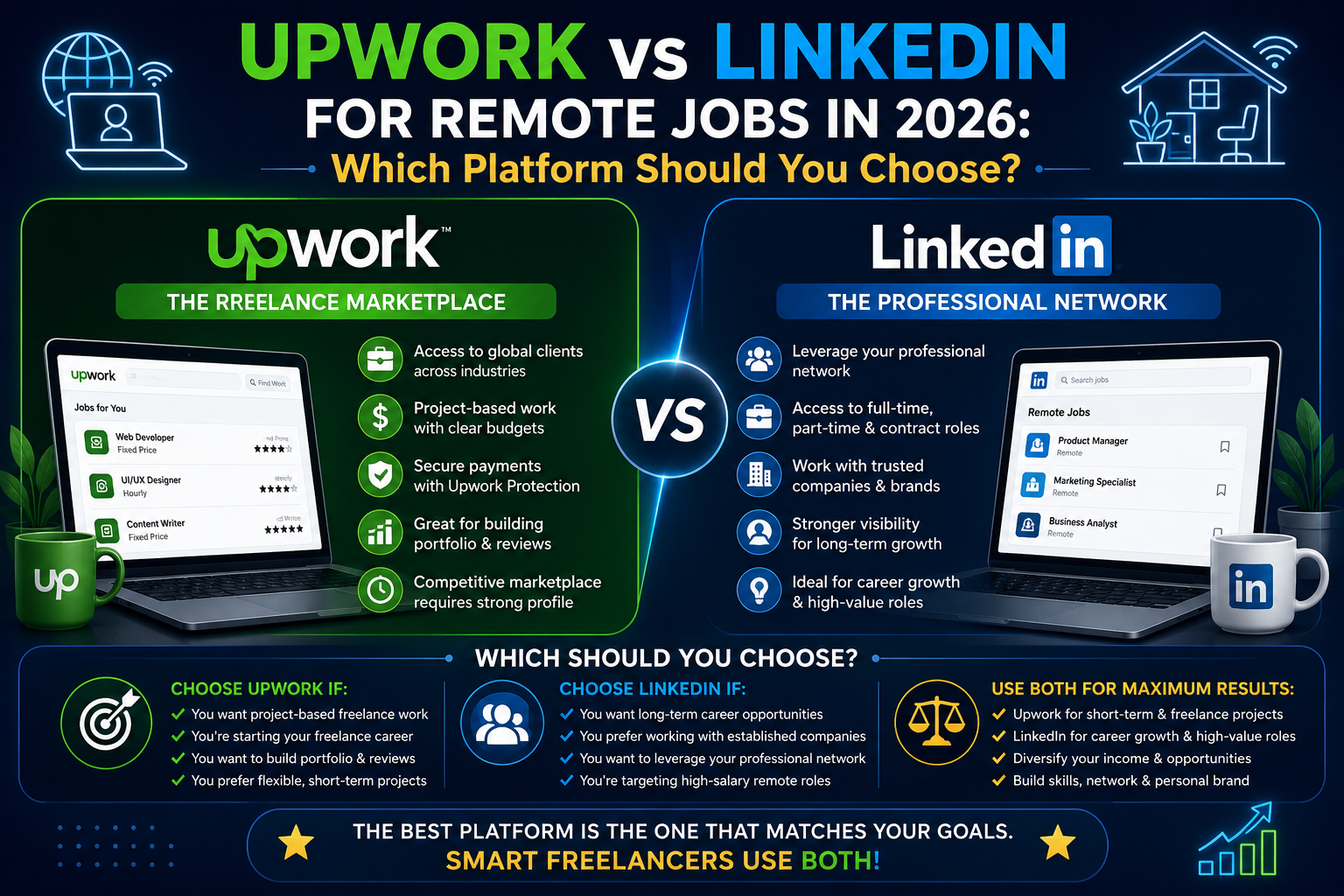
Upwork is a freelance marketplace where businesses post projects and freelancers submit proposals to win work.
LinkedIn is a professional networking platform where employers, recruiters, and business owners search for talent for full-time, part-time, and consulting roles.
Let’s explore each platform in detail.
Upwork: Best for Freelancers and Project-Based Work
Upwork is designed specifically for freelancers. Companies and individuals post projects, and freelancers compete by sending proposals that explain how they can solve the client’s problem.
How Upwork Works
Client Posts a Project → Freelancer Sends Proposal → Contract Begins → Work Completed → Payment Released
Advantages of Upwork
Quick Access to Paying Clients
Most clients on Upwork have an immediate need and an allocated budget. Whether they need a website fixed, content written, or a mobile app developed, they are actively looking to hire.
Secure Payment System
Upwork provides payment protection through its escrow system. Funds are often deposited before work begins, reducing the risk of non-payment.
Flexible Work Schedule
Freelancers can choose projects that fit their skills, availability, and income goals. You decide when to work and which clients to accept.
Challenges of Upwork
Application Costs
Freelancers need Connects to apply for many projects. While the cost is relatively small, it can add up when applying to multiple jobs.
Service Fees
Upwork deducts a percentage of earnings as a platform fee, which means freelancers do not receive the full amount invoiced to clients.
Strong Competition
Many projects attract dozens of proposals, making it important to build a strong profile and portfolio.
LinkedIn: Best for Long-Term Career Growth
LinkedIn functions as a professional networking and career development platform rather than a freelance marketplace.
Instead of bidding on projects, professionals create detailed profiles, showcase their expertise, publish content, and connect with recruiters and decision-makers.
Advantages of LinkedIn
Access to High-Quality Employers
Many global companies use LinkedIn to hire remote employees, consultants, and senior-level professionals.
No Platform Commission
If you secure a job or contract through LinkedIn, you keep your entire salary or consulting fee without paying marketplace commissions.
Recruiters Can Find You
A well-optimized LinkedIn profile can attract recruiters directly. Instead of constantly applying for jobs, opportunities may come to you.
Professional Brand Building
LinkedIn allows you to demonstrate expertise through articles, case studies, certifications, and industry discussions.
Challenges of LinkedIn
Longer Hiring Process
Remote jobs often involve multiple interviews, technical assessments, and background checks before an offer is made.
Heavy Applicant Volume
Popular remote positions frequently receive hundreds or even thousands of applications, making it difficult to stand out.
Results Take Time
Building a strong professional network and personal brand does not happen overnight. Consistency is required before significant opportunities appear.
Upwork vs LinkedIn: Side-by-Side Comparison
| Feature | Upwork | |
|---|---|---|
| Main Purpose | Freelance projects | Professional networking and employment |
| Best For | Freelancers and contractors | Full-time remote professionals |
| Speed of Getting Work | Often faster | Usually slower |
| Payment Protection | Built-in escrow system | Depends on employer |
| Platform Fees | Yes | No |
| Client Acquisition | Through proposals | Through networking and recruiters |
| Income Stability | Project-based | Typically more stable |
| Long-Term Career Growth | Moderate | High |
Which Platform Is Right for You?
Choose Upwork If:
- You want to start earning quickly.
- You enjoy working on different projects.
- You prefer freelancing over traditional employment.
- You want complete control over your schedule.
Choose LinkedIn If:
- You are looking for a long-term remote position.
- You want career progression within a company.
- You prefer stable monthly income and employee benefits.
- You enjoy networking and building a professional brand.
The Smart Strategy: Use Both Platforms
Many successful remote professionals combine Upwork and LinkedIn instead of choosing one over the other.
Step 1: Build Income Through Upwork
Use Upwork to gain experience, earn money, and develop a portfolio. Even small projects can help you build credibility and collect positive client reviews.
Step 2: Build Authority on LinkedIn
Share project outcomes, lessons learned, and case studies from your freelance work. Consistent posting helps establish your expertise and attracts recruiters and business owners.
Step 3: Transition Into Premium Opportunities
As your reputation grows, LinkedIn can open doors to higher-paying consulting contracts, remote employment opportunities, and long-term client relationships.
Final Thoughts
Both Upwork and LinkedIn can help you build a successful remote career, but they serve different purposes.
If your goal is to find freelance projects quickly and start generating income, Upwork is often the better option. If you’re focused on securing a long-term remote job, building a professional reputation, and connecting with recruiters, LinkedIn offers greater long-term potential.
Rather than viewing them as competitors, consider using both strategically. Upwork can provide immediate earning opportunities, while LinkedIn can help you establish a professional presence that supports long-term career growth.