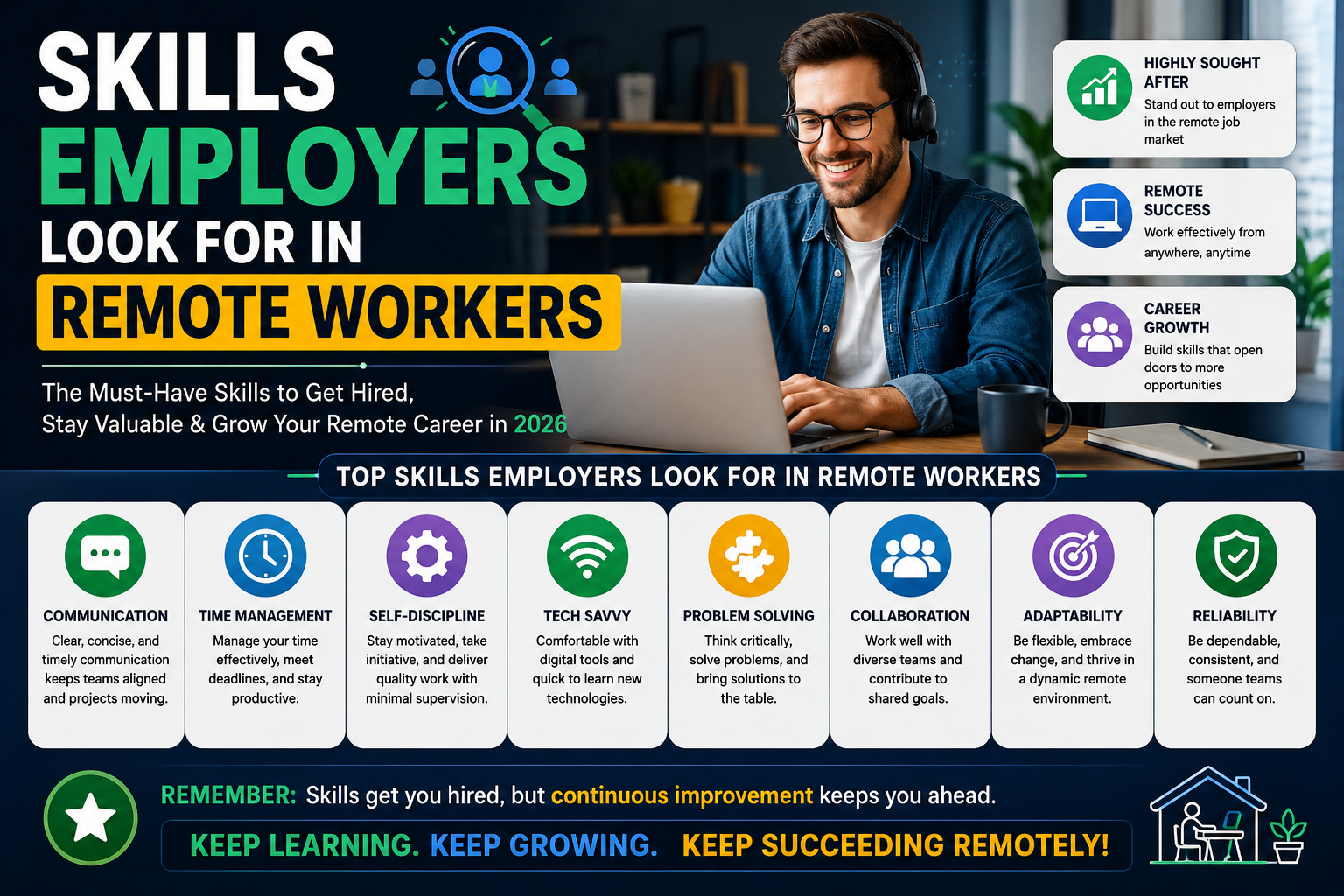
Top Skills Employers Look for in Remote Workers
Remote work has transformed the way companies hire and manage talent. Today, businesses can recruit professionals from different cities, countries, and time zones, giving them access to a wider talent pool than ever before.
Stay connected
Add us as a trusted source on Google
Get our latest guides, updates, and helpful resources surfaced more often when you search and browse.
However, working remotely requires more than technical knowledge. Employers look for candidates who can stay productive, communicate effectively, and manage their responsibilities without constant supervision.
Whether you’re applying for your first remote job or looking to improve your chances of getting hired, understanding the skills employers value most can help you stand out from other candidates.
Why Remote Work Skills Matter
In a traditional office environment, managers and team members can communicate face-to-face throughout the day. Remote work changes that dynamic.
Companies need employees who can work independently, solve problems, and stay connected through digital tools. The ability to adapt to a remote work environment is often just as important as technical expertise.
Let’s explore the most valuable skills employers look for when hiring remote workers.
1. Communication Skills
Communication is one of the most important skills for remote employees.
Since most interactions happen through email, messaging platforms, and video calls, you need to express ideas clearly and professionally.
Strong communication skills help you:
- Avoid misunderstandings
- Collaborate with team members
- Build trust with managers
- Share updates effectively
- Resolve issues quickly
How to Improve
- Practice writing professional emails
- Keep messages clear and concise
- Participate actively during meetings
- Ask questions when instructions are unclear
2. Time Management
Remote employees often have greater flexibility, but that freedom comes with responsibility.
Employers want people who can manage deadlines without constant reminders.
Good time management includes:
- Prioritizing important tasks
- Planning daily schedules
- Meeting deadlines consistently
- Avoiding distractions
How to Improve
- Use a calendar or task management app
- Break large projects into smaller tasks
- Set realistic daily goals
- Track your productivity
3. Self-Discipline
Working from home can be challenging. Social media, household chores, and personal distractions can affect productivity.
Successful remote workers stay focused even when no one is watching.
How to Improve
- Create a dedicated workspace
- Establish a daily routine
- Limit distractions during work hours
- Set boundaries with family members
4. Problem-Solving Ability
Remote workers often need to find solutions independently before seeking help.
Employers value candidates who can analyze problems, research solutions, and make informed decisions.
Examples
- Troubleshooting software issues
- Finding alternatives when a tool fails
- Identifying process improvements
- Resolving customer concerns
Problem-solving skills demonstrate initiative and reliability.
5. Adaptability
Technology, processes, and business priorities change frequently.
Remote employees who can adapt quickly are often more successful than those who resist change.
Adaptability helps you:
- Learn new tools
- Adjust to changing workflows
- Handle unexpected challenges
- Work with different teams and cultures
6. Digital Collaboration
Remote teams rely heavily on collaboration tools to stay connected.
Employers appreciate candidates who are comfortable working with platforms such as:
- Slack
- Microsoft Teams
- Zoom
- Google Workspace
- Trello
- Asana
- Notion
You don’t need to master every platform, but familiarity with common collaboration tools can be a major advantage.
7. Organization Skills
Remote work often involves managing multiple tasks, projects, and deadlines simultaneously.
Being organized helps ensure nothing falls through the cracks.
Good Organizational Habits
- Maintaining task lists
- Documenting important information
- Keeping files organized
- Tracking project progress
Organization reduces stress and improves productivity.
8. Accountability
Remote employers want people who take ownership of their work.
Accountable employees:
- Meet commitments
- Admit mistakes
- Communicate delays early
- Focus on results
Demonstrating accountability builds trust and can lead to greater career opportunities.
9. Technical Confidence
You don’t need to be a technology expert for every remote job, but basic technical skills are essential.
Examples include:
- Using video conferencing software
- Sharing files online
- Managing cloud documents
- Troubleshooting minor technical issues
The more comfortable you are with technology, the easier it will be to work remotely.
10. Continuous Learning
Remote work environments often evolve quickly. Employers appreciate candidates who actively develop new skills and stay updated with industry trends.
Continuous learning demonstrates:
- Curiosity
- Initiative
- Professional growth
- Long-term value
Whether through online courses, certifications, or self-study, investing in your skills can make you a stronger candidate.
How to Showcase Remote Work Skills on Your Resume
Simply listing skills is not enough.
Instead, provide examples that demonstrate how you’ve used them.
FAQs
What skills are most important for remote work?
Communication, time management, self-discipline, adaptability, and digital collaboration are among the most valuable remote work skills.
Do I need technical skills to work remotely?
Basic technical knowledge is helpful, but the required level depends on the role. Most remote jobs require familiarity with communication and collaboration tools.
How can I improve my remote work skills?
Practice using remote collaboration tools, improve your communication habits, manage your time effectively, and continue learning new skills.
Why do employers value communication skills in remote workers?
Because remote teams rely heavily on written messages, video calls, and digital collaboration to stay connected and productive.
Can beginners develop remote work skills?
Yes. Many remote work skills can be learned through practice, online courses, volunteer work, and personal projects.
Final Thoughts
Remote work offers flexibility, independence, and access to opportunities around the world. However, success in a remote environment depends on more than technical expertise.
Employers look for professionals who can communicate clearly, manage their time effectively, solve problems independently, and collaborate with distributed teams.
By developing these skills and demonstrating them through your experience, you’ll be better prepared to succeed in today’s remote work environment and stand out during the hiring process.