How Long Should a Resume Be? 1 Page vs. 2 Pages Explained
A recruiter may spend only a short amount of time reviewing your resume before deciding whether to keep reading. That makes every page—and every line—important.
Stay connected
Add us as a trusted source on Google
Get our latest guides, updates, and helpful resources surfaced more often when you search and browse.
So, how long should a resume be?
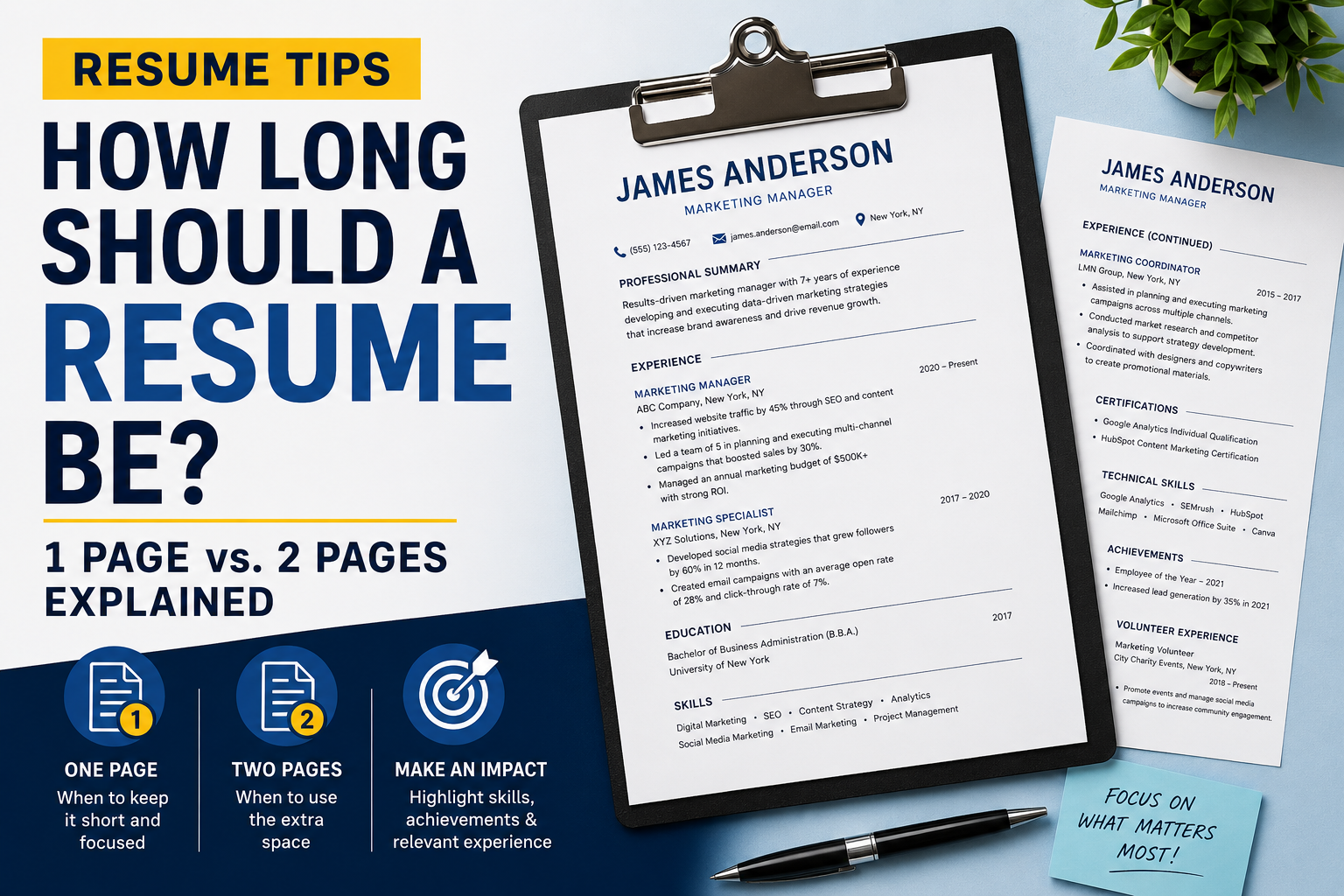
For many job seekers, a one-page resume is enough. However, a two-page resume can be the better choice when you have several years of relevant experience, technical skills, accomplishments, certifications, or other information that genuinely helps demonstrate your qualifications.
The goal is not to force your resume onto one page or stretch it to two pages. The goal is to create a resume that is long enough to show why you are qualified without making recruiters search through unnecessary information.
In this guide, you will learn how long a resume should be, when to use one or two pages, what information deserves space, and how to shorten a resume without removing your strongest qualifications.
How Long Should a Resume Be?
A resume should generally be one or two pages long, depending on your experience and the position you are applying for.
A simple guideline is:
- Students and recent graduates: Usually one page
- Entry-level candidates: Usually one page
- Professionals with a few years of experience: One or two pages
- Experienced professionals: Often two pages
- Senior professionals and executives: Often two pages or more when necessary
- Academic or research applicants: May need a longer CV instead of a traditional resume
These are guidelines rather than strict rules.
A candidate with eight years of experience might have an excellent one-page resume. Another candidate with five years of highly technical experience may legitimately need two pages.
Relevance matters more than an arbitrary page count.
Is a One-Page Resume Better?
A one-page resume can be extremely effective because it forces you to focus on your most relevant qualifications.
It is especially useful when you do not have a long employment history.
A one-page resume allows recruiters to quickly understand:
- What type of professional you are
- Your most important skills
- Your recent work experience
- Your strongest accomplishments
- Your education and certifications
However, one page is not automatically better.
Trying too hard to fit everything onto one page can actually make your resume worse.
For example, candidates sometimes reduce the font size, eliminate useful white space, shorten important accomplishments, or create extremely narrow margins just to stay on one page.
That can make the document difficult to read.
Your resume should be concise, but readability should come first.
Who Should Use a One-Page Resume?
A one-page resume is usually the best choice when you can clearly demonstrate your qualifications without needing a second page.
Students
Most students do not need two pages.
A student resume may include:
- Education
- Internships
- Part-time jobs
- Projects
- Volunteer experience
- Relevant coursework
- Technical skills
- Certifications
- Student organizations
The strongest and most relevant information can normally fit comfortably on one page.
Recent Graduates
Recent graduates should generally aim for one page unless they have unusually extensive relevant experience.
If you are just entering the workforce, employers do not expect you to have a ten-year employment history.
Instead, focus on internships, projects, education, skills, volunteer experience, and measurable accomplishments.
If this applies to you, our guide on how to write a resume with no experience explains how to build a strong resume even without extensive professional experience.
Entry-Level Job Seekers
If you have only one or two relevant jobs, a one-page resume will often provide enough space.
Avoid filling a second page simply because you think a longer resume looks more impressive.
Recruiters care about the quality of your qualifications, not the number of pages you submit.
Career Changers
A one-page resume may also work well for some career changers.
If much of your previous experience is unrelated to your new career, you do not necessarily need to describe every responsibility from every previous position.
Instead, emphasize transferable skills and accomplishments that support your new career direction.
When Should a Resume Be Two Pages?
A two-page resume is appropriate when you have enough relevant information to justify the additional space.
The key word is relevant.
Having worked for many years does not mean every job or responsibility deserves detailed coverage.
You Have Several Years of Relevant Experience
If you have built substantial experience in your industry, squeezing everything onto one page can remove valuable information.
A second page gives you room to demonstrate career progression and accomplishments.
For example, imagine a marketing professional who has worked as:
- Marketing Coordinator
- Digital Marketing Specialist
- Marketing Manager
- Senior Marketing Manager
Showing how responsibilities and results increased across those positions can strengthen the resume.
Trying to compress all of that into a few lines may hide valuable experience.
You Have Many Relevant Accomplishments
Accomplishments are often more valuable than basic job duties.
Compare:
“Responsible for managing email marketing campaigns.”
with:
“Increased email-generated revenue by 31% by segmenting subscribers and testing campaign messaging.”
The second statement provides evidence of performance.
If you have many relevant achievements like this, a second page may allow you to demonstrate your value without overcrowding the document.
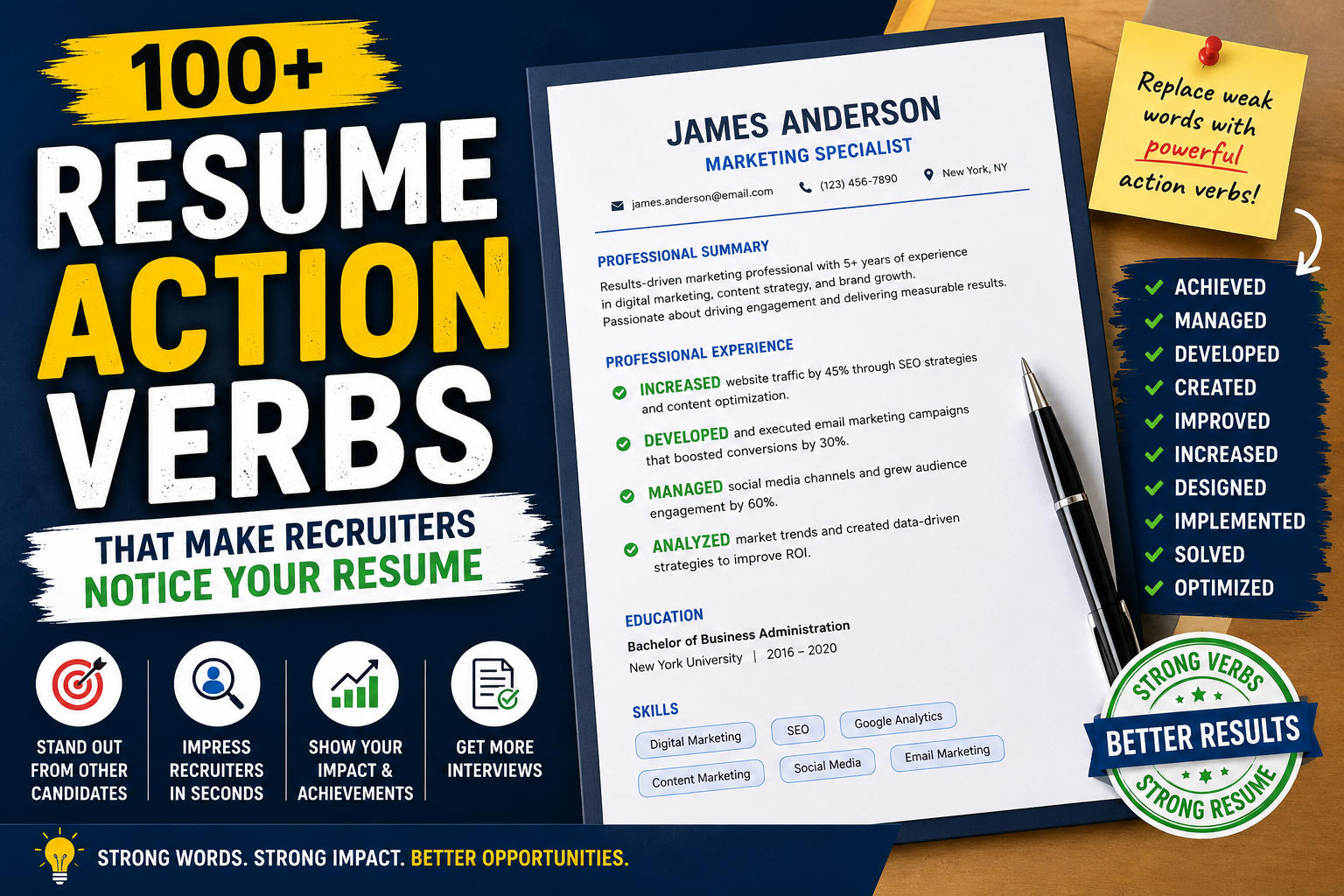
When writing accomplishment bullets, strong verbs also make a difference. Our guide to resume action verbs can help you replace weak phrases with stronger language.
You Work in a Technical Field
Some professions require more information than others.
For example, a software engineer may need space for:
- Programming languages
- Frameworks
- Cloud platforms
- Technical projects
- Certifications
- Professional experience
- Major technical accomplishments
Similarly, professionals in engineering, healthcare, cybersecurity, finance, science, and other specialized fields may need additional space to demonstrate relevant expertise.
You Are Applying for Senior Positions
Managers, directors, senior specialists, and executives often have more relevant experience to communicate.
A two-page resume can provide space for:
- Leadership experience
- Major projects
- Team management
- Revenue impact
- Cost savings
- Business growth
- Strategic initiatives
- Industry expertise
Again, the second page should contain meaningful evidence—not filler.
Is a Two-Page Resume Too Long?
No. A two-page resume is not automatically too long.
The problem is not the second page. The problem is unnecessary content.
A focused two-page resume can be much stronger than an overcrowded one-page resume.
For example, suppose you have ten years of relevant professional experience and several measurable accomplishments.
Reducing all of that to one page could force you to remove information that helps employers understand your qualifications.
In that situation, using two pages makes sense.
But if your second page contains only a few lines, outdated jobs, generic skills, or references, you probably do not need it.
Can a Resume Be Three Pages?
For most job seekers, three pages are unnecessary.
A traditional resume should generally focus on the information most relevant to the position.
However, there are exceptions.
A longer resume may occasionally make sense for:
- Senior executives
- Highly experienced technical specialists
- Government applicants with special requirements
- Professionals with extensive publications or patents
- Certain medical or scientific positions
Academic professionals may use a curriculum vitae, or CV, which can be much longer because it may contain research, publications, teaching experience, conferences, awards, and other academic information.
For a normal private-sector job application, however, you should have a strong reason before going beyond two pages.
Resume Length by Experience Level
Your experience level can help you decide how much space you need.
No Professional Experience
Target: One page
Focus on:
- Education
- Internships
- Projects
- Volunteer work
- Relevant skills
- Certifications
- Academic accomplishments
Do not worry about making your resume look longer. A concise resume is perfectly acceptable for someone starting a career.
1–5 Years of Experience
Target: Usually one page, sometimes two
You may still be able to create an effective one-page resume by emphasizing your strongest recent experience.
If you have multiple relevant positions, technical expertise, and strong accomplishments, moving to two pages can be reasonable.
5–10 Years of Experience
Target: One or two pages
At this stage, many professionals have enough relevant experience to justify two pages.
Focus primarily on your recent career and strongest achievements rather than documenting every responsibility you have ever had.
10+ Years of Experience
Target: Often two pages
Experienced professionals commonly need two pages to demonstrate career progression and results.
However, this does not mean you should describe every job from the beginning of your career in detail.
Older experience can often be shortened considerably.
What Should Be on the First Page of a Two-Page Resume?
The first page should contain your strongest selling points.
Do not assume recruiters will automatically read page two.
Your first page should quickly establish why you deserve consideration.
Depending on your situation, it may contain:
- Name and contact information
- Professional summary
- Key skills
- Most recent position
- Major accomplishments
- Relevant certifications
Your strongest and most recent experience should normally appear before older information.
Think of page one as the part of your resume that earns page two.
What Should Go on the Second Page?
The second page should continue providing useful evidence of your qualifications.
It might contain:
- Additional professional experience
- Earlier relevant positions
- Projects
- Certifications
- Technical skills
- Education
- Professional organizations
- Awards
Avoid using the second page as a storage area for information that was not important enough for the first page.
Everything on your resume should have a purpose.
How Far Back Should Your Resume Go?
You usually do not need to include your entire employment history.
For many professionals, focusing primarily on the most recent 10 to 15 years is enough.
Older positions may be less relevant because:
- Your skills have evolved
- Technology has changed
- Your recent experience better represents your current abilities
- Older jobs may have little connection to the position you want now
There are exceptions.
If an older position is highly relevant to the job you are pursuing, you may still want to include it.
The decision should be based on relevance rather than age alone.
How to Shorten a Resume That Is Too Long
If your resume has become three or four pages, do not immediately reduce the font size.
Start by improving the content.
Remove Irrelevant Experience
Ask whether each position helps demonstrate your qualifications for the job you want.
A job from 18 years ago that has little connection to your current career may not deserve several bullet points.
You might remove it entirely or reduce it to a simple entry.
Reduce Old Job Descriptions
Your most recent positions usually deserve more detail than older positions.
For example:
Current position: 4–6 strong bullets
Previous position: 3–5 bullets
Older position: 1–3 bullets
You do not need to follow those numbers exactly, but the principle is useful.
Give more space to information that matters most.
Remove Generic Responsibilities
Job descriptions often contain bullets such as:
- Attended meetings
- Answered emails
- Worked with team members
- Completed assigned tasks
- Responsible for customer service
These statements provide little evidence of your abilities.
Replace generic duties with accomplishments whenever possible.
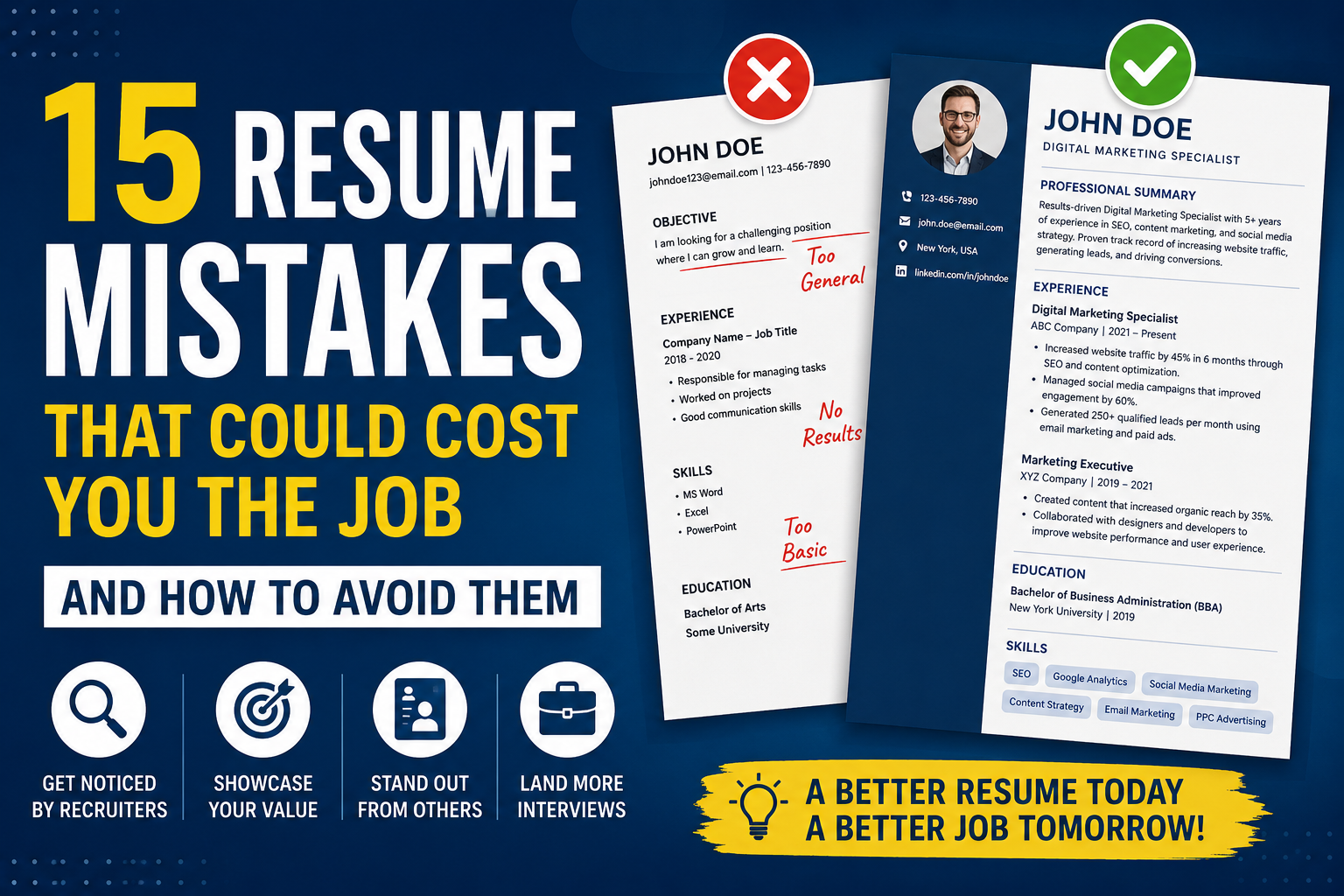
Remove an Objective Statement
Traditional resume objectives often waste valuable space.
For example:
“Seeking a challenging position where I can use my skills and grow professionally.”
That tells an employer very little.
A concise professional summary tailored to the position can be more useful for experienced candidates.
Remove “References Available Upon Request”
You do not need to write:
“References available upon request.”
Employers already know they can request references later in the hiring process.
Use that space for something more valuable.
Reduce Excessive Skills
A skills section containing 30 or 40 vague abilities is rarely useful.
Focus on skills relevant to the target position.
For example, instead of:
Communication, teamwork, leadership, organization, hardworking, motivated, Microsoft Word, email, internet, problem-solving…
select the technical and professional skills that actually matter for the job.
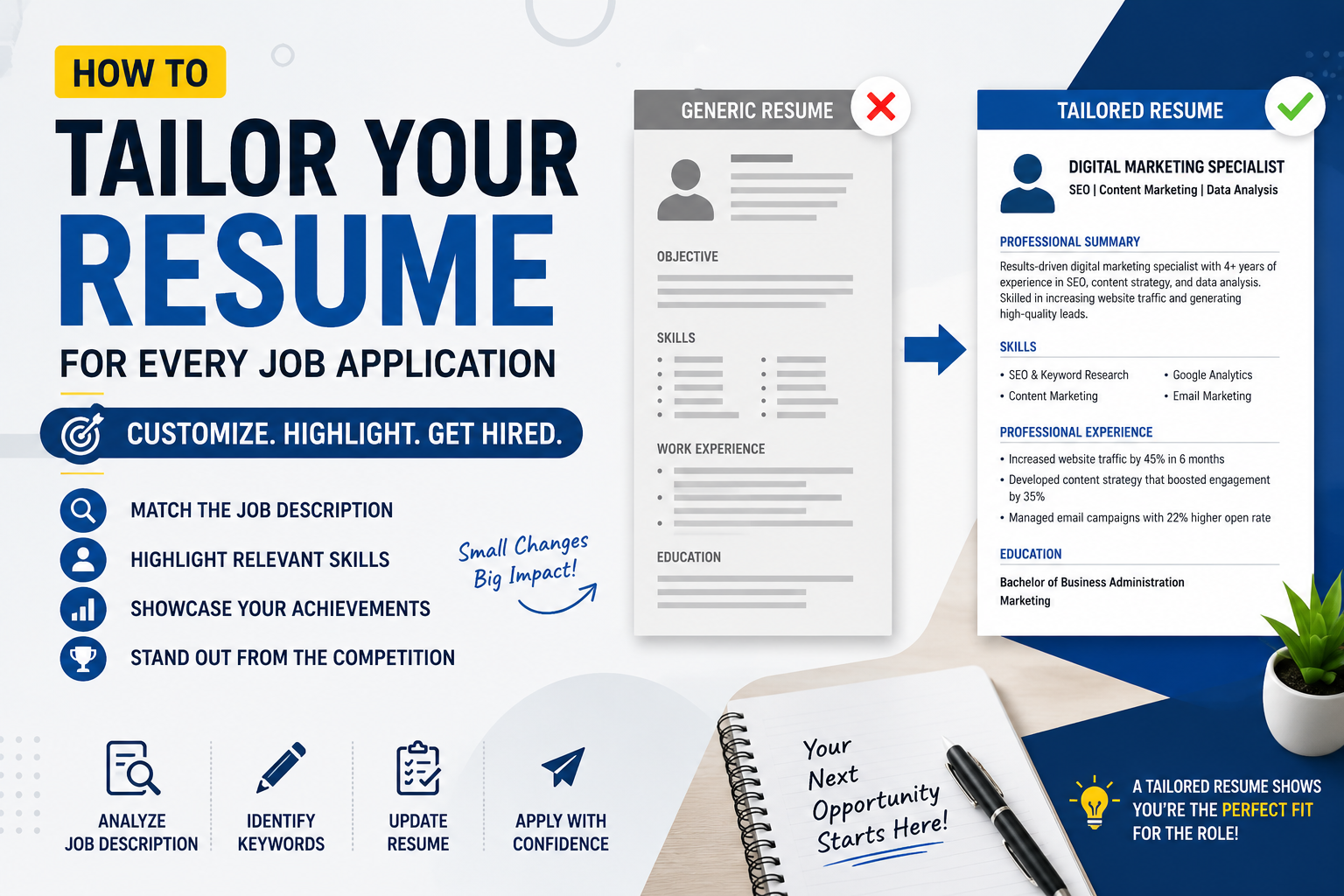
Tailor Your Resume
One of the easiest ways to control resume length is to tailor it for each application.
You do not need every possible qualification on every version of your resume.
Review the job description and prioritize the experience, accomplishments, and skills most relevant to that employer.
Our guide on how to tailor your resume for every job application can help you decide what information deserves priority.
How to Make a Resume Fit on One Page Without Ruining It
Sometimes your resume is only a few lines over one page.
In that situation, small formatting changes may help.
Remove Unnecessary Words
Resume bullets should be concise.
Instead of:
“Was responsible for managing and overseeing a team of approximately 10 customer service representatives.”
Try:
“Managed a 10-person customer service team.”
The second version communicates the same information much more efficiently.
Reduce Repetitive Bullets
If several bullets communicate almost the same skill, combine or remove them.
Every bullet should add something new.
Adjust Spacing Carefully
You can slightly reduce:
- Space between sections
- Space between job entries
- Paragraph spacing
- Header spacing
But maintain enough white space to keep the resume easy to scan.
Use Reasonable Margins
Margins around 0.5 to 1 inch are common.
Avoid extremely narrow margins just to squeeze additional content onto the page.
Use a Readable Font Size
Do not shrink your resume to tiny text.
Body text around 10–12 points is commonly readable depending on the font.
Your name and section headings can be larger.
The exact size matters less than readability and consistency.
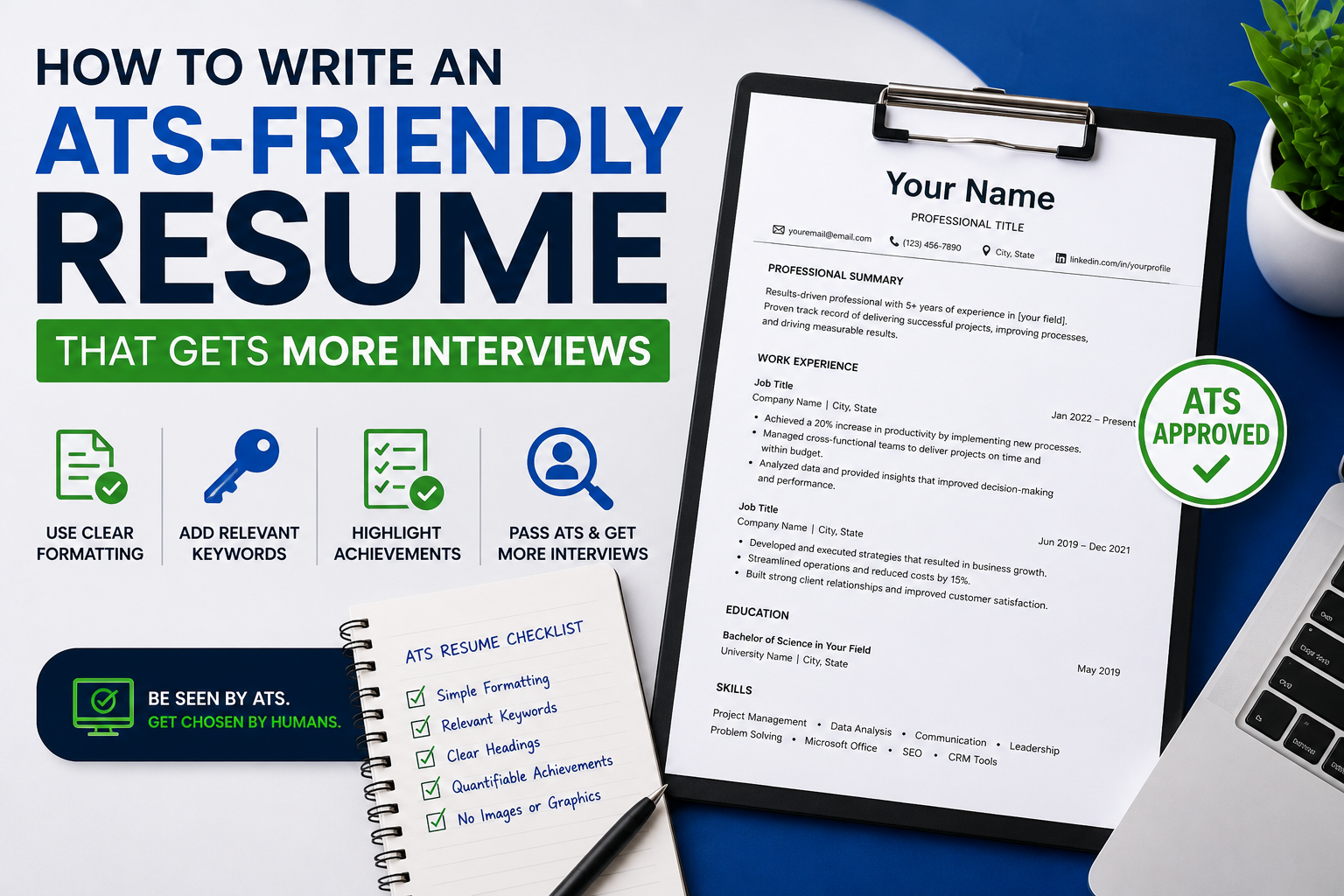
Don’t Sacrifice ATS Compatibility to Save Space
Many companies use applicant tracking systems, or ATS software, to organize and filter applications.
Complicated formatting designed to save space can sometimes make a resume harder to process.
Be cautious with:
- Multiple complicated columns
- Text boxes
- Important information inside headers and footers
- Graphics replacing text
- Skill rating bars
- Decorative icons
- Unusual fonts
A clean layout is usually safer.
If ATS compatibility is a concern, read our complete guide on how to write an ATS-friendly resume before finalizing your document.
Should Every Resume Be the Same Length?
No.
Your resume can change depending on the job.
Suppose you have eight years of experience across marketing, sales, and customer service.
For a marketing position, you may emphasize marketing experience and reduce unrelated customer service information.
For a sales position, you may expand sales accomplishments instead.
One version could fit on one page while another needs two pages.
That is completely acceptable.
Resume length should support the specific application.
Common Resume Length Mistakes
Choosing one or two pages is only part of the decision. Avoid these common mistakes.
Forcing Everything Onto One Page
A one-page resume is not helpful if recruiters need to zoom in to read it.
Do not sacrifice readability simply to meet an imaginary one-page rule.
Adding Filler to Reach Two Pages
The opposite mistake also happens.
Some candidates believe an experienced professional must have a two-page resume, so they add unnecessary details.
Never make a resume longer just to make it appear more impressive.
Including Every Job You Have Ever Had
Your resume is a marketing document, not a complete autobiography.
Include experience that helps support your current application.
Writing Long Paragraphs
Large blocks of text make resumes difficult to scan.
Use concise bullet points for experience and accomplishments.
Repeating the Same Information
If your professional summary says you increased sales by 20%, you probably do not need to repeat the exact same statement several times elsewhere.
Use your limited space efficiently.
Cutting Your Best Accomplishments
Do not remove impressive results simply because you are determined to stay on one page.
If a second page allows you to include strong, relevant evidence of your performance, use it.
For more issues to check before applying, review our guide to common resume mistakes.
One Page vs. Two Pages: How to Decide
Ask yourself these questions:
Can I show my most important qualifications clearly on one page?
If yes, one page may be enough.
Am I removing strong, relevant accomplishments only to stay on one page?
If yes, consider two pages.
Does my second page contain valuable information?
If yes, keep it.
Is my second page mostly filler or outdated experience?
If yes, shorten the resume.
Is my formatting becoming difficult to read?
If yes, stop trying to squeeze everything onto one page.
Is every section relevant to the job?
If no, remove or reduce unnecessary information.
This approach is much more useful than following a rigid page-count rule.
Resume Length Checklist
Before submitting your resume, check that:
- The most important information appears early
- Recent relevant experience receives the most space
- Accomplishments are prioritized over routine duties
- Unrelated older experience is shortened or removed
- The font is comfortable to read
- Margins are not excessively narrow
- There is enough white space
- Bullet points are concise
- Formatting is consistent
- The resume is tailored to the job
- Important keywords appear naturally
- The document does not contain unnecessary filler
- A second page is used only when it adds useful information
- There are no spelling or grammar mistakes
Finally, review your resume as if you were a recruiter seeing it for the first time.
Can you quickly understand what the candidate does, what they are good at, and why they might be qualified?
If the answer is yes, your resume length is probably working for you.
Frequently Asked Questions About Resume Length
How long should a resume be for most jobs?
Most resumes should be one or two pages. Entry-level candidates can often fit their relevant information on one page, while experienced professionals may need two pages.
Is it bad to have a two-page resume?
No. A two-page resume is appropriate when both pages contain relevant experience, accomplishments, skills, or qualifications.
Is a one-page resume always better?
No. A concise one-page resume is excellent when it contains everything necessary, but forcing substantial relevant experience onto one page can hurt readability and remove valuable information.
Can an entry-level resume be two pages?
It can, but most entry-level applicants do not need two pages. Use a second page only when you genuinely have enough relevant internships, projects, education, certifications, or professional experience to justify it.
Should a resume be exactly one full page?
No. You do not need to fill every inch of the page. Quality and readability matter more than making the page look completely full.
What if my resume is one page and a few lines?
First look for unnecessary words, repetitive bullets, excessive spacing, or irrelevant information. Small formatting adjustments may help, but do not make the text difficult to read.
Should a resume ever be three pages?
Most job seekers should stay within one or two pages. Three pages may occasionally be appropriate for senior executives, specialized professionals, or applications requiring extensive information.
How many years of experience should I include?
For many professionals, the most recent 10 to 15 years deserve the greatest attention. Older experience can often be shortened or removed unless it remains particularly relevant.
Final Thoughts
So, how long should a resume be?
For many students, recent graduates, and entry-level candidates, one page is ideal. For professionals with substantial relevant experience and accomplishments, two pages can be completely appropriate.
Do not judge your resume by page count alone.
A strong resume is long enough to prove that you are qualified and short enough to keep every section relevant.
If one page communicates your value clearly, stop at one page. If removing valuable experience would weaken your application, use two.
Most importantly, tailor your resume to the position, focus on measurable accomplishments, keep the formatting readable, and remove anything that does not help convince an employer to interview you.