
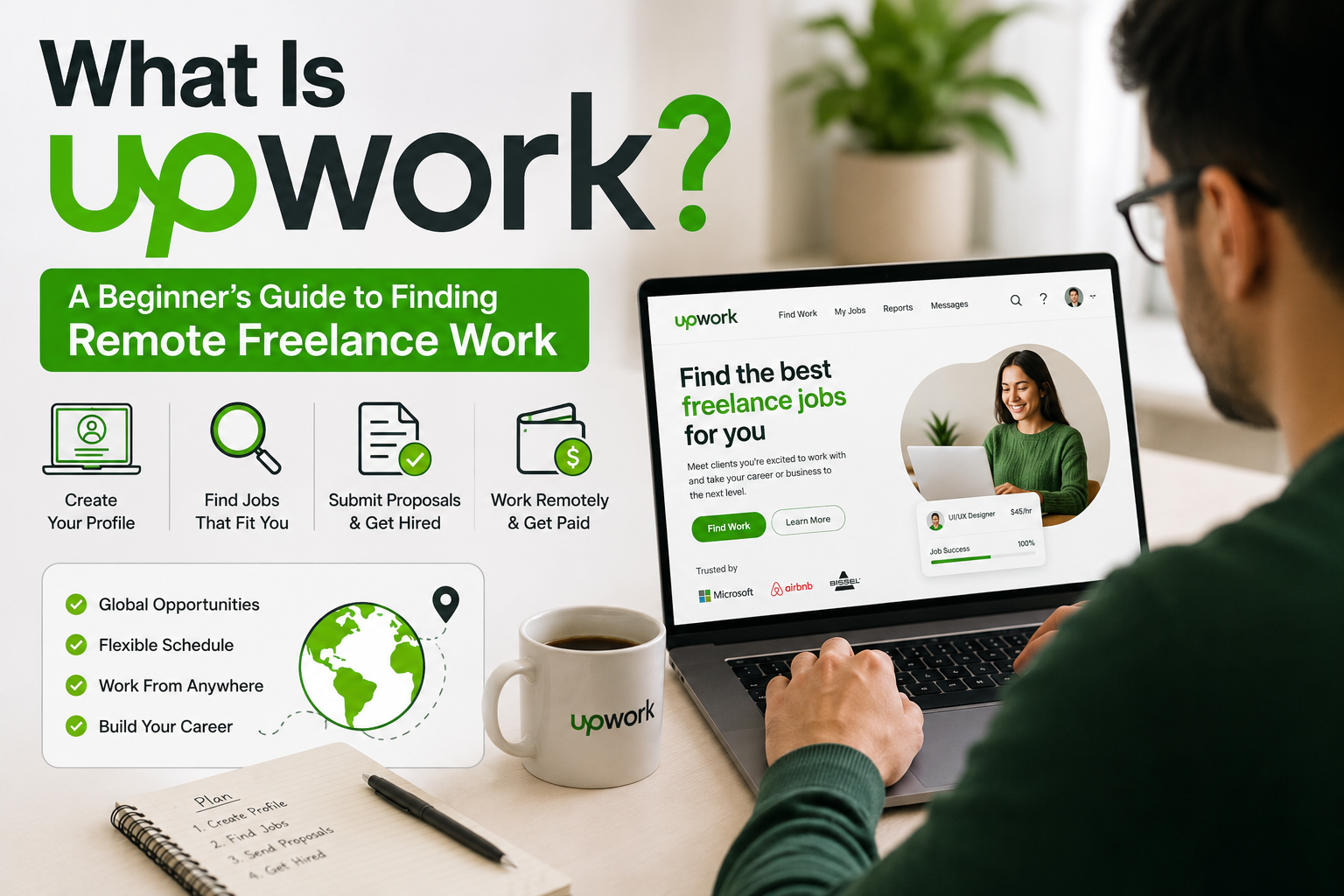
What Is Upwork? A Beginner’s Guide to Finding Remote Freelance Work
For many people, remote work starts with a simple question:
“How can I find clients online?”
One of the most popular answers is Upwork.
Upwork is one of the world’s largest freelance marketplaces, connecting businesses with professionals who offer services such as web development, graphic design, content writing, digital marketing, customer support, virtual assistance, and many other skills.
Whether you’re a student, freelancer, career changer, or professional looking for extra income, Upwork can be a valuable platform for finding remote work opportunities.
In this guide, you’ll learn how Upwork works, who it’s best for, and how beginners can increase their chances of success.
What Is Upwork?
Upwork is an online freelancing platform where clients post projects and freelancers submit proposals to win those projects.
Instead of applying for traditional jobs, freelancers compete for contracts by demonstrating their skills, experience, and ability to solve a client’s problem.
Projects can range from small one-time tasks to long-term contracts lasting months or even years.
Common categories on Upwork include:
- Web Development
- WordPress Services
- Graphic Design
- Content Writing
- SEO
- Virtual Assistance
- Data Entry
- Customer Support
- Video Editing
- Digital Marketing
This variety makes Upwork accessible to professionals from many different backgrounds.
How Upwork Works
The process is relatively straightforward.
Step 1: Create a Freelancer Profile
Your profile acts as your online resume.
It should include:
- Professional headline
- Skills
- Work experience
- Portfolio samples
- Certifications
- Profile photo
A complete profile helps build trust with potential clients.
Step 2: Search for Projects
Clients regularly post jobs describing their requirements, budget, and expectations.
Freelancers can browse projects based on:
- Skill category
- Budget range
- Experience level
- Project length
Step 3: Submit Proposals
To apply for a project, freelancers send a proposal explaining:
- Why they are a good fit
- Relevant experience
- Suggested approach
- Estimated cost or timeline
Strong proposals often focus on the client’s problem rather than the freelancer’s achievements.
Step 4: Complete the Work
If selected, the freelancer begins working according to the agreed requirements.
Communication typically takes place through Upwork’s messaging system.
Step 5: Get Paid
Once the work is completed and approved, payment is released through Upwork’s secure payment system.
Who Should Use Upwork?
Upwork can work well for many different types of professionals.
Beginners
People with limited professional experience can use Upwork to build a portfolio and gain real-world client experience.
Freelancers
Experienced freelancers often use Upwork to find new clients and maintain a steady workflow.
Remote Workers
Professionals looking for location-independent income opportunities frequently use Upwork as a source of remote projects.
Agency Owners
Many agencies use Upwork to acquire clients and expand their business.
Advantages of Using Upwork
Access to Global Clients
Freelancers can work with businesses from different countries without needing local connections.
Flexible Work Arrangements
You choose:
- Which projects to apply for
- Your working hours
- Your service rates
- Your workload
Secure Payments
Upwork provides payment protection and dispute resolution systems that help reduce payment-related risks.
Opportunity to Build a Portfolio
Even small projects can help freelancers gain reviews, testimonials, and practical experience.
Challenges New Freelancers Face
While Upwork offers opportunities, success rarely happens overnight.
Competition
Popular job categories can attract many applicants.
Building Trust
Clients often prefer freelancers with positive reviews and completed projects.
Learning Proposal Writing
Many beginners focus too much on themselves instead of explaining how they can solve a client’s problem.
Patience Required
Winning the first project can take time, especially for new accounts.
Tips for Getting Your First Upwork Job
Optimize Your Profile
Complete every section and clearly explain your expertise.
Focus on One Skill
Specialized profiles often perform better than generic profiles.
For example:
Instead of:
“Web Developer”
Try:
“WordPress Website Speed Optimization Specialist”
Apply to Smaller Projects
Smaller jobs often have less competition and can help you earn your first review.
Personalize Every Proposal
Avoid copying and pasting the same message for every application.
Build a Portfolio
Even personal projects can demonstrate your skills and increase client confidence.
Common Mistakes Beginners Make
Applying for Every Job
Focus on projects that genuinely match your skills.
Writing Generic Proposals
Clients want solutions, not lengthy introductions.
Undervaluing Your Work
Extremely low pricing can attract difficult clients and create unrealistic expectations.
Ignoring Communication
Fast, professional communication can significantly improve your chances of winning projects.
Is Upwork Worth It?
For many freelancers, Upwork can be an excellent starting point for remote work.
While competition exists, the platform offers access to clients, secure payments, and opportunities to build experience.
Success usually comes from consistency, strong communication, and delivering high-quality work rather than relying on shortcuts.
Like any professional platform, results improve over time as you gain reviews, refine your profile, and develop specialized skills.
Final Thoughts
Upwork has helped millions of freelancers connect with clients and build remote careers. Whether you’re a writer, designer, developer, marketer, or virtual assistant, the platform provides opportunities to work with businesses from around the world.
The key is to treat freelancing like a professional business. Invest time in building your profile, improving your skills, and learning how to communicate value to clients.
With patience and persistence, Upwork can become a powerful tool for finding remote work and developing long-term professional relationships.