How to Answer “What Is Your Biggest Weakness?” in an Interview (2026 Guide)
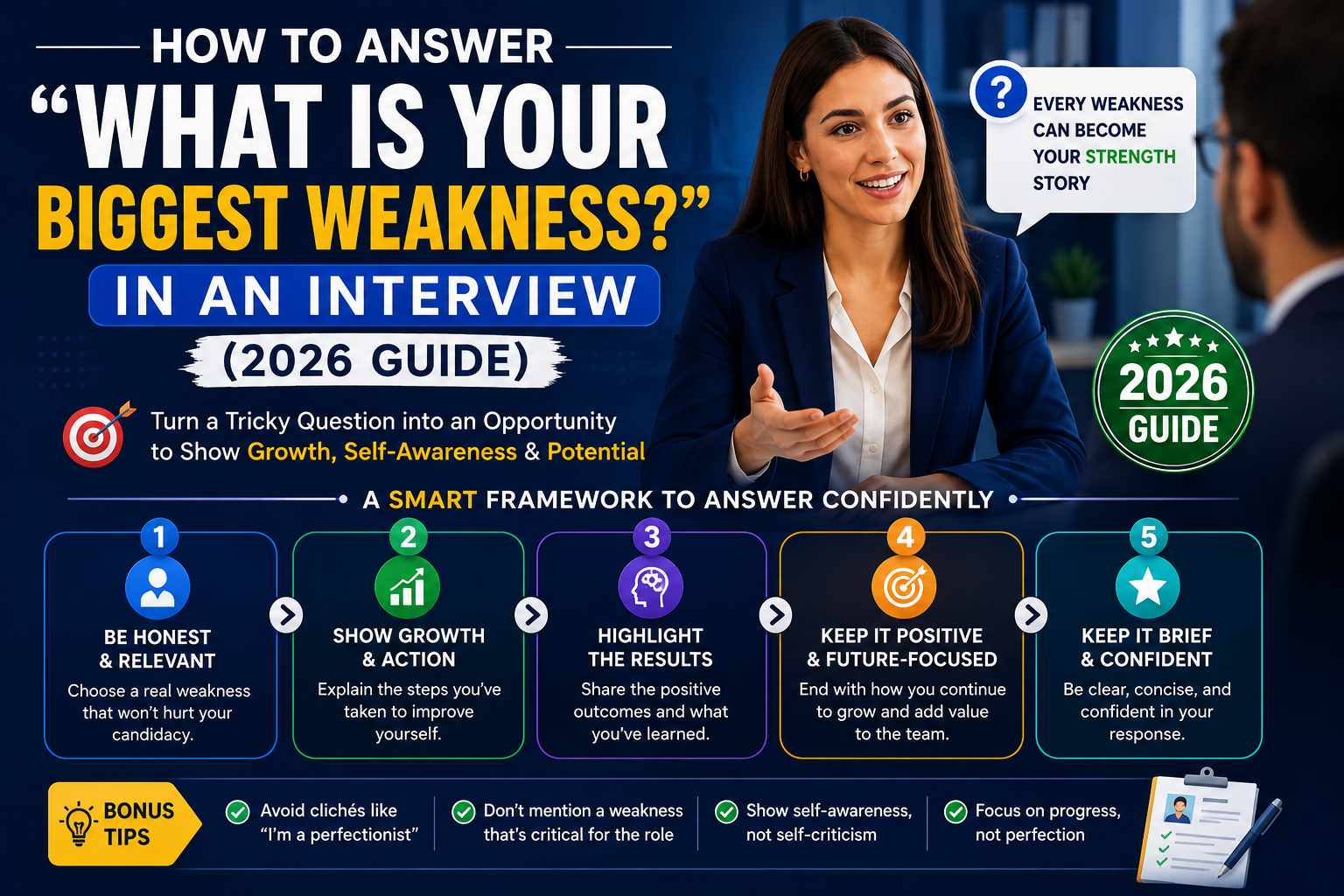
Few interview questions make candidates more nervous than:
Stay connected
Add us as a trusted source on Google
Get our latest guides, updates, and helpful resources surfaced more often when you search and browse.
“What is your biggest weakness?”
Many job seekers worry that giving an honest answer will hurt their chances of getting hired. As a result, they either claim they have no weaknesses or give an answer that sounds fake.
The truth is that interviewers are not looking for a perfect candidate. They want to see self-awareness, honesty, and a willingness to improve.
In this guide, you’ll learn why employers ask this question, what answers to avoid, and several strong example responses you can use in your next interview.
Why Employers Ask “What Is Your Biggest Weakness?”
This question helps employers understand:
- How self-aware you are
- Whether you can identify areas for improvement
- If you’re actively working on personal growth
- How you handle challenges and feedback
A good answer shows maturity and professionalism.
Common Mistakes When Answering “What Is Your Biggest Weakness?”
Many applicants try to disguise a strength as a weakness.
Examples include:
- “I work too hard.”
- “I’m a perfectionist.”
- “I care too much.”
Interviewers hear these answers regularly and often view them as insincere.
Instead, choose a real weakness that is not critical to the role and explain how you’re improving it.
How to Answer “What Is Your Biggest Weakness?”
Use this three-step structure:
1. State a Genuine Weakness
Choose something real but manageable.
2. Explain What You’ve Learned
Show self-awareness and accountability.
3. Describe How You’re Improving
Demonstrate personal growth and action.
Example Answer #1: Public Speaking
“Earlier in my career, I wasn’t comfortable speaking in front of large groups. I realized this could limit my ability to share ideas effectively, so I started volunteering to present during team meetings. Over time, my confidence improved significantly, and I now feel much more comfortable communicating with larger audiences.”
Example Answer #2: Delegating Tasks
“I used to take on too much work myself because I wanted to ensure everything was completed correctly. Eventually, I realized this wasn’t the most efficient approach. I’ve worked on trusting team members more and improving my delegation skills, which has helped both productivity and collaboration.”
Example Answer #3: Asking for Help
“In the past, I tried solving every problem independently before seeking assistance. While that helped me develop problem-solving skills, it sometimes slowed progress. I’ve learned that asking for guidance when appropriate can save time and lead to better outcomes.”
Example Answer for Freshers
“As a recent graduate, one area I’m still developing is practical industry experience. To address this, I’ve been working on personal projects, taking online courses, and continuously learning from professionals in the field.”
Weaknesses You Should Avoid Mentioning
Do not mention weaknesses that directly affect essential job responsibilities.
Examples include:
- Poor communication skills (for customer-facing roles)
- Being late frequently
- Difficulty meeting deadlines
- Lack of honesty
- Poor teamwork
These answers may raise red flags for employers.
Tips for Answering “What Is Your Biggest Weakness?”
Be Honest
Choose a genuine area for improvement.
Stay Positive
Focus on progress rather than limitations.
Keep It Professional
Avoid personal weaknesses unrelated to work.
Show Growth
Always explain what you’re doing to improve.
Final Thoughts
The best answer to “What is your biggest weakness?” isn’t about finding the perfect weakness. It’s about showing self-awareness, accountability, and a commitment to continuous improvement.
Employers understand that nobody is perfect. What matters most is your ability to recognize challenges, learn from them, and become better over time.
When answered correctly, this question can actually strengthen your interview performance and help demonstrate your professionalism.